
Your tires are the only part of your vehicle that actually touches the road. Four contact patches—each roughly the size of a hand—are all that stand between you and the pavement at any given moment. When tire tread wears down, those contact patches become less effective, and the consequences can be serious.
Most drivers don’t think much about tread depth until something goes wrong. But knowing what to look for, and when to act, can make the difference between a safe stop and a dangerous skid. This guide covers how tire tread works, how to spot wear before it becomes a problem, and what you can do to keep your tires performing safely for as long as possible.
How Tire Tread Works
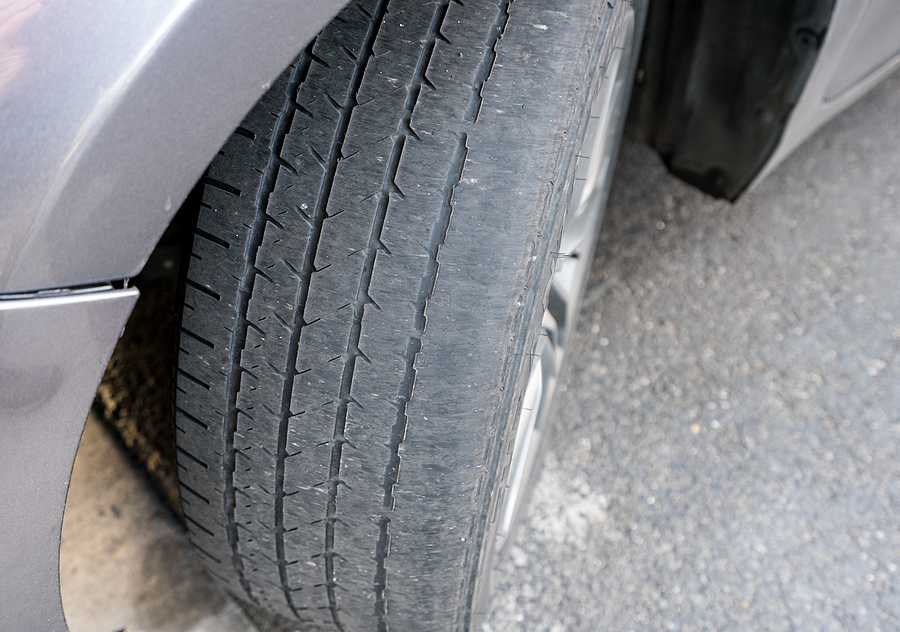
Tire tread isn’t just rubber—it’s a carefully engineered system of grooves, channels, and raised blocks designed to grip the road and manage water.
Traction and Braking Performance
Tread blocks create friction against the road surface, giving your vehicle the grip it needs to accelerate, corner, and stop. The deeper the tread, the more surface area and grip available. As tread wears thin, that grip decreases—and so does your vehicle’s ability to stop quickly.
Water Displacement and Hydroplaning Risk
The grooves in your tires act as channels that push water out from under the tire as you drive. Deeper grooves move more water per second, keeping the tire in contact with the road even in heavy rain. As those grooves shallow out, water has nowhere to go—and your tire can ride up on a thin film of water rather than gripping the road. This is hydroplaning, and it can cause a sudden, complete loss of steering control.
New tires typically start with 10/32nds to 11/32nds of an inch of tread. The U.S. federal legal minimum is 2/32nds of an inch (about 1.6 mm). But here’s the important part: tires at 4/32nds already experience a serious loss in stopping power and hydroplane resistance, long before they hit the legal limit.
Signs Your Tires Need Replacement
Knowing when your tires are worn isn’t complicated. There are a few quick, reliable methods every driver should know.
The Penny Test and Quarter Test
The penny test checks whether your tread has reached the legal minimum of 2/32nds of an inch:
- Place a penny into a tread groove with Lincoln’s head facing down.
- If you can see the top of Lincoln’s head, your tires are worn to the legal limit—or beyond. Replace them immediately.
The quarter test checks for the safer 4/32nds threshold:
- Place a quarter into the groove with Washington’s head facing down.
- If the top of Washington’s head is visible, your tires are approaching a danger zone. Replacement is strongly recommended.
Built-In Wear Indicator Bars
Most tires come with wear indicator bars molded directly into the tread grooves. These bars sit at exactly 2/32nds of an inch. When the tread surface wears flush with those bars, your tires have reached the legal limit. At that point, they need to come off immediately.
Performance Changes to Watch For
Sometimes your tires tell you something is wrong before you even grab a coin. Watch for these warning signs:
- Longer stopping distances, especially in wet conditions
- Pulling to one side when driving straight
- Vibration or shimmying at highway speeds
- Visible cracking or bulging on the tire sidewall
If you notice any of these, have your tires inspected as soon as possible.
Factors That Affect Tire Tread Wear
Tires don’t wear out at the same rate for every driver. Several factors can speed up—or slow down—how quickly your tread disappears.
Driving Habits
Hard braking, fast acceleration, and aggressive cornering all generate excess heat and friction, which accelerates tread wear. Smooth, consistent driving extends tire life significantly.
Road Conditions and Terrain
Rough roads, gravel, and construction zones put extra stress on tires. Highway driving is generally gentler on tread than stop-and-go city traffic, which involves more frequent braking and acceleration.
Tire Pressure and Inflation
Improper inflation is one of the most common causes of uneven wear. Over-inflated tires wear down the center of the tread faster, while under-inflated tires wear the outer edges. According to Continental Tires, maintaining correct tire pressure alone can boost fuel efficiency by up to 3%—and it’s just as important for tread longevity.
Vehicle Alignment and Suspension
Misaligned wheels cause tires to run at an angle instead of straight, wearing the inner or outer edge unevenly. Worn shocks and struts can cause a scalloped, wavy wear pattern. Both issues accelerate tread wear and compromise handling.
Climate and Temperature
Extreme heat softens rubber and speeds up wear. Cold temperatures make rubber harden and less flexible, reducing grip. Seasonal tire swaps—all-season tires in mild climates, dedicated winter tires in snow-prone areas—can help protect tread life and maintain safety year-round.
How Often Should You Inspect and Replace Your Tires?
A quick visual check every month takes less than a minute and can catch problems early. Use the penny or quarter test whenever you notice any handling changes, or at least every few months.
For replacement timelines, Goodyear recommends replacing any tire that has been in service for 6 years or more, even if the tread still appears adequate. According to the Federal Highway Administration, the average American drives 13,476 miles per year—meaning most all-season tires (rated for 40,000–70,000 miles) will wear out on mileage before the 6-year mark.
Truck and SUV tires typically last 50,000–75,000 miles, though off-road use can reduce that significantly. Tire manufacturers generally set a hard cap of 10 years, regardless of tread depth or condition.
What Does Tire Maintenance Actually Cost?
Tire maintenance is one of the most cost-effective forms of vehicle upkeep available. Most inspection services are free at tire shops, and catching uneven wear early means you can correct the underlying problem before it destroys the tire.
When it comes to replacement, Consumer Reports found that their members paid an average of $212 per tire, with a median installation cost of $31 per tire. A full set of four tires, professionally installed, typically runs between $900 and $1,000 for standard passenger vehicles—though prices vary considerably depending on tire brand and vehicle type.
Proper maintenance—regular inflation checks, alignment corrections, and rotation—can meaningfully extend the life of your tires and delay that replacement cost.
Stuck With a Flat? Zore’s Towing Has You Covered
Even well-maintained tires can fail without warning. A road hazard, a slow leak, or a sudden blowout can leave you stranded at any time of day or night. Zore’s Towing provides 24-hour emergency roadside assistance throughout Central Indiana, including flat tire help, towing, and more. Whenever you need it, day or night, Zore’s is ready to get you back on the road safely.
Frequently Asked Questions
How do I know if my tires are safe?
Use the quarter test monthly. If the top of Washington’s head is visible, tread is at or below 4/32nds of an inch—the point where wet-road safety is already compromised. Also look for cracking, bulging, and uneven wear patterns.
What is the legal minimum tire tread depth in the U.S.?
The federal minimum for passenger vehicle tires is 2/32nds of an inch (approximately 1.6 mm). Driving below this threshold is illegal. Most safety experts recommend replacing tires at 4/32nds for a meaningful safety margin.
Can worn tires affect fuel efficiency?
Yes. Under-inflated tires increase rolling resistance and reduce fuel economy. Correct tire pressure can improve efficiency by up to 3%, according to Continental Tires, while proper alignment may add another 2.2%.
How can I extend tire life?
Check and maintain proper tire pressure monthly, rotate your tires every 5,000–7,500 miles, keep your vehicle’s alignment in check, and avoid hard braking and aggressive acceleration whenever possible.
Keep Your Tires—and Yourself—Safe on the Road
Tire tread is easy to overlook until it fails at the worst possible moment. A quick monthly check with a quarter takes seconds and could prevent a serious accident. Stay on top of inflation, alignment, and rotation, and your tires will last longer and perform better in every condition.
And if a flat tire catches you off guard in Central Indiana, Zore’s Towing is available 24/7 to get you the help you need. Don’t wait on the side of the road alone—call Zore’s and get back moving safely.
Related Posts:
Stuck on the Shoulder? Your Guide to Flat Tire Roadside Assistance
The Vital Link Between Tire Inflation and Safe Driving
Prevent and Prepare: A Guide to Flat Tire Emergencies