The moment your vehicle loses traction and slides off the road can be terrifying. Your heart pounds as you grip the steering wheel, watching helplessly as your car veers into a ditch, snowbank, or muddy shoulder. While this situation feels overwhelming, taking the right steps immediately after can make the difference between a minor inconvenience and a dangerous ordeal.
Understanding how to respond when your car becomes stuck protects both your safety and your wallet. Whether you’re dealing with icy winter conditions, unexpected rain, or construction zones, knowing the proper recovery procedures helps you navigate this stressful situation with confidence. This guide walks you through every step, from immediate safety measures to working with professional towing services.
Most importantly, remember that your safety comes first—no vehicle is worth risking injury or putting yourself in harm’s way.
Immediate Safety Measures After Going Off-Road
Check for Injuries First
The moment your car stops moving, take a deep breath and assess whether anyone in the vehicle is hurt. Even minor accidents can cause injuries that aren’t immediately apparent due to adrenaline. Ask all passengers how they feel and look for any visible signs of injury before focusing on the vehicle situation.
Turn On Your Hazard Lights
Activate your hazard lights immediately to alert other drivers to your situation. This simple step significantly reduces the risk of additional accidents, especially on busy roads or during poor weather conditions. Your hazard lights serve as a beacon, warning approaching vehicles to slow down and change lanes.
Assess Your Surroundings
Before exiting the vehicle, carefully observe your surroundings. Are you in a safe location away from traffic? Is the ground stable beneath your car? Look for potential hazards like steep drops, unstable surfaces, or oncoming traffic. If you’re on a busy highway or in severe weather conditions, staying inside your vehicle may be the safest option.
Call Emergency Services if Needed
If anyone is injured, your vehicle is blocking traffic, or you’re in immediate danger, call 911 right away. Emergency responders can provide medical assistance, direct traffic around your vehicle, and coordinate with towing companies for safe recovery.
Evaluating Your Vehicle’s Condition
Perform a Visual Inspection
Once you’ve ensured everyone’s safety, carefully examine your car’s condition. Look for obvious damage to the body, bumpers, or undercarriage. Check if any fluids are leaking onto the ground, which could indicate serious mechanical problems. Pay special attention to your tires—are they flat, damaged, or simply stuck?
Check Your Vehicle’s Position
Understanding how your car is positioned helps determine the best recovery approach. Is it sitting level, or is one side significantly lower than the other? Are all four wheels touching solid ground, or is your vehicle high-centered on a rock or snow pile? This assessment guides whether you can attempt self-recovery or need professional towing assistance.
Test Basic Functions
If your car appears undamaged, try starting the engine and testing basic functions like lights, wipers, and steering. However, avoid attempting to drive until you’re certain the path is safe and your vehicle is mechanically sound.
Basic Recovery Techniques to Try First
Clear Away Obstacles
Before attempting any recovery, remove debris, snow, ice, or mud from around your tires. Use whatever tools you have available—a shovel from your emergency kit works best, but even a sturdy piece of cardboard can help. Focus on creating a clear path in the direction you want to move.
Improve Traction Naturally
If you have cat litter, sand, or traction mats in your emergency roadside kit, place them under and in front of your drive wheels. These materials provide the grip your tires need to gain traction. Rock salt can also help melt ice, though it takes time to work effectively.
Try Gentle Acceleration
With obstacles cleared and traction aids in place, attempt to move your vehicle using gentle, steady pressure on the accelerator. Avoid spinning your tires, which only digs your car deeper into soft surfaces. If you have a manual transmission, try starting in second gear to reduce wheel spin.
Rock Your Vehicle
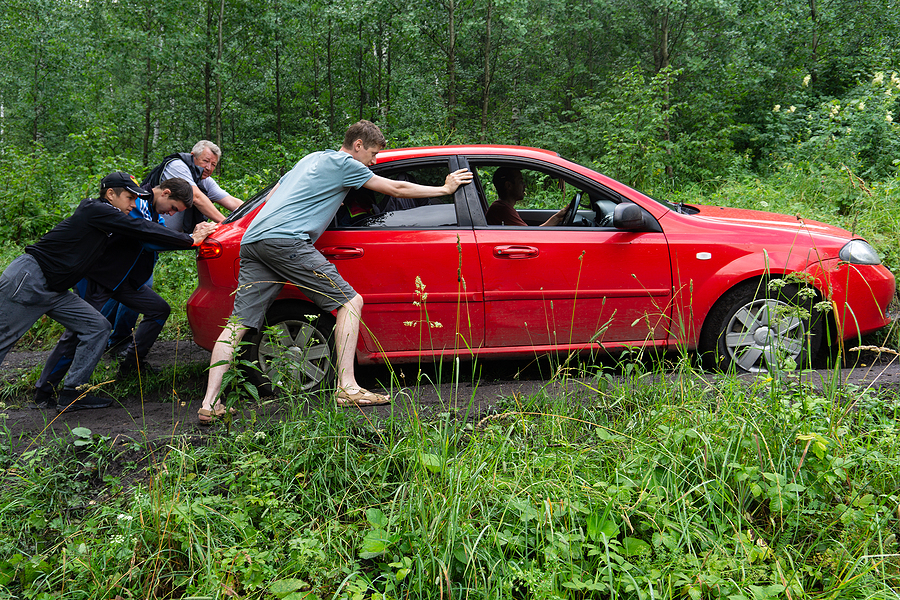
Sometimes gently rocking your car back and forth can help it gain enough momentum to break free. Shift between drive and reverse while applying light pressure to the accelerator. This technique works best on level ground with minimal obstacles.
When Professional Towing Becomes Necessary
Recognize the Warning Signs
Certain situations require professional towing and recovery services immediately. If your vehicle is severely damaged, leaking fluids, or positioned dangerously close to traffic, don’t attempt self-recovery. Similarly, if you’re stuck in deep snow, mud, or sand, or if your car is high-centered on an obstacle, professional equipment is likely necessary.
Don’t Risk Further Damage
Excessive tire spinning, aggressive rocking, or using inappropriate recovery methods can cause expensive damage to your transmission, differential, or other critical components. When basic techniques fail after a few attempts, calling a professional tow truck service protects your vehicle and your safety.
Consider Weather and Time Factors
Severe weather conditions, approaching darkness, or being stranded in an isolated area all increase the urgency of calling for professional help. Your safety is worth more than the cost of towing services, especially when environmental factors make self-recovery dangerous.
Preparing for Professional Towing Services
Contact a Reputable Towing Company
When you need professional assistance, choose a licensed and insured towing company with experience in road emergency situations. Zore’s Towing in Central Indiana, for example, specializes in emergency roadside assistance and towing and recovery services for vehicles in challenging situations.
Document the Scene
While waiting for the tow truck, take photos of your vehicle’s position, any visible damage, and the surrounding area. This documentation proves valuable for insurance claims and helps the towing operator understand the situation before arrival.
Gather Important Information
Have your vehicle registration, insurance information, and identification ready. The towing operator will need these documents, and having them organized saves time and reduces stress during an already challenging situation.
Stay Safe While Waiting
If possible, wait inside your vehicle with the doors locked and hazard lights activated. If you must exit the vehicle, stay away from traffic and wear bright or reflective clothing if available. Keep your emergency kit accessible, including items like a flashlight, blanket, and first aid supplies.
Request Immediate Towing Help in Indianapolis ✅
Understanding Insurance and Financial Considerations
Review Your Coverage Options
Many auto insurance policies include roadside assistance coverage that reimburses towing costs up to certain limits. Contact your insurance provider promptly to understand your coverage and begin the claims process. Even if you don’t have specific roadside assistance, comprehensive coverage may apply to certain situations.
Document Everything for Claims
Keep detailed records of the incident, including photos, receipts from towing services, and any repair estimates. This documentation supports your insurance claim and ensures accurate processing. Note the time, weather conditions, and circumstances that led to your vehicle going off the road.
Understand Your Financial Responsibilities
Even with insurance coverage, you may be responsible for deductibles or costs exceeding your policy limits. Discuss payment options with your towing company upfront to avoid surprises and ensure you can access necessary services.
Post-Recovery Vehicle Inspection
Schedule a Professional Assessment
After your vehicle is recovered, have it thoroughly inspected by a qualified mechanic, even if no damage is visible. Off-road incidents can cause alignment issues, suspension damage, or other problems that aren’t immediately apparent but could lead to safety issues or expensive repairs later.
Check for Hidden Damage
Pay attention to how your car drives after recovery. Does it pull to one side? Are there unusual noises or vibrations? These symptoms could indicate frame damage, suspension problems, or other issues requiring professional attention.
Update Your Emergency Preparedness
Use this experience to improve your emergency preparedness. Consider adding items to your roadside kit that could have helped in your specific situation, such as better traction mats, a more powerful flashlight, or additional warm clothing for winter emergencies.
Preventing Future Off-Road Incidents
Maintain Your Vehicle Properly
Regular maintenance significantly reduces your risk of sliding off the road. Keep your tires properly inflated with adequate tread depth, maintain your braking system, and ensure your battery and fluid levels are appropriate for seasonal conditions. Consider seasonal tire changes to improve traction during winter months.
Practice Defensive Driving
Stay aware of changing road conditions and adjust your driving accordingly. Reduce speed in poor weather, maintain greater following distances, and avoid sudden movements that could cause loss of control. Keep your gas tank at least half full during winter months to prevent fuel line freezing.
Know Your Resources
Familiarize yourself with local emergency numbers and roadside assistance contacts before you need them. Program these numbers into your phone and keep a written copy in your glove compartment as backup.
Wrapping Up
Getting stuck off the road tests your preparedness and decision-making skills, but following these guidelines helps ensure your safety and minimizes potential damage. Remember that professional towing services exist to handle situations beyond your ability to resolve safely—there’s no shame in calling for help when you need it.
The investment in proper emergency equipment and professional towing services when necessary far outweighs the potential costs of injury, vehicle damage, or prolonged exposure to dangerous conditions. By staying calm, prioritizing safety, and knowing when to seek professional assistance, you can navigate these challenging situations successfully.
If you find yourself needing immediate towing and recovery assistance in Central Indiana, we are here to help. Contact Zore’s Towing for professional, reliable service that prioritizes your safety and gets you back on the road quickly.
Book Emergency Towing Service Now
Related Post: Stuck on the Shoulder? Here’s What to Do in a Roadside Emergency