
It happens in the blink of an eye. One minute you’re navigating I-465 or a back road in Fishers during a snowstorm, and the next, your wheels lose traction. The slide is silent but terrifying, and before you can correct the steering, your vehicle settles into a snowy ditch. The engine is still running, the heater is blasting, but your wheels are spinning uselessly against slick mud and ice.
Recent heavy snowfalls in Central Indiana have made this scenario all too common. Panic is a natural first reaction, but it’s the enemy of safety. Knowing exactly how to assess your situation, when to attempt a DIY rescue, and when to call for professional tow truck help can make the difference between a minor inconvenience and a dangerous roadside emergency.
This guide provides actionable steps for Indianapolis drivers to safely navigate getting a vehicle unstuck. Whether you’re dealing with a shallow slide-off or a deep embankment, you will learn the precise techniques to regain traction and when to prioritize your safety by calling a tow truck.
TL;DR: Quick steps & tips for getting your car unstuck from a snowy ditch in Indianapolis after recent heavy snowfall. Know when to DIY and when to call for emergency towing service.
Key Takeaways:
- Assess the situation carefully before attempting to move your car.
- Use proper techniques to avoid causing further damage.
- Know when to call a professional towing service for safety and efficiency.
Table of Contents:
- Assessing the Situation: Is It Safe to Move Your Car?
- DIY Steps: How to Get Your Car Unstuck
- When to Call for Help: Emergency Towing Service
- Preventing Future Incidents
- FAQ
- Quick Recap
- Conclusion
- Request Emergency Towing Now
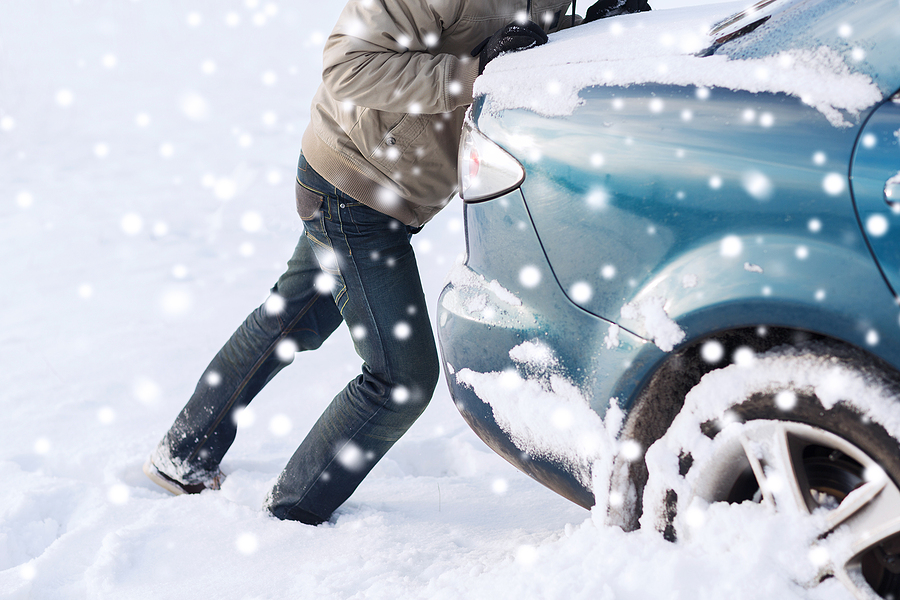
Assessing the Situation: Is It Safe to Move Your Car?
Before you even unbuckle your seatbelt, take a moment to breathe and assess. Your safety—and the safety of your passengers—is the absolute priority. Rushing out of the vehicle on a busy highway can be more dangerous than the ditch itself.
Check for Immediate Hazards
Look around. Are you on a busy thoroughfare like I-65 where other cars might lose control in the same spot? If visibility is low and traffic is moving fast, staying inside the vehicle with your seatbelt on and hazard lights flashing is often the safest choice.
Critical Safety Warning: Ensure your exhaust pipe is not blocked by snow or mud. The CDC warns that a blocked tailpipe can cause deadly carbon monoxide gas to build up inside the vehicle’s cabin in minutes. If you are stuck in deep snow, clear the area around the exhaust pipe immediately if it is safe to exit the vehicle.
Stability Check
How stable is the vehicle? If the ditch is steep, shifting your weight or rocking the car could cause it to tip or slide further down. If the angle feels precarious, do not attempt to move the vehicle yourself.
Physical Capability
Be honest about your physical limits. Digging a car out of heavy, wet snow is strenuous work. In cold weather, heart rates increase, and overexertion can lead to medical emergencies. If you aren’t dressed for sub-freezing temperatures or aren’t physically up for the task, wait for help.
DIY Steps: How to Get Your Car Unstuck
If you’ve determined it’s safe to proceed, you can try these proven techniques to free your vehicle. The goal is to create traction, not just spin your wheels.
1. Clear the Area
Use a shovel (or an ice scraper in a pinch) to clear snow from around all four tires. You need to reduce the resistance against the wheels. Dig out a path in the direction you intend to move—usually straight back the way you came is easiest. Clear any snow touching the underside of the car’s frame, as this can leave your wheels “high-centered” and spinning in the air.
2. Improve Traction
Your tires need something to grip. Ice and loose snow offer zero friction.
- Sand, Salt, or Kitty Litter: These are excellent for adding grit. Sprinkle a generous amount in front of and behind the drive tires (front tires for FWD, rear for RWD).
- Floor Mats: In an emergency, take the floor mats out of your car and wedge them under the drive tires. Note: This can ruin the mats, and they may shoot out forcibly if the tires spin too fast, so ensure no one is standing behind the vehicle.
3. The Rocking Technique
This requires patience and a gentle touch.
- Straighten your wheels.
- Switch your vehicle into the lowest gear (or “Low” for automatics).
- Gently accelerate forward just until the wheels slip, then immediately release the gas and let the car roll back.
- As it rolls back, shift to reverse and gently accelerate again.
- Repeat this rhythm—forward, back, forward, back—to build momentum.
Warning: Do not floor the gas. Excessive wheel spin heats up tires and can damage your transmission. If you haven’t moved after a few minutes of rocking, stop to prevent mechanical failure.
4. Tire Deflation (Last Resort)
Letting a small amount of air out of your tires can increase their surface area and improve grip. However, you must have a way to re-inflate them immediately once you are back on the road, as driving on under-inflated tires is dangerous.
When to Call for Help: Emergency Towing Service
Sometimes, no amount of kitty litter or rocking will work. Recognizing when you are beat is a smart safety move. According to the National Highway Traffic Safety Administration (NHTSA), winter weather causes thousands of injuries annually; don’t become a statistic by taking unnecessary risks.
Signs You Need a Tow Truck
- Deep Snow or Mud: If the snow is up to the chassis or the ground is soft mud, you likely need a winch to pull you out.
- Mechanical Issues: If you hear strange noises, smell burning rubber or transmission fluid, or see warning lights on your dashboard, stop immediately.
- Hazardous Location: If you are stuck on a blind curve or partially blocking a lane, call 911 or emergency towing immediately.
- Unsuccessful DIY: If you’ve been trying for 15 minutes without success, you risk damaging your vehicle or suffering from hypothermia.
When you call for tow truck service, be ready to provide your exact location (use GPS on your phone), the make and model of your vehicle, and a description of the ditch (depth, angle, distance from the road).
Preventing Future Emergency Roadside Incidents
Winter in Indiana is predictable in its unpredictability. Preparing your vehicle now can save you a headache later.
- Winter Tires: All-season tires start to lose grip when temperatures drop below 45°F. Winter tires have specialized rubber compounds and tread patterns designed for snow and ice.
- Drive for Conditions: Slow down. The posted speed limit is for ideal conditions, not a blizzard. Increase your following distance to 5-6 seconds.
- Pack a Winter Kit: Don’t leave home without essential safety gear.
Frequently Asked Questions
What kind of equipment should I keep in my winter emergency kit?
A well-stocked kit should include a collapsible shovel, ice scraper, flashlight with extra batteries, jumper cables, warm blankets, gloves, hat, non-perishable snacks, water, and a bag of abrasive material like sand or non-clumping kitty litter.
How can I improve my car’s traction in snowy conditions?
Aside from installing winter tires, you can add weight to your vehicle. If you drive a rear-wheel-drive truck or car, placing bags of sand or salt in the trunk or truck bed over the rear axle can help improve stability and grip.
What are the risks of trying to get my car unstuck myself?
The biggest risks are injury from slips and falls, hypothermia, carbon monoxide poisoning (if the tailpipe is blocked), and physical injury from pushing a heavy vehicle. Mechanically, you risk overheating your transmission or damaging your tires through excessive spinning.
Quick Recap:
- Assess: Ensure you aren’t in immediate danger from traffic and that your exhaust pipe is clear.
- Prepare: Dig out the tires and use traction aids like sand or floor mats.
- Execute: Use the “rocking” method gently; do not floor the gas pedal.
- Call: If you are deep in a ditch, mechanically compromised, or unsafe, call for professional towing.
- Prevent: Equip your car with winter tires and an emergency kit.
Stay Safe on Indiana Roads
Getting stuck is stressful, but it doesn’t have to be a disaster. By staying calm and following these steps, you can often get back on the road safely. However, never prioritize your vehicle over your physical well-being. If the situation feels unsafe or the car won’t budge, the smartest move is to wait for the professionals.
Need emergency towing service in Central Indiana? Contact us now for immediate assistance!
Related Post: When Your Car Slides Off the Road and Gets Stuck: A Complete Recovery Guide