
Your tires are the only part of your vehicle that actually touches the road—which makes their condition a serious safety matter. Yet tire pressure is one of the most overlooked aspects of car maintenance. In fact, about 25% of vehicles on the road have at least one significantly underinflated tire, and only 19% of drivers check their tire pressure correctly.
Keeping your tires properly inflated does more than prevent a flat. It improves your safety, saves you money at the pump, and helps your tires last longer. The good news? Checking tire pressure takes just a few minutes a month, and you don’t need any special training to do it.
This guide walks you through everything you need to know—why tire pressure matters, how to check it step by step, the right PSI for your vehicle, and the common mistakes to avoid.
Why Tire Pressure Is So Important
Proper tire pressure affects nearly every aspect of how your vehicle performs. When your tires are inflated correctly, you get better handling, a smoother ride, and quicker steering response. When they’re not, you put yourself at risk.
The Safety Factor
Underinflated and overinflated tires both compromise your safety. Low pressure creates excess heat and puts more of the tire’s surface in contact with the road, raising the risk of tire failure. Overinflated tires, on the other hand, reduce traction and are more prone to skidding and hydroplaning. According to the National Highway Traffic Safety Administration (NHTSA), 50% of tire-related crashes involved a single vehicle—a sobering reminder of what neglected tires can lead to.
Fuel Economy and Tire Wear
There’s a financial cost to poor tire pressure, too. Each 1 PSI drop in average tire pressure reduces fuel economy by 0.2%. Underinflated tires create more rolling resistance, which forces your engine to work harder and burn more gas. Incorrect pressure also causes uneven, premature treadwear, meaning you’ll replace your tires sooner than you should. Correct inflation protects both your wallet and your safety.
How to Check Your Tire Pressure Step by Step
Checking tire pressure is a straightforward task once you have the right tools and know what you’re aiming for.
What You’ll Need
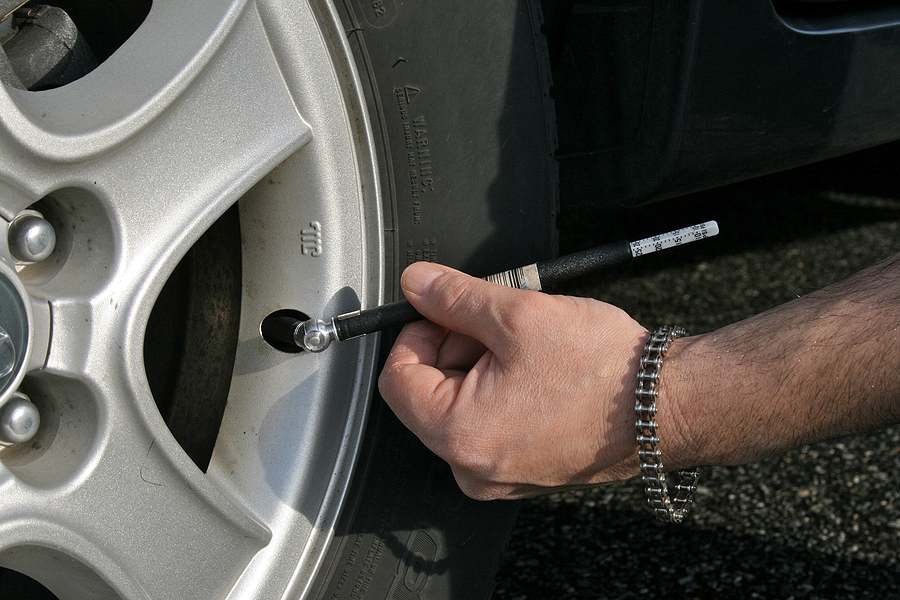
- A tire pressure gauge. You can choose from digital gauges (easy-to-read LCD screens, but they need batteries), analog dial gauges (durable and battery-free), or pencil-style stick gauges (compact but slightly less accurate). A quality gauge costs just $10 to $20.
- An air compressor. Most gas stations offer one for $0.50 to $1.00, and portable models are widely available.
- Pen and paper to record your readings.
The Step-by-Step Process
- Start with cold tires. Check your tires first thing in the morning or after the vehicle has been parked for at least three hours.
- Find your recommended PSI. Look on the sticker inside the driver’s side door jamb or in your owner’s manual.
- Write down the PSI for each tire. Front and rear tires may require different pressures, so note them separately.
- Remove the valve cap from the first tire and set it somewhere safe.
- Press the gauge firmly onto the valve stem until the hissing stops and you get a clear reading.
- Compare the reading to your recommended PSI.
- Add air if the reading is low, checking frequently as you fill. Release air if it’s too high by pressing the small pin inside the valve stem in short bursts.
- Repeat for all four tires and your spare.
- Reinstall the valve caps securely to keep out dirt and debris.
What PSI Should Your Tires Be?
PSI stands for “pounds per square inch,” the unit used to measure tire pressure. For most passenger vehicles, the recommended range falls between 30 and 35 PSI—but always confirm the exact figure for your specific vehicle.
Where to Find Your Recommended PSI
Your recommended pressure is printed on a sticker inside the driver’s side door jamb, and it’s also listed in your owner’s manual. Some vehicles display it on the fuel filler door as well.
One important distinction: the number molded into your tire’s sidewall is not your target pressure. That figure represents the tire’s maximum structural limit, not the pressure your vehicle is designed to run on. Always go with the number on the door sticker.
Cold vs. Hot Tire Pressure
Vehicle manufacturers specify PSI based on cold tires. Tires are considered “cold” when the vehicle has been parked for three hours or more, or driven less than a mile at moderate speed. Driving heats up your tires and can raise the pressure by several PSI, which throws off your reading. If you must check pressure when tires are warm, set them to about 4 PSI above the recommended cold pressure, then recheck once they’ve cooled.
Common Tire Pressure Mistakes to Avoid
Even careful drivers slip up. Here are the errors to watch for:
- Checking warm tires. Reading pressure right after driving gives you an inflated—literally—number. Always measure cold.
- Over- or underinflating. Both extremes hurt performance and safety. Stick to your manufacturer’s recommendation, not the sidewall maximum.
- Ignoring manufacturer recommendations. Guessing at the right PSI can leave you dangerously off target.
- Relying only on your TPMS. Your Tire Pressure Monitoring System is a helpful backup, not a replacement for manual checks. It typically won’t warn you until pressure has already dropped 25% below the recommended level.
When to Check Your Tire Pressure
Make tire pressure checks a regular habit rather than an afterthought.
- Once a month. Tires lose 1 to 2 PSI naturally each month through air seepage, so monthly checks keep you on track.
- With seasonal temperature changes. Tire pressure shifts about 1 PSI for every 10°F change in temperature. Pressure drops in cold weather and rises in heat.
- Before long trips. A quick check before hitting the highway can prevent a roadside emergency.
- After extreme conditions. If you’ve hit a curb, run over debris, or driven through severe weather, check your tires even if they look fine.
Frequently Asked Questions
How often should I check my tire pressure?
At least once a month, and always before long trips. Tires lose 1 to 2 PSI each month naturally, and temperature swings can change your pressure further.
What’s the difference between tire PSI and bar?
PSI (pounds per square inch) and bar are both units for measuring pressure. Bar is used mainly outside the U.S.; 1 bar equals roughly 14.5 PSI. Most vehicles in the U.S. list pressure in PSI.
Can I rely on my tire pressure monitoring system?
Not entirely. NHTSA data shows only 57% of vehicles with TPMS actually have properly inflated tires. The system won’t alert you until pressure drops 25% below the recommended level, so manual checks are still essential.
What happens if my tire pressure is too low or too high?
Low pressure increases rolling resistance, wastes fuel, and raises the risk of tire failure. High pressure reduces traction and makes skidding and hydroplaning more likely. Both cause uneven treadwear and shorten your tires’ lifespan.
Keep Your Tires—and Yourself—Road Ready
Checking your tire pressure is one of the simplest, most affordable ways to protect your safety and your vehicle. Grab a quality gauge, find your recommended PSI, and make monthly checks part of your routine. Your tires, your fuel budget, and your peace of mind will all benefit.
Even with the best maintenance, flats still happen. If you find yourself stranded in Central Indiana, Zore’s Towing has your back. We offer 24/7 roadside assistance for flat tires, lockouts, tows, and more. Save our number and drive with confidence knowing help is just a call away.
Related Posts:
Tire Tread Wear: What Every Driver Needs to Know
The Vital Link Between Tire Inflation and Safe Driving
Stuck on the Shoulder? Your Guide to Flat Tire Roadside Assistance