Suggested Cars and Trucks with High Towing Capacities

If you need to tow a heavy load, an extra-large trailer, or something equally as big or hefty, it is vital that you use the appropriate vehicle for the job. Tow capacity can range anywhere from a few thousand pounds to six tons or more. It is important to know what your vehicle can handle in order to determine whether or not you need to find a different car or truck for a substantial tow. Cars, trucks, and SUV’s are all options, but for larger jobs, SUV’s and trucks are your best bet. They typically have the higher towing capacities and capabilities.

Continue reading to learn what the towing limits are for some popular make and model vehicles on the market today.
Large Vehicle Towing and Roadside Assistance in Indiana 317-247-8484

Gross Vehicle Weight and Towing Limits

To calculate your vehicle’s tow limit, you must first determine its gross vehicle weight rating, or GVW. This number can often times be found on a label inside the driver’s door or in the owner’s manual. Take the GVW and add it to the total weight of the trailer or load you intend to tow. This will give you the GCW, or gross combination weight of your truck. This number should not exceed the GCWR, or gross combination weight rating. This is the maximum amount of weight your vehicle can haul without jeopardizing the integrity of the transmission, brakes, suspension, engine, tires, and more.

High Towing Capacity Vehicles to Consider

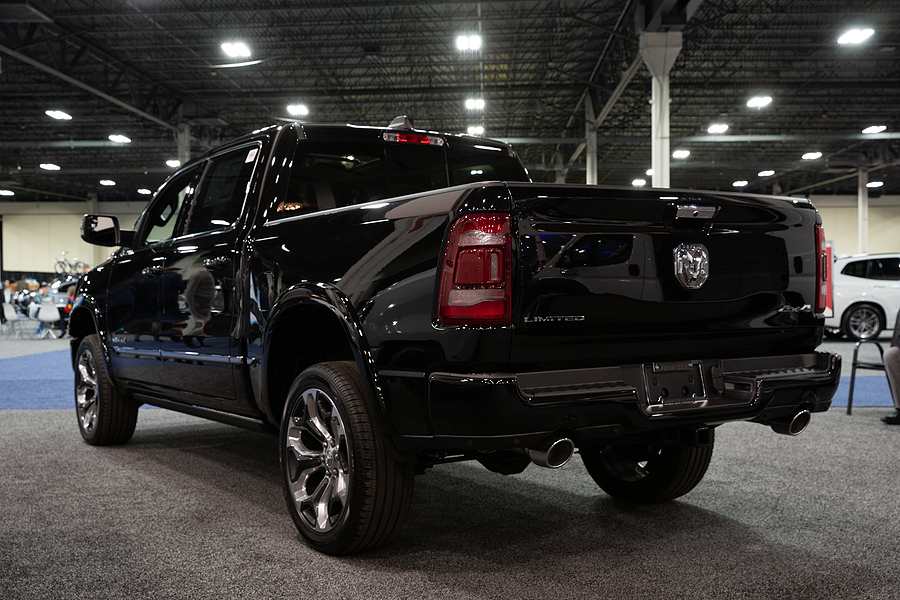
If you are in the market for a new truck or SUV with a high hauling capacity, take a look at the following list for current market options for conventional ball and hitch towing. Keep in mind that these particular make and model vehicles come in a variety of cab styles, sizes, engines, and additional features and upgrades.

Ford Trucks:

F-450 DRW 4×4 6.7L Power Stroke Turbo Diesel V8 = Up to 19,000 lbs.
F-350 DRW 4×4 6.7L Power Stroke Turbo Diesel V8 = Up to 19,000 lbs.
F-250 SRW 4×4 6.7L Power Stroke Turbo Diesel V8 = Up to 14,000 lbs.

Dodge Trucks:

Ram 3500 = Up to 11,900 lbs.
Ram 2500 = Up to 11,800 lbs.
Ram 1500 = Up to 9,000 lbs.

GMC Trucks:

Sierra 3500HD = Up to 13,000 lbs.
Sierra 2500HD = Up to 13,000 lbs.
Sierra 1500HD = Up to 8,000 lbs.

Chevrolet Trucks:

Silverado 3500HD = Up to 13,000 lbs.
Silverado 2500HD = Up to 13,000 lbs.
Silverado 1500HD = Up to 8,000 lbs.

⚠ Never exceed your car or truck’s towing capacity! Consult a professional Indianapolis Indiana wrecker company for accurate information and advice on gross vehicle weights and guidelines.

Central Indiana Towing and Recovery Service You Can Truly Count On

Call Zore’s Towing at 317-247-8484 for safe and affordable Indianapolis tow truck services you can trust. Our licensed and insured tow truck operators provide punctual and prompt tow truck services, 24 hours a day and 7 days a week! We also provide numerous community services, roadside assistance services, wrecker and recovery services, and much more. Call 317-247-8484 to request a free estimate, anytime!

Indianapolis Towing & Recovery 317-247-8484
Indianapolis Roadside Assistance & Towing 317-247-8484

How to Save Money on Gasoline for Your Car

Even though gasoline prices are the lowest they’ve been for years, drivers are still looking for ways to save money on car fuel. Saving money on gasoline is not only great for your wallet, it is beneficial for the environment. It is in every driver’s best interest to do what they can to reduce fuel consumption and save money on fuel costs.

Continue reading to learn some effective methods for doing just that!

24 Hour Roadside Assistance and Fuel Delivery
24 Hour Roadside Assistance and Fuel Delivery 317-247-8484

Do Not Use Premium Gasoline!

Never use premium fuel unless your car specifically requires it. And if your owners’ manual mentions premium fuel, look closer whether it’s “premium recommended” or “premium required”, because there is a difference. If it is a premium-recommended vehicle, you should still just stick to unleaded gas and save yourself money. The only cars that require premium fuel incudes high performance vehicles like 2016 Audi’s and BMW’s, Aston Martins, Alfa Romero’s, and similar luxury foreign cars. Aside from premium-required cars, there is no benefit to using premium grade gasoline, especially in terms of performance and gas mileage. Unleaded gasoline is perfectly safe for your vehicle, and will save you a lot of money on fuel.

Do Not Use the “Top-Off” Method

When filling up the gas tank, many drivers choose to continue filling after the nozzle clicks. Whether to “top it off” or hit an even number, this method of filling up the tank is a wasteful one. The extra fuel will never be used to power the engine, and instead, slosh out and make a mess everywhere. The worst part is that you are paying for fuel you don’t get to use. As soon as the nozzle clicks, your tank is perfectly full. There is no need to top of the tank with additional gasoline.

Double-Check the Gas Cap

After filling up, it is important to double-check the gas cap. Forgetting to replace it is a common mistake, but making sure it’s there is not the only thing to look for. It is also important to make sure the cap is screwed on tight and fully-closed. A loose or missing gas cap will allow fuel to evaporate, wasting your hard-earned, cautiously-spent money.

Park in the Shade

Loose gas caps are not the only thing that can cause your fuel to evaporate. The hot summer sun will do the same! To avoid wasting your fuel, park in shady areas on hot sunny days. If you are not able to park in shade, it is helpful to purchase a windshield cover to reduce the amount of sun exposure inside your car. These are inexpensive and easy to use.
Keep Your Tires Inflated

Deflated tires are a common cause of wasted fuel. When the tires are not properly inflated, your vehicle has to work harder to go, causing the need to use more fuel. Be sure to check your tire pressure once a month to avoid this problem. Never use the maximum pressure recommendations on the side of the tire. The proper tire pressure for your car or truck can be found on the factory sticker on the inside of the door jam on the driver’s side. If it’s not there, check the inside of the glove compartment.

Did You Run Out of Gas in Indianapolis, Indiana?

Call Zore’s Towing at 317-247-8484 for friendly 24 hour roadside assistance, including fuel fill-ups, in Indianapolis, or throughout Central Indiana. We open a family-owned and operated business for 90 years, so you can trust us for prompt and professional service. We are open 24 hours a day, seven days a week, and 365 days a year, so our certified tow truck operators can be there for you anytime, any day! Request free estimates, anytime.

Indianapolis Towing & Recovery 317-247-8484

Recommended Tow Hitch Fittings You’ll Need for Long Distance Hauls

There are several hitch accessories that are recommended for drivers to use when towing a trailer longer distances. Although there are several hitch accessories you don’t necessarily need for shorter hauls, long distance towing is a more serious undertaking, especially when using highways and interstates at high speeds. Continue reading to learn a little about some of the most popular and recommended tow hitch accessories, and who to contact for additional towing advice and information you can trust.

Indiana Long Distance Towing Service
Indiana Long Distance Towing Service 317-247-8484

What You Should Have for Trailer Towing

➾ Ball Mounts

The hitch receiver and ball mounts are entirely separate assemblies. A ball mount should slide into a hitch receiver and be secured with a locking pin. Always be sure to use a ball mount that matches your hitch class. This is the amount of weight your truck can pull, of course. Class I hitch pulls up to 2,000 pounds, Class II hitches pull up to 3,500 pounds, Class III’s pull up to 5,000 pounds, and so forth. You can find class V hitches that can pull more than ten thousand pounds!

➾ Hitch Balls

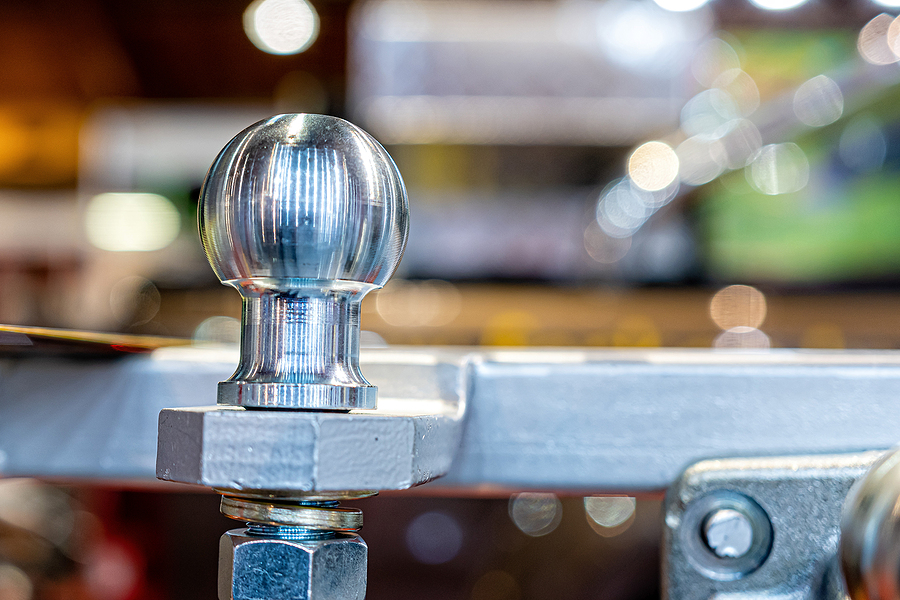
Hitch ball shanks fit through a hole in a ball mount, and secured with nuts and washers. Because these holes in ball mounts come in different sizes, it is important to check the shank diameter of your hitch balls before trying them out or purchasing them.

➾ Couplers

Although couplers are technically part of a trailer, they are an important accessory to mention because a trailer cannot be connected to a vehicle without them. They are attached at the end of the tongue, and must match the size of hitch ball diameter. They must also be able to handle that total weight of the load in haul. This is called the gross trailer weight, or GTW.

➾ Safety Chains

One of the most highly recommended accessories for any tow are safety chains. Just like couplers, safety chains are located at the tongue of the trailer, but on each side. They serve the purpose of keeping a trailer connected to a vehicle, while providing extra security and safety when towing a trailer. In fact, most states require them under law.

➾ Locks, Pins, and Clips

As mentioned before, pins are used to secure ball mounts to hitch receivers. Then a clip is placed over the head of the pin to prevent it from slipping out of place. Hitch locks are popular alternatives to pins and clips, as they do the job of both; but they also protect the ball mounts from thieves.

➾ Tube Covers

Customizable and fun to use, hitch tube covers are another popular and useful accessory for towing a trailer. When tow hitches aren’t being used, they can collect dirt, mud, and grime. This exposure can cause pre-mature corrosion and deterioration of your tow hitch. The solution for this issue is using a hitch cover! They are steel or plastic tube covers that protect your tow hitch from overexposure to natural elements and harsh weather conditions. Simply insert them into the ball mount hole when not in use. They are fun because they come in a variety of colors and patterns that you can match to your truck or your personality!

➾ Hitch-Mounted Cargo Carriers

Hitch-mounted cargo carriers are another accessory that can be useful when not towing a trailer. They are like a mini-flatbed trailer because they offer a flattened platform capable of holding up to 600 pounds of cargo weight. Cargo carriers simply connect to the hitch receiver on one side, providing the platform deck on the other! There are two types of carriers, open-style and enclosed. Talk to your local wrecker service for details and advice on which style to use for your truck or SUV.

➾ Extenders and Adapters

Extenders and adapters are used as accessories to hitch-mounted accessories, like cargo carriers. When a ball mount doesn’t fit the size of a receiver, a tow adapter might be used. And when you need to increase the clearance of a cargo carrier or other hitch-mounted device, an extender might be used for this. Extenders are important for trucks and vehicles that have something hanging over the bumper, like a tire or camper shell.

➾ Weight Distribution Systems

Weight distribution systems are great towing accessories to consider when you need to tow a large amount of weight. This means loads heavier than 3,000 pounds or so. In this case, you would of course need a Class VI or V trailer hitch.  These systems come with shanks, hitch heads, and spring bars.

➾ Trailer Jacks

Trailer jacks do not actually mount to the hitch, but they make the hitching process much safer and much easier. They are mounted to the trailer, on the tongue, in close proximity to the coupler. They allow you to raise and lower the trailer from the hitch ball with a crank.

Indianapolis Roadside Assistance Towing Services You Can Count On

Call Zore’s Towing at 317-247-8484 for 24 hour towing and roadside assistance in Indianapolis and throughout Central Indiana. Our friendly staff is waiting by the phones, ready to help you get back on the road, safe and sound. We operate 24 hours a day, 7 days a week, and 365 days a year, so you can always count on us. Request a free estimate, today.

Indianapolis Towing & Recovery 317-247-8484

What a Driver Must Do to Tow another Car Safely

There are many reasons why you might have to tow another vehicle with your own vehicle. Whether taking a cross-country road trip with your RV and primary vehicle in tow, moving to another state for work, or helping a friend transport their broken-down vehicle to their auto repair shop, the most important factor is safety. There are certain protocols that you, as the driver of the vehicle towing the other vehicle, must take in order to protect both people and cargo on the road.

Continue reading to learn some vital driving safety tips for towing another vehicle with your own.

24 Hour Towing and Roadside Assistance
24 Hour Towing and Roadside Assistance 317-247-8484

Safety Tips for the Driver of the Towing Vehicle

✅ Use Extreme Caution

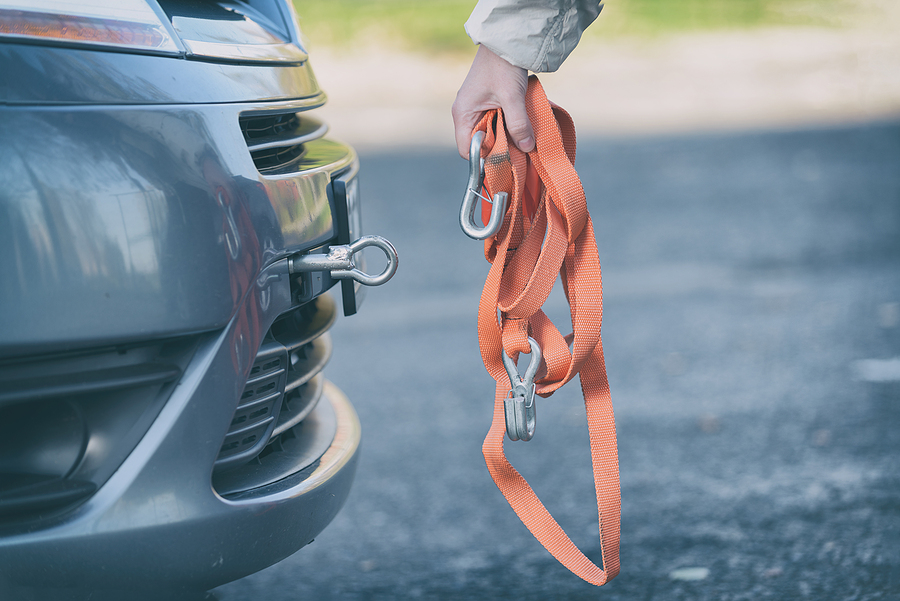
Always drive with superior care and caution. Never exceed 16 miles per hour on the road, and be sure to stay alert of all surroundings, both in front of you, beside you, and behind you. Driving too fast with another vehicle in tow can create too much inertia, or force, that can easily turn into uncontrollable momentum. As a result, your vehicle might have trouble coming to a stop on demand.

✅ Utilize the Clutch Properly

When pulling away for the first time with the other vehicle in tow behind you, it is vital that you operate your clutch properly. Being gentle with the clutch, pull out delicately, and at a very slow pace. If you are not using a vehicle with a manual clutch, just be sure to pull out slowly and carefully. If you pull out abruptly, you can snap the towrope or towing pole that connects your car to the towed one. As a result, the towed vehicle can whip forward and smash into the back of yours, or worse, come off on the road and smash into another person or vehicle.

✅ Be Slow and Gentle When Braking

Never slam on the brakes, or brake suddenly, when towing another vehicle with your own. This can cause the same type of problems with pulling out too fast, as mentioned above, but it can also cause massive damage to both vehicles. Give yourself several hundred feet to brake slowly, before coming to a stop, turning, or yielding. Apply the brakes gradually and gently to avoid sudden braking. Likewise, use your turn signals far ahead of time to warn drivers around you.

If the Driver is Sitting in the Car Being Towed…

In the case that you are utilizing a towing method that allows the driver to sit inside their own car while your car tows it, there are certain precautions they must take as well. They should remain fully alert, watching all braking and turn signaling. This allows them to actively steer and brake in coordination with the other vehicle, as needed. Also, they should keep constant tension in the towrope or towing pole to reduce jerking and similar abrupt movements.

Indianapolis Indiana Towing and Recovery Services You Can Trust

Call Zore’s Towing at 317-247-8484 for 24 hour towing and recovery services, or roadside assistance in Indianapolis and throughout Central Indiana. Our friendly staff is waiting by the phones, ready to help you get back on the road, safe and sound. We operate 24 hours a day, 7 days a week, and 365 days a year, so you can always count on us. Request a free estimate, today.

Indianapolis Towing & Recovery 317-247-8484

6 Maintenance Tips for Your Personal Watercraft Trailer

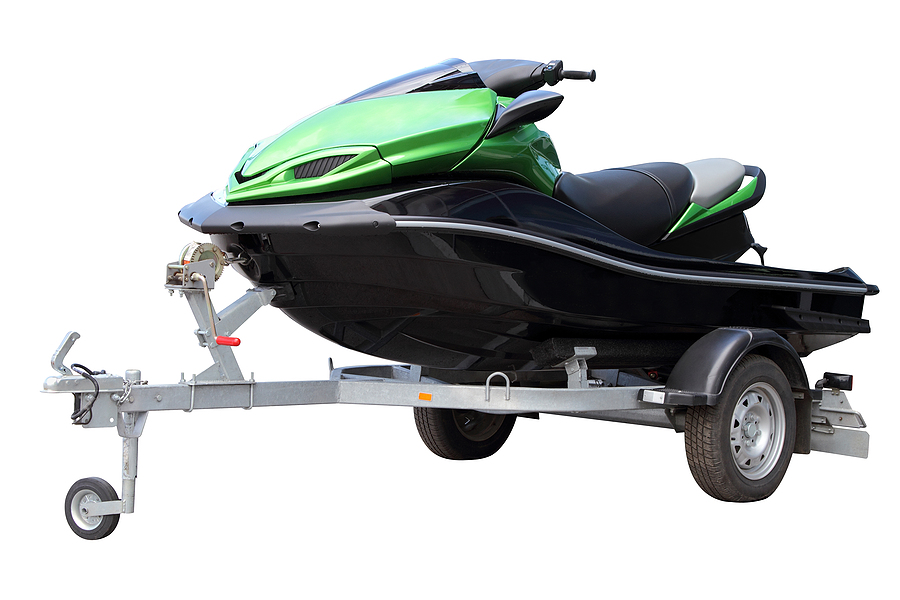
Whether yours is a Wave Runner, Sea-Doo, Jet Ski, or some other type of personal watercraft, you likely have a trailer to get it from point A to point B. As the owner of a personal watercraft, you understand how important it is to take good care of your asset considering it’s an expensive and potentially dangerous piece of equipment. However, many personal watercraft owners tend to overlook the needs of the watercraft’s trailer. Trailers require maintenance too, and without proper routine maintenance, you can expect to run into some mechanical and operational issues down the line. Both of which can lead to serious accidents, injuries, and costly structural damage. Fortunately, all of these scenarios can be avoided with some regular watercraft trailer maintenance.

Continue reading to learn the top six maintenance tips you need to know when it comes to taking care of your personal watercraft trailer.

Indiana Boat Jet Ski Towing
Indiana Boat Jet Ski Towing 317-247-8484

Routine Cleaning

all trailers require some light routine cleaning in order to keep them in superior condition. This simply involves taking a microfiber cloth to the surface areas, eliminating dust and debris that accumulates over a period of a couple of days. For a deeper claim, opt for a degreasing agent or some other cleaner that safe for the type of metal your trailer is made of. This can remove rust and other surface blemishes, thus polishing up the exterior quite nicely. On a less regular basis but still on schedule, it is a good idea to use a mild soap and water solution on your trailer, and rinsed clean with a garden hose.

Lubrication

along with regular cleaning, a watercraft trailer also needs its mechanical and moving parts lubricated periodically. It is recommended to use a spray lubricant product, which is available at any local home improvement store or even at your local department store. Be sure to treat all exposed parts that are moving or mechanical, including hubs, hinges, bolts, springs, and a tongue jacket your trailer has one. If your personal watercraft trailer happens to have grease nipples, you can also treat them with the grease gun.

Wheel Bearings

Be sure to give your wheel bearings an inspection every once in a while. You might need to get them repacked. Talk to the manufacturer to see what your personal watercraft trailer requires in terms of wheel bearing and hub maintenance.

Tires

T will he tires on your trailer make the most contact with the ground, which means they experience a higher level of wear and tear. For this reason, it is important to regularly inspect your personal watercraft trailer tires to ensure they are properly inflated and without any defects. Look for problems like bulging sidewalls, cracked sidewalls, tread wear, and tire blowouts.

Hitch

Your hitch system to your personal watercraft trailer is one of the most important components considering a connects your trailer to your towing vehicle. Regularly inspect your hitch set up to ensure the hitch ball, trailer hitch coupler, safety chains, and wiring systems are all properly connected and operational. If you want us to check to see if your hitch ball is properly level, simply drop a few dollops of water on the very top. Watch how the water droplets fall, and this can give you an indication on whether your hitch ball is tipped up, down, or tilted forward.

Lighting System

Last, inspect your trailer’s lighting system to ensure the brake lights, turn signals, hazard lights, taillights, and parking lights are all connected to your towing vehicle’s lighting system and operational. Before each use, it is important to check the lighting system to ensure all of the lights are probably working. You will get pulled over by law enforcement if your lighting system on your trailer is not synced up with your towing vehicle.

Going a Long Distance? Choose Professional Towing Service for Your Boats and Watercrafts!

Central Indiana Long Distance Boat Towing Services You Can Trust

Call Zore’s Towing at 317-247-8484 for long distance boat towing services in Indianapolis and throughout Central Indiana. Our friendly staff is waiting by the phones, ready to help you get back on the road, safe and sound. We operate 24 hours a day, 7 days a week, and 365 days a year, so you can always count on us. Request a free estimate, today.

Indianapolis Towing & Recovery 317-247-8484

Important Information About Transmission Fluid Leaks

When it comes to your car’s transmission, there is nothing more important than ensuring it maintains proper fluid levels. After all, transmission fluid is one of the seven vital automotive fluids that every vehicle needs to operate safely and efficiently. One of the most common causes of lost transmission fluid is a leak.

Continue reading to learn what you need to know about transmission fluid leaks, including common facts like how to detect them, and what to do if your car has one.

24 Hour Towing and Roadside Assistance 317-247-8484

How to Monitor Transmission Fluid

There are many factors that determine how often you should monitor a vehicle’s transmission fluid levels. The frequency of transmission fluid checks primarily depends on the make and model of the vehicle, however, there could be several other more specific factors that you need to know. For instance, most instructions tell you to leave the car engine on while checking the transmission fluid; but, if you are driving a Honda, the engine needs to be turned off. 

If you drive a Dodge model, you have to put in neutral while applying the emergency brake in order to check your transmission fluid. With all the different guidelines and variables that apply to each make and model vehicle and transmission, it is strongly suggested to always refer to your vehicle’s owners’ manual for the right information. You can also contact a local auto shop for professional advice you can trust.  Many mechanics offer free fluid checks, so be sure to take advantage of this when it is time your vehicle is in the shop!

Transmission Leak Dangers

Minor leaks can easily go unnoticed to an untrained eye. In fact, many drivers on the road have automotive fluid leaks and don’t even realize they are there; but it is never safe to drive with a leak, especially if it’s coming from the transmission. Although minor leaks are not likely to impose an immediate danger on the road, they will lead to more severe damages to other car parts, which can cause serious car accidents and injuries, or cost you thousands of dollars in needed repairs and part replacements. These damages are costly, but can fortunately be avoided by not operating the vehicle until it is repaired.

Transmission Leak Detection

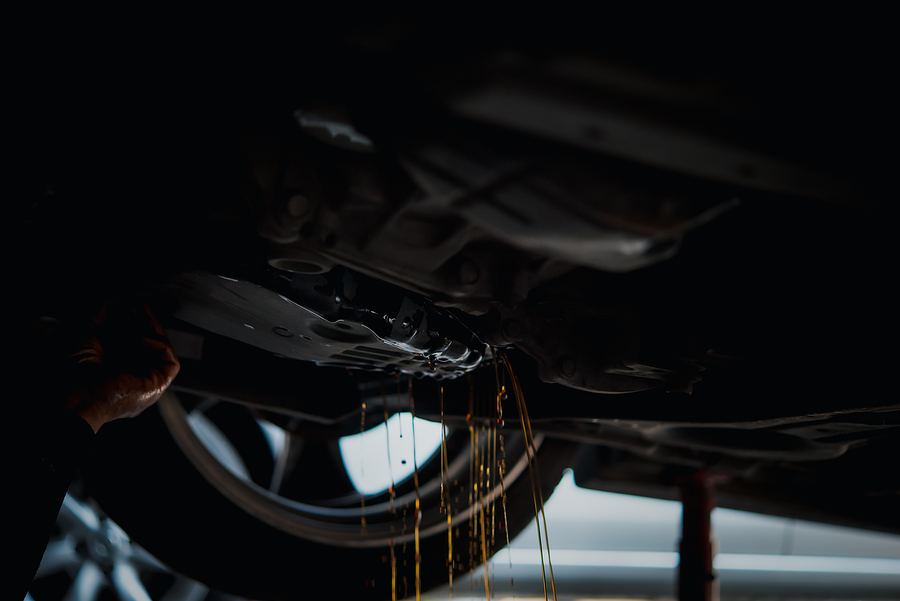
The most common sign of a transmission leak is seeing the actual transmission fluid seeping or puddling beneath a car. Transmission fluid is dark red in color. When clean, it is a light pink or red, but when dirty, it will appear burnt orange or brown. If you detect a leak in your transmission, do not continue driving the vehicle. If you are on the road, pull over and contact a 24 hour roadside assistance company. They may be able to patch up your leak and replace your fluid well-enough to get you home or to the nearest mechanic. Otherwise, they can tow your vehicle for you. If you are at home, and notice the leak on your driveway, you should not drive your car. Instead, contact a tow truck to have your car towed to your auto repair shop of choice.

Where to Get Fast Towing and Roadside Assistance in Indianapolis, Indiana

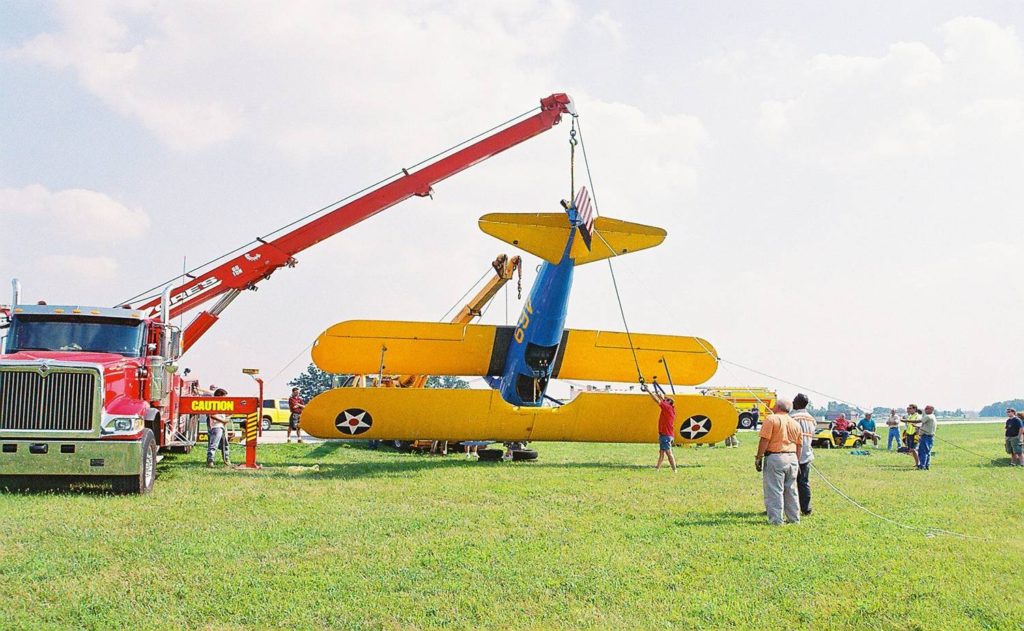
Call Zore’s Towing at 317-247-8484 for 24 hour roadside assistance and towing in Indianapolis and throughout Central Indiana. We are fully-equipped with the right fleets to assist cars, trucks, motorcycles, boats, construction equipment, trailers, vans, semi-trucks, airplanes, and much more. Since 1927, we have a provided a wide range of towing and roadside assistance services, and for the past 90 years, we have earned a reputation for trusted service at a fair price! We operate 24 hours a day, 7 days a week, and 365 days a year, so you can always count on us. Request a free estimate, today.
Indianapolis Towing & Recovery 317-247-8484

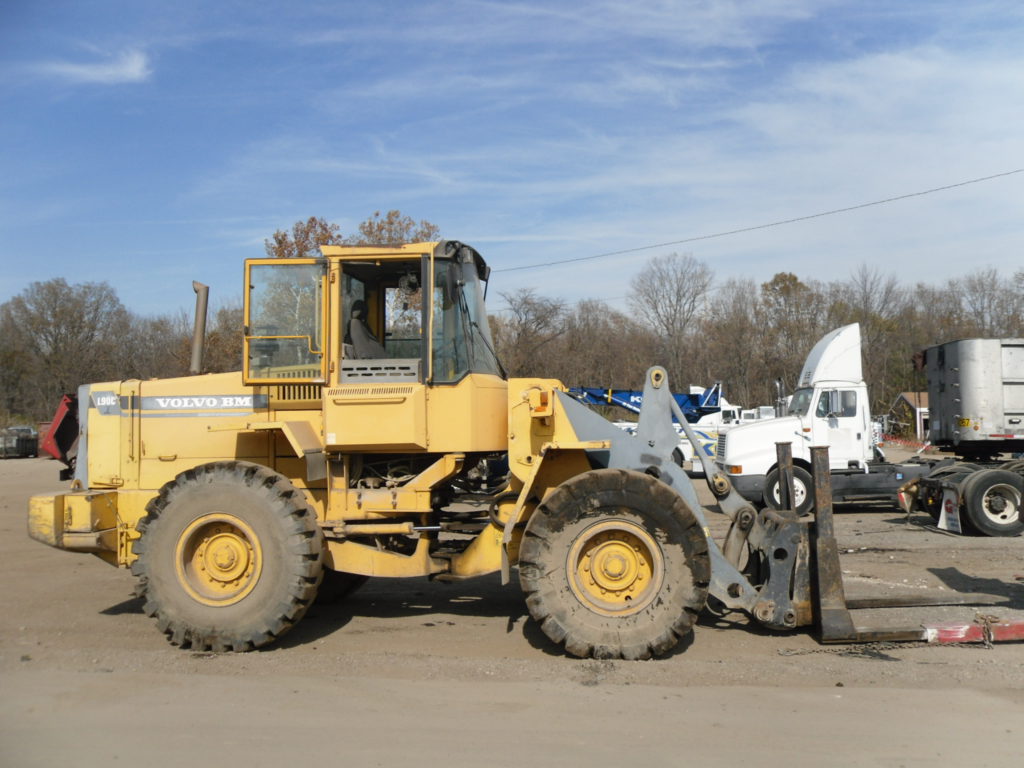
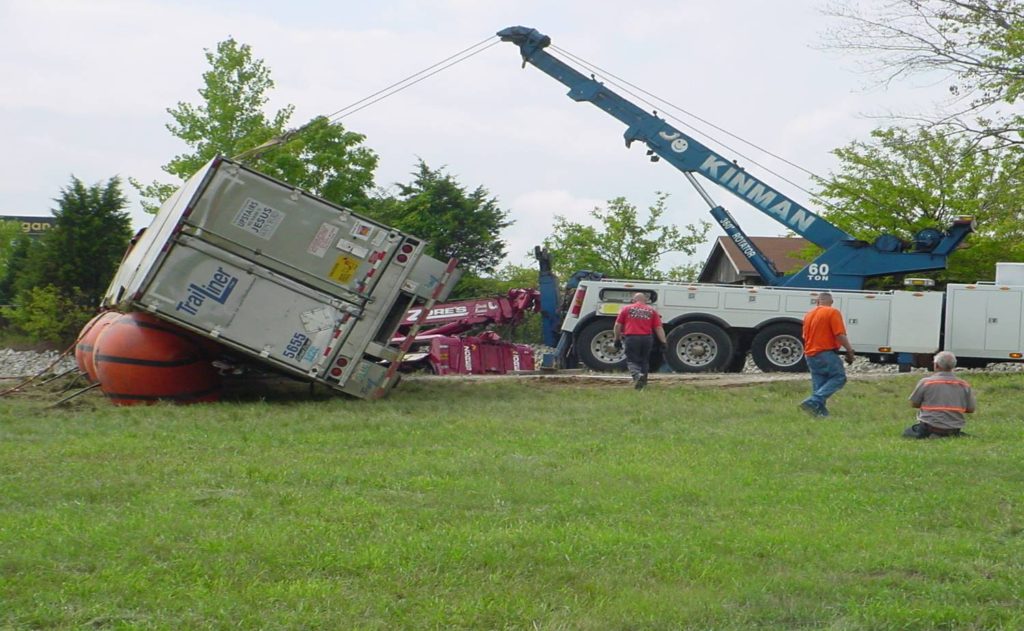
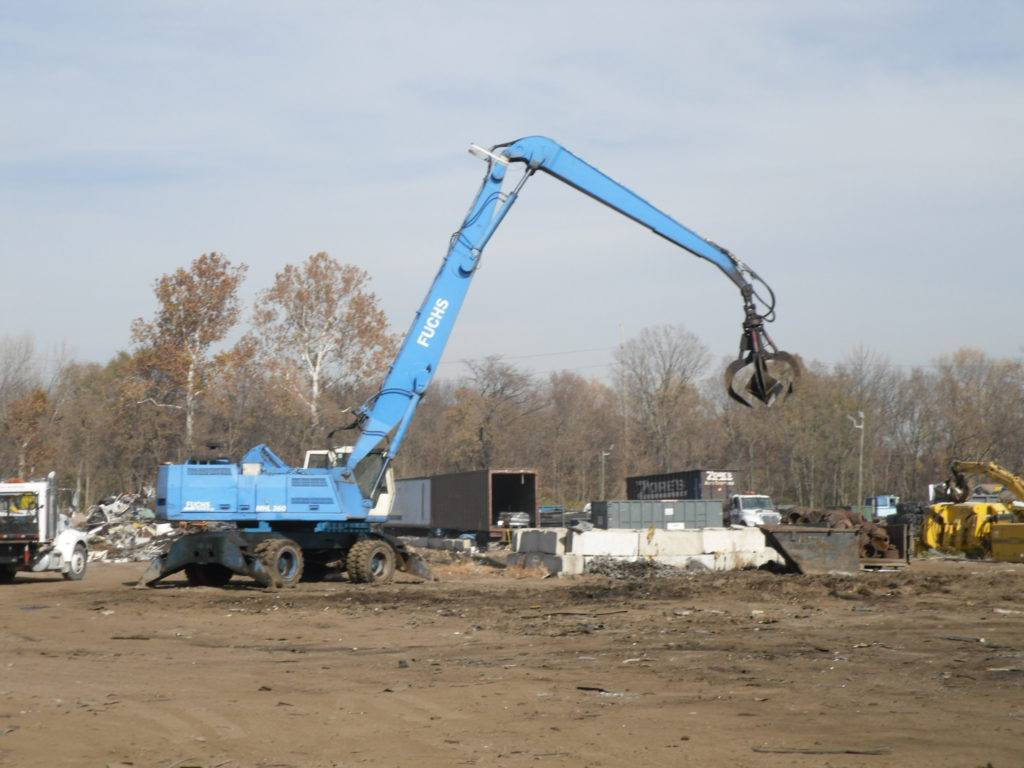
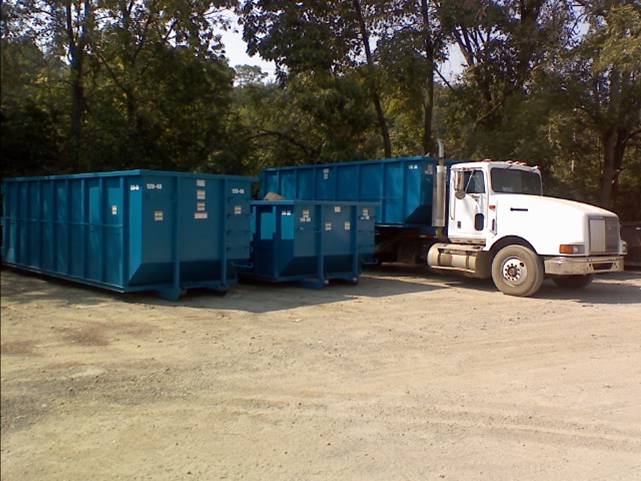
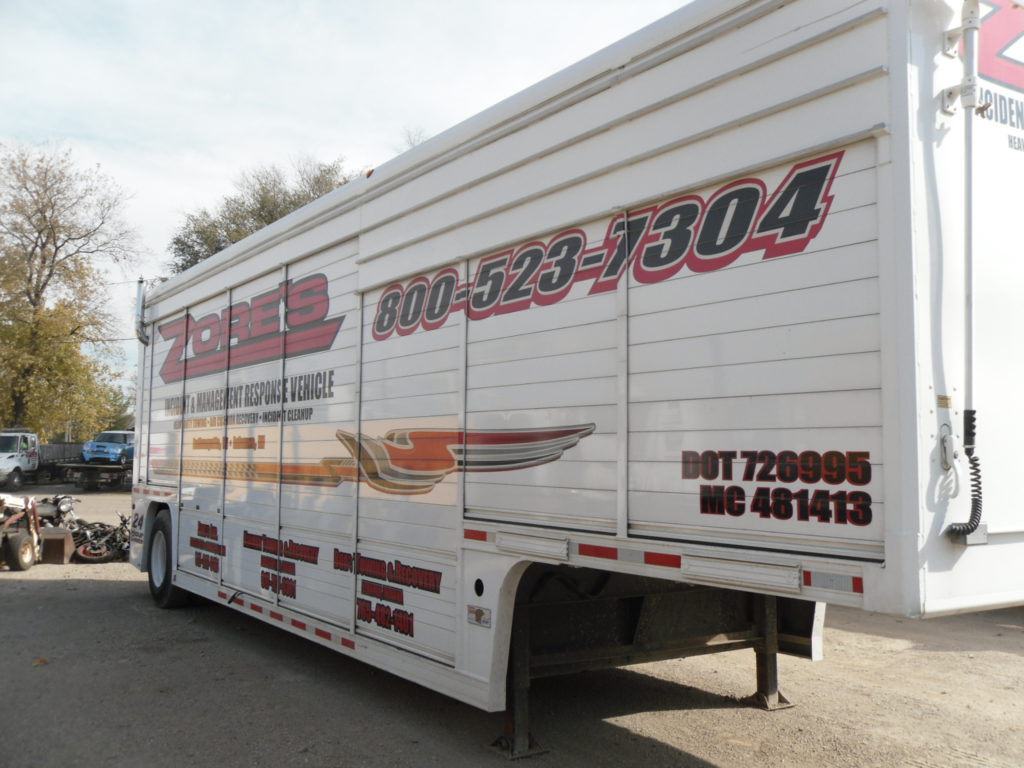
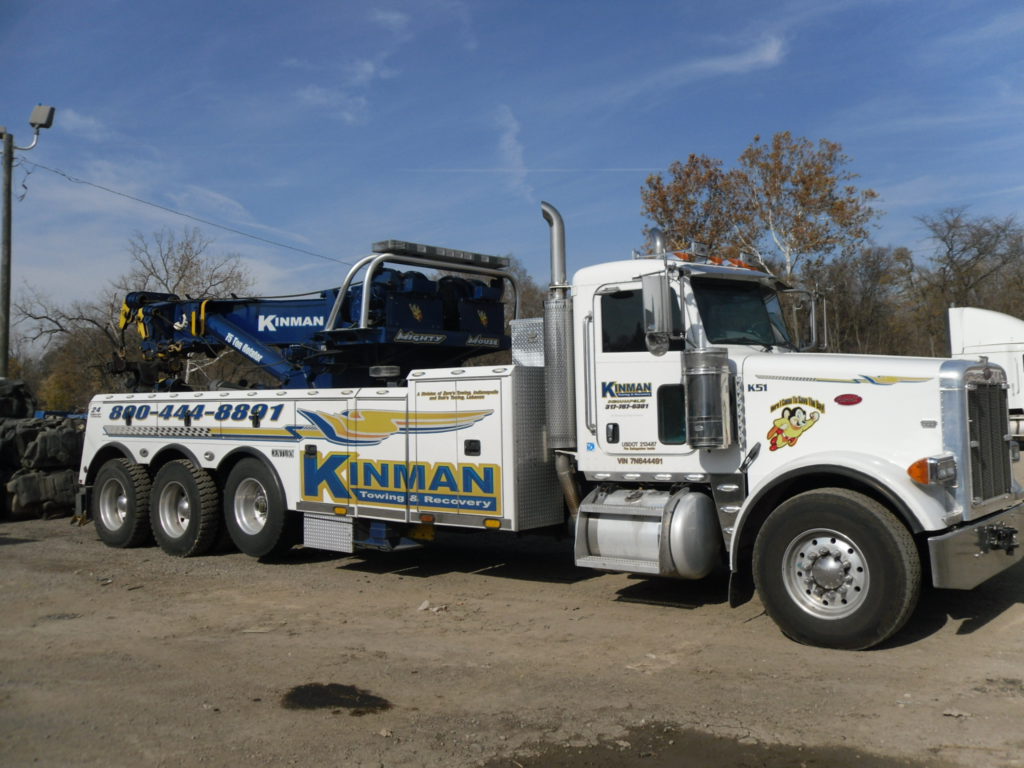
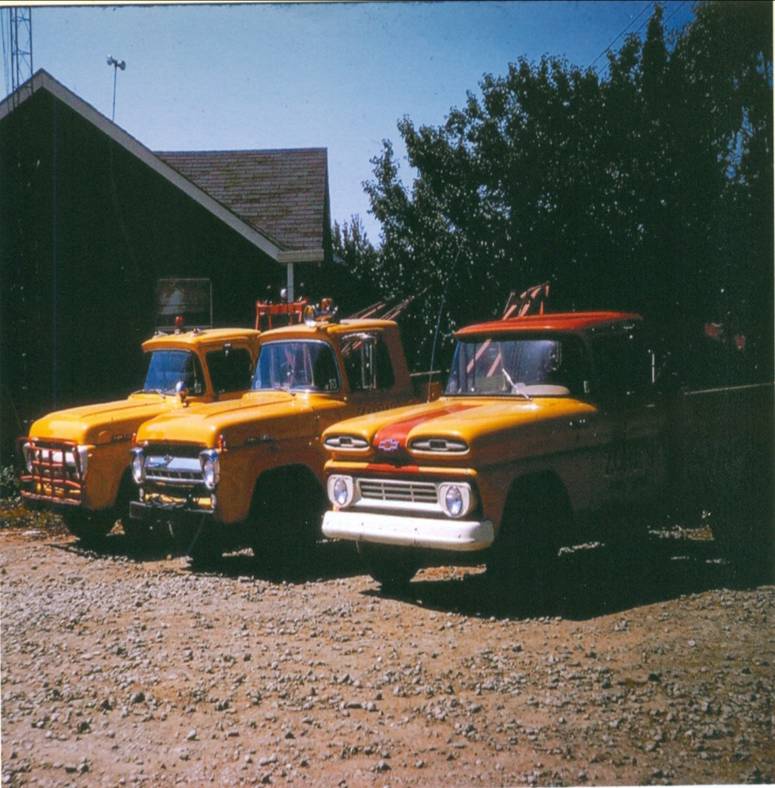
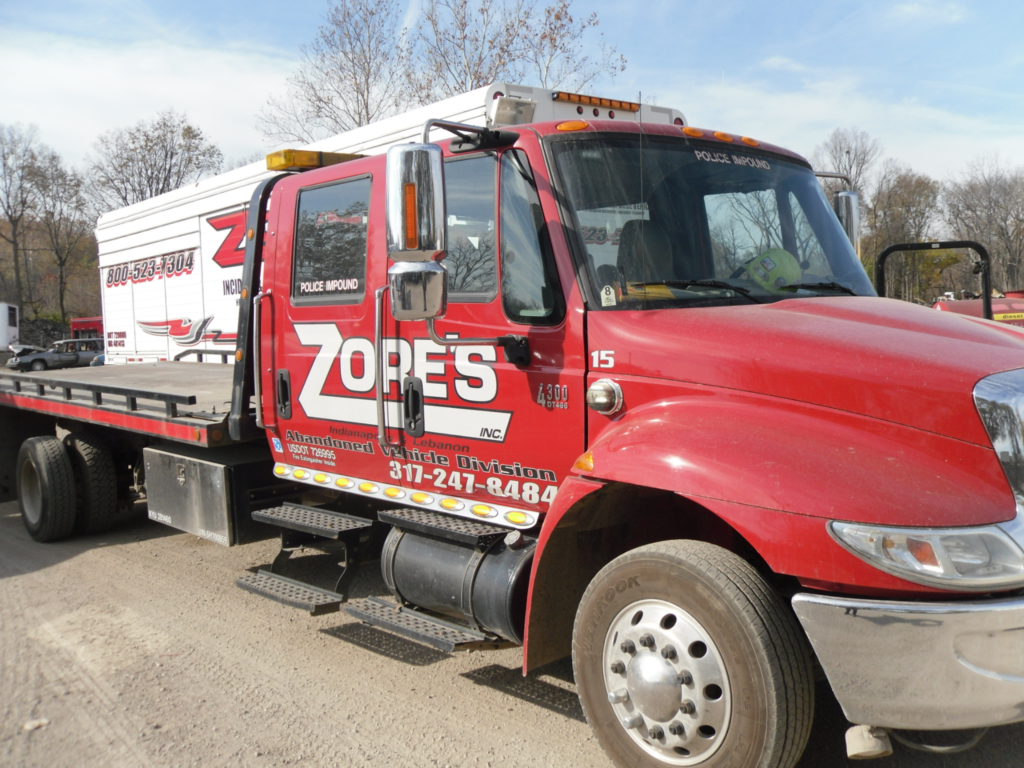
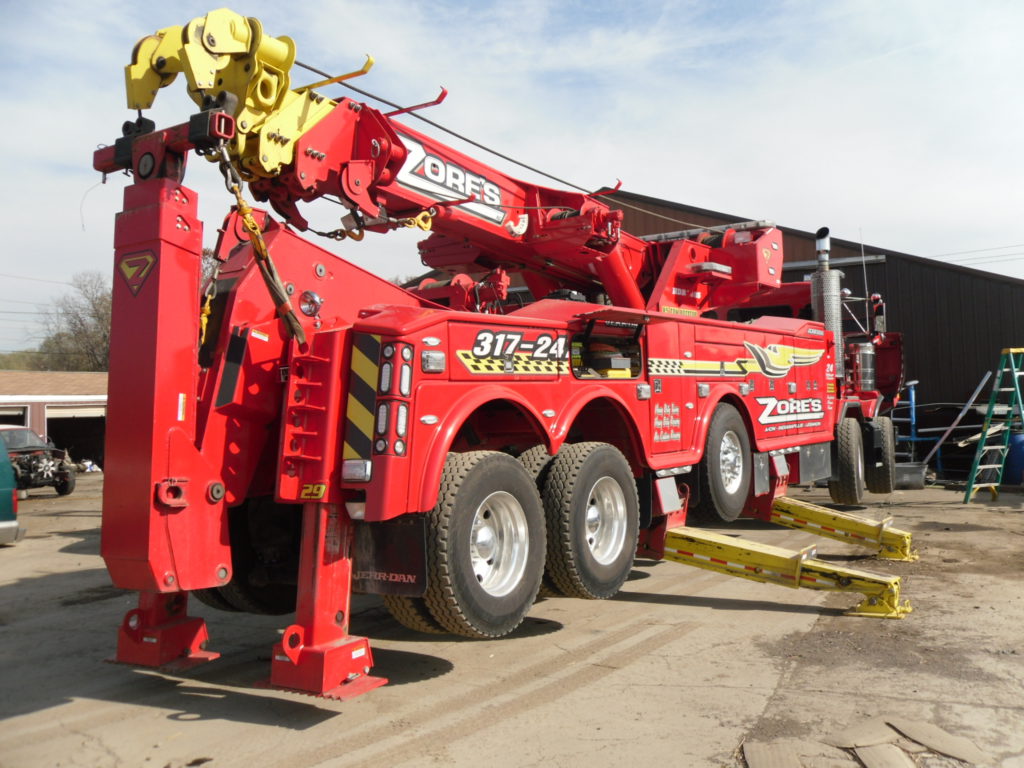
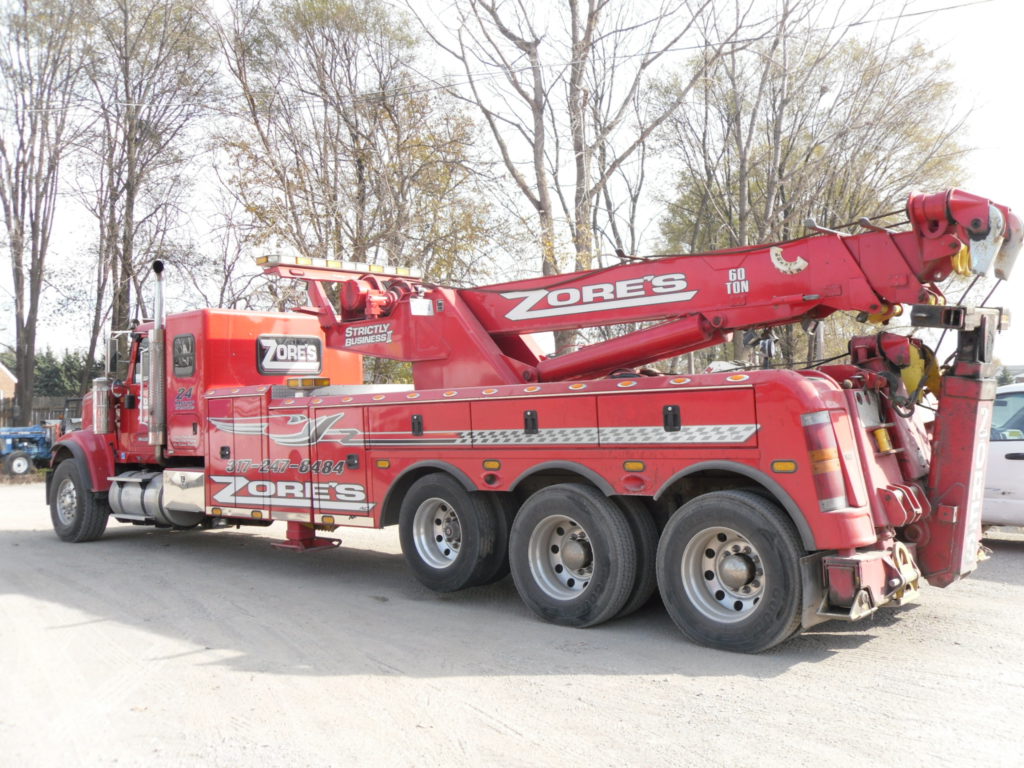
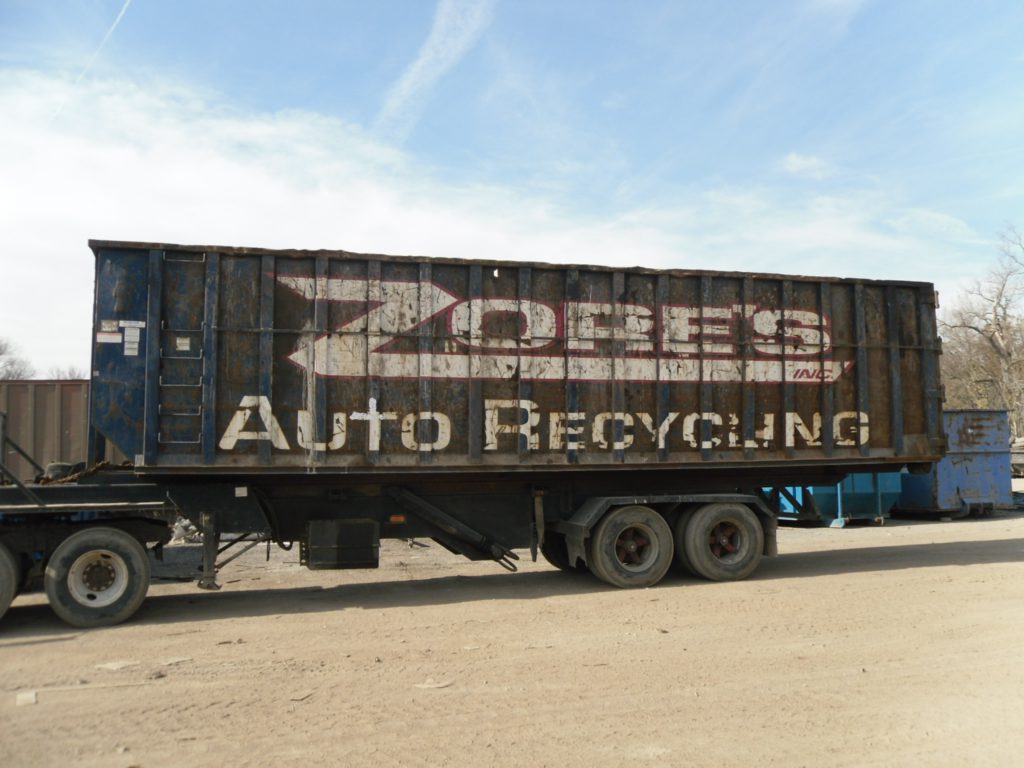
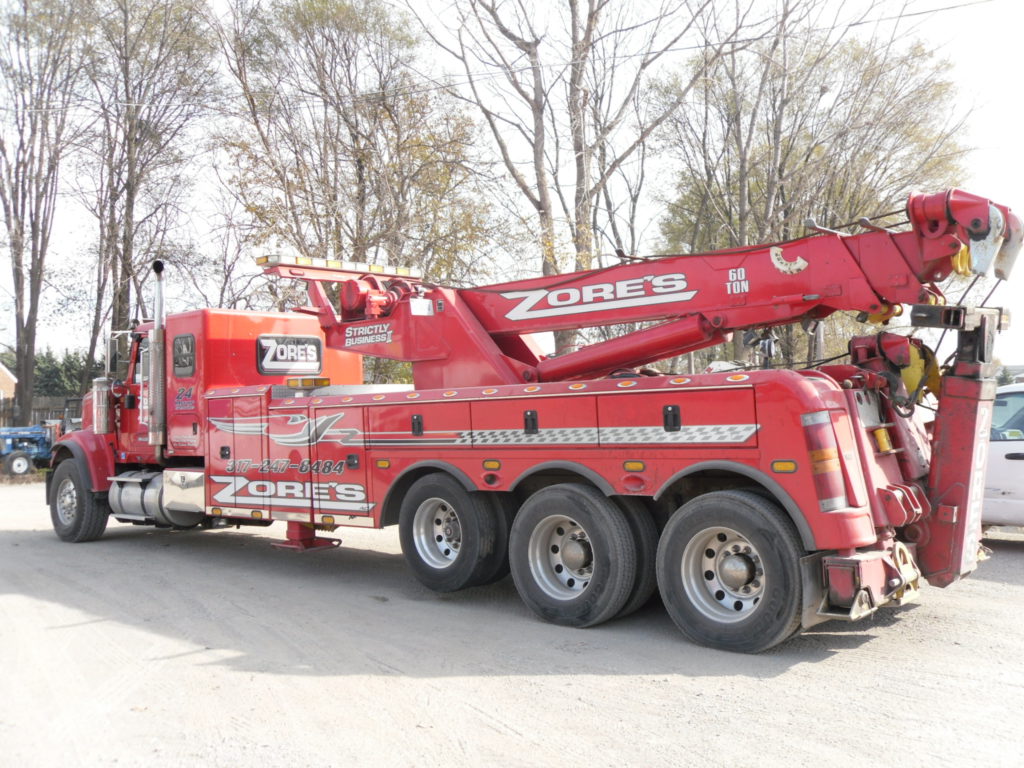
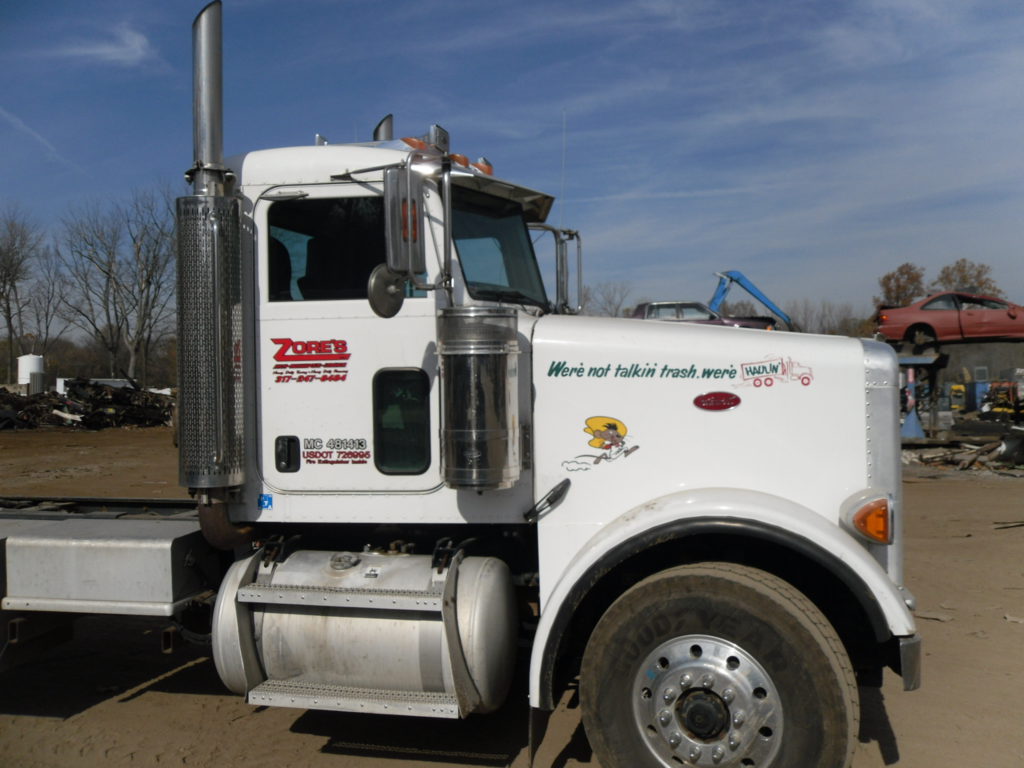
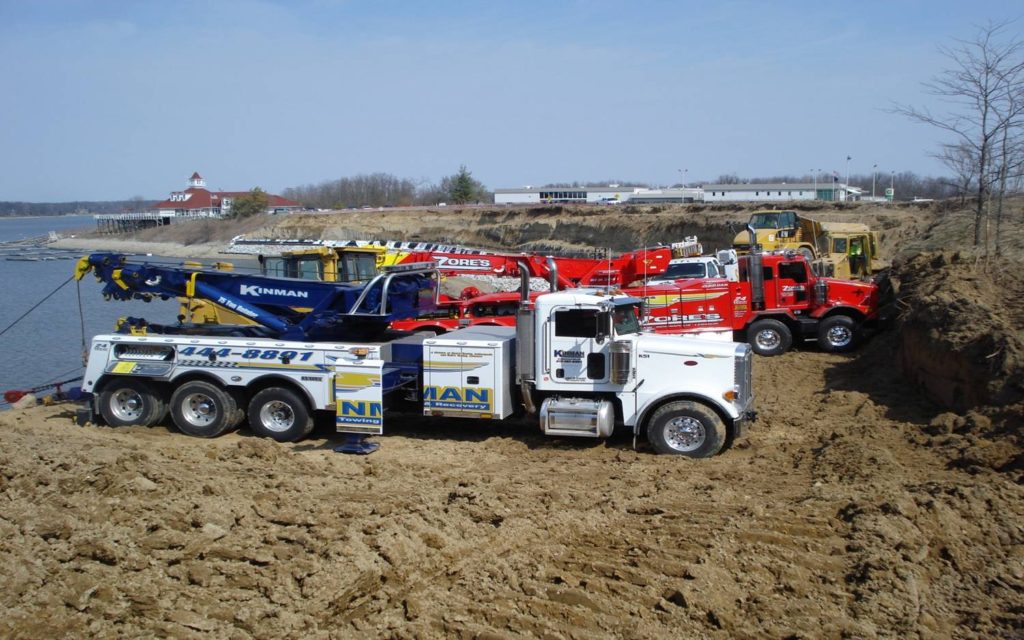
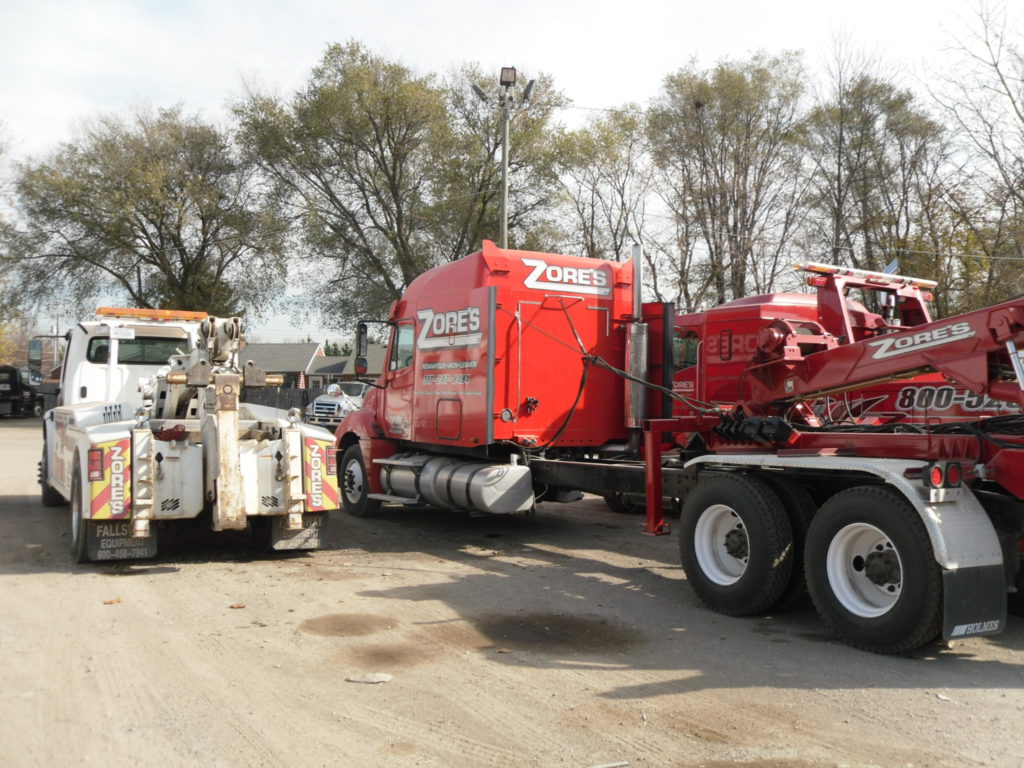
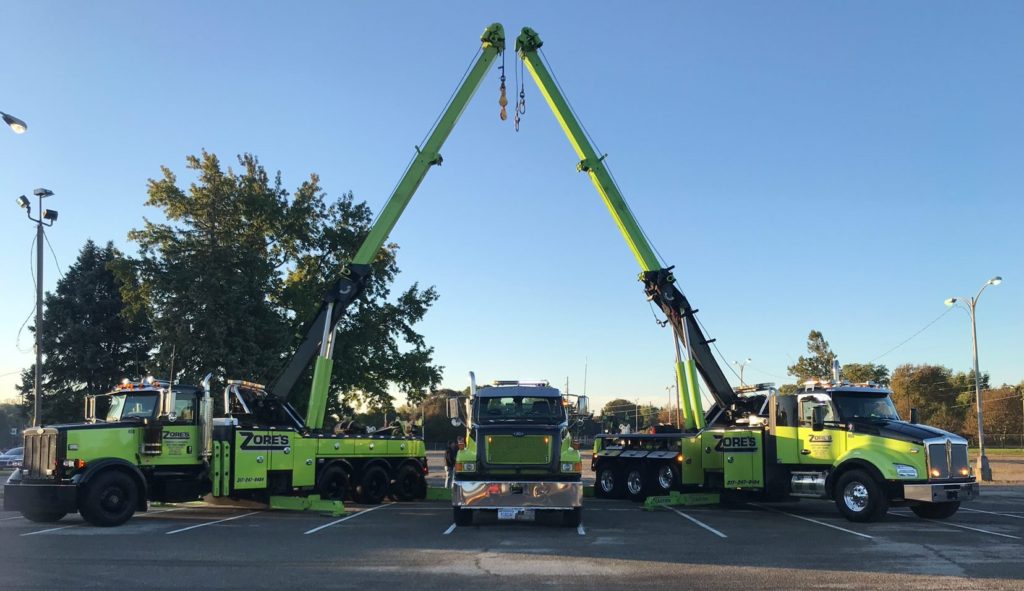
Check Out the Impressive Fleet of Trucks and Equipment at Zore’s Towing

When you call on Zore’s Towing for tow truck service, roadside assistance, recovery, or even municipal and city training programs, you can trust that you have enlisted the right group of professionals for the job. There are hundreds of towing companies throughout Central Indiana you can choose from, but here at Zore’s, we set ourselves apart from our competition by maintaining the latest technologies and resources in the industry, as well as, fine-tuning our skills as wrecker operators.

In fact, continue below to check out our amazing, state-of-the-art fleet of trucks, cranes, and equipment for towing and recovery services!
Indianapolis Roadside Assistance & Towing 317-247-8484

We Serve All of Central Indiana

Zore’s Towing is your simple, hassle-free solution to affordable towing and recovery services in Indianapolis, and throughout Central Indiana. With more than 90 years in business, you can trust our pledge to provide safe and efficient service at a fair price. Our certified and experienced drivers carry out a wide range of professional towing services, including light to heavy-duty tow truck service, property management, roadside assistance, towed car searches, emergency towing, long-distance towing, heavy equipment transport, and much more.

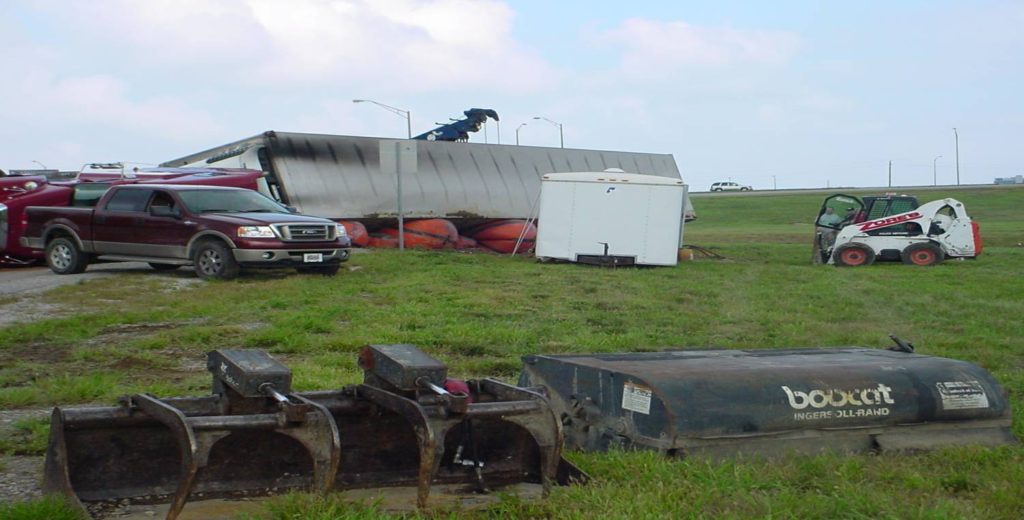
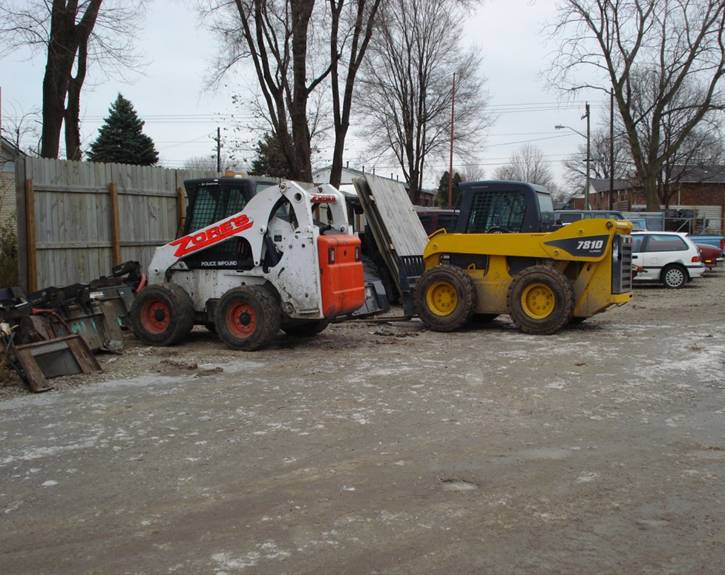
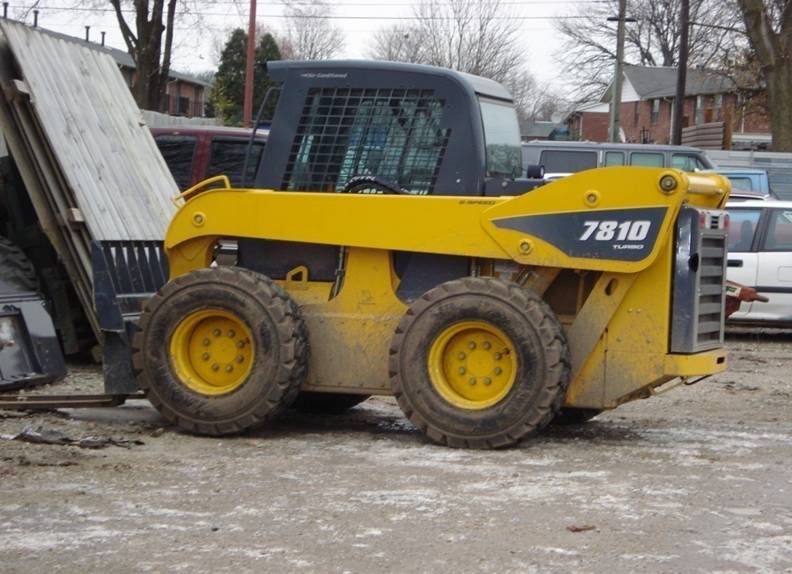
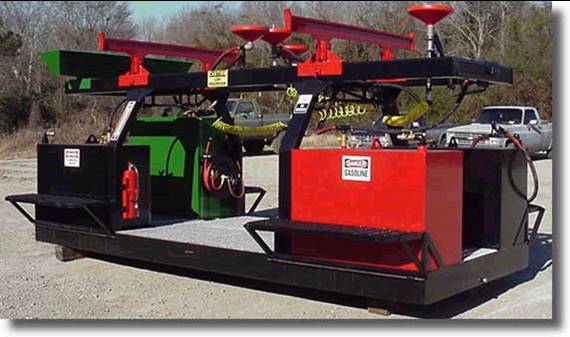
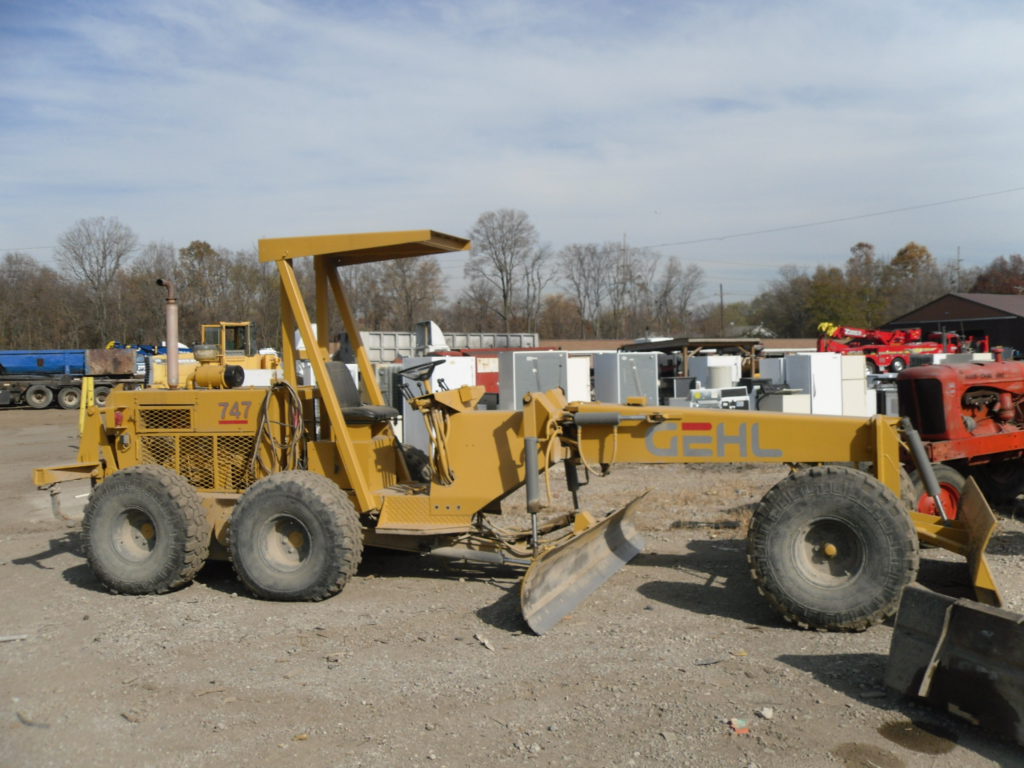
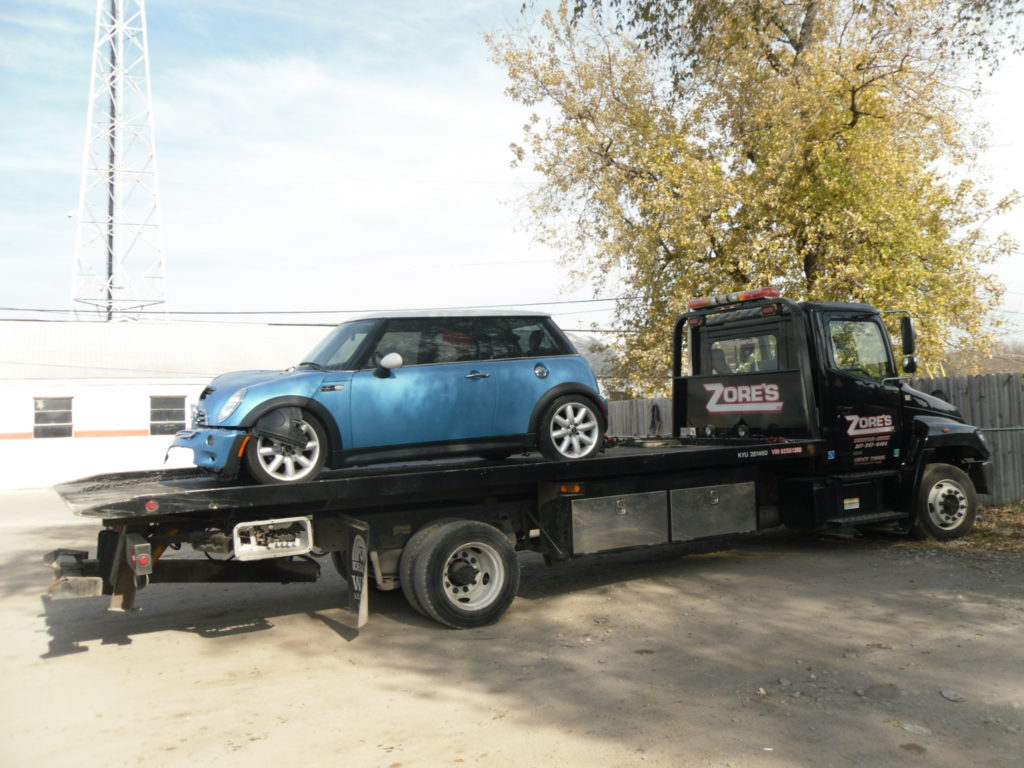
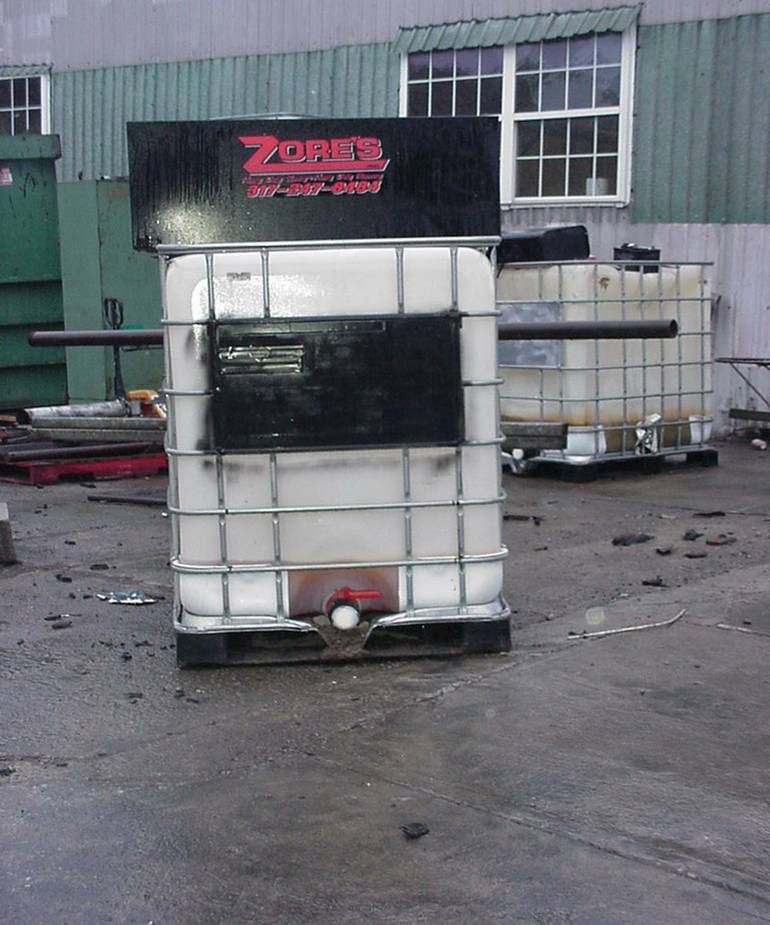
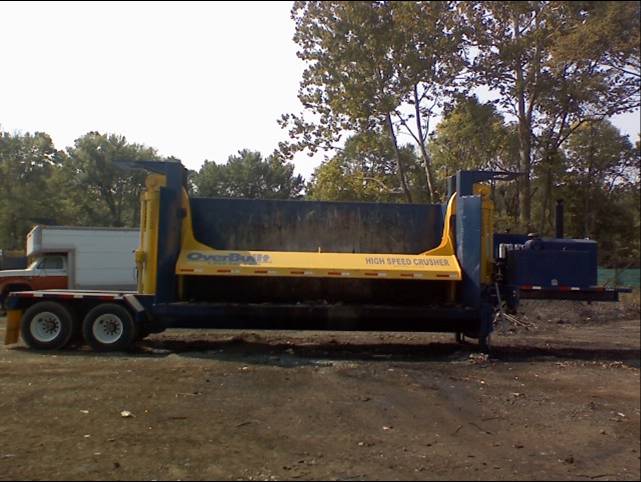
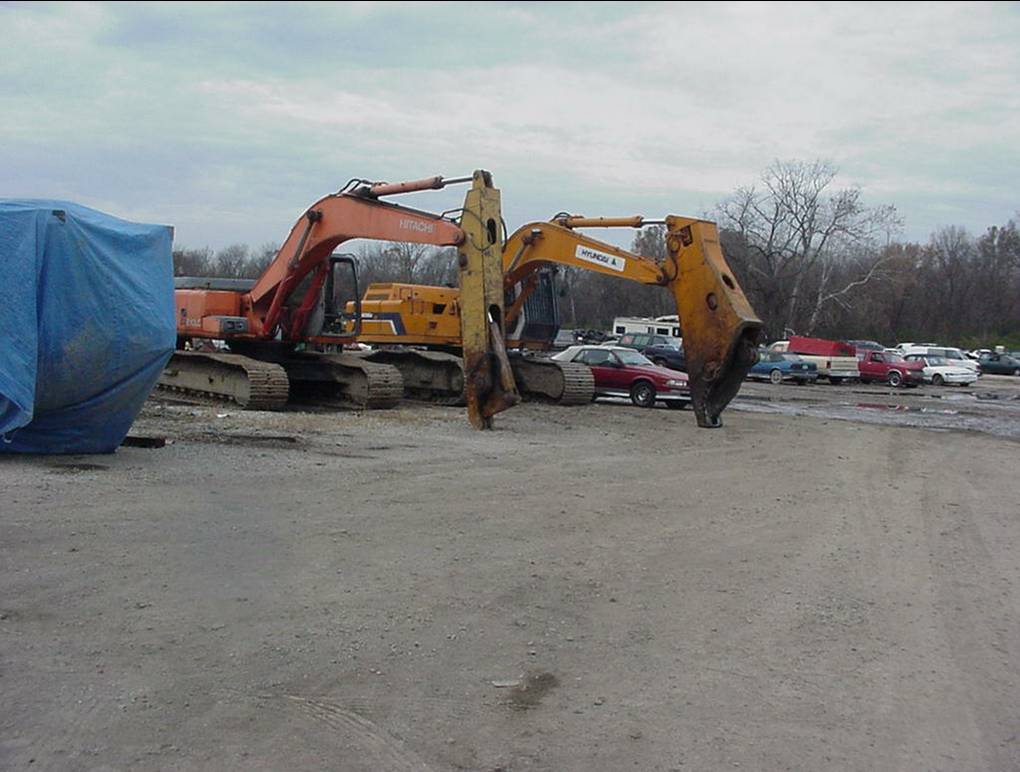
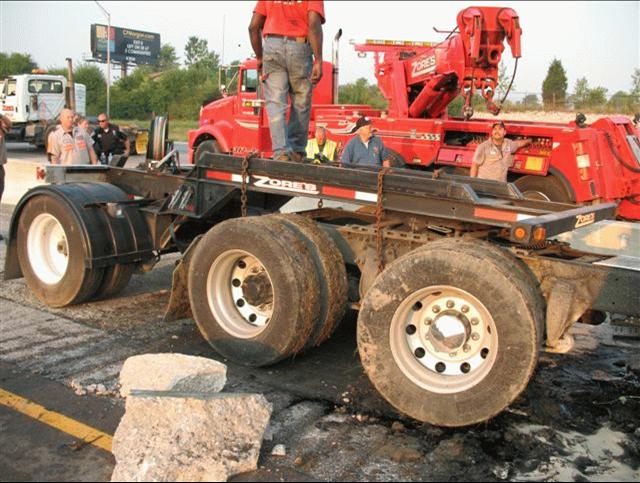
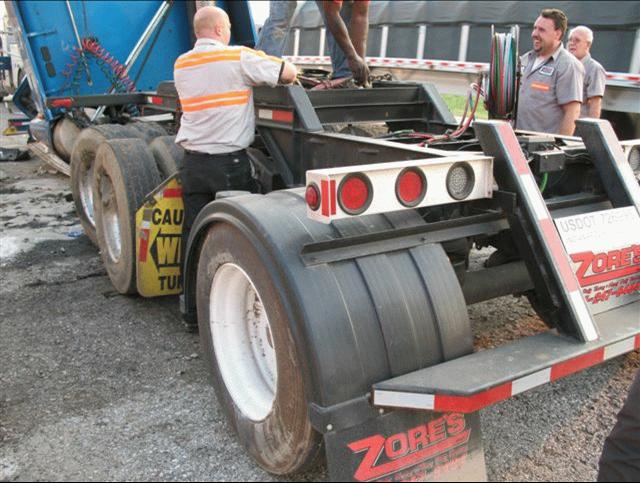
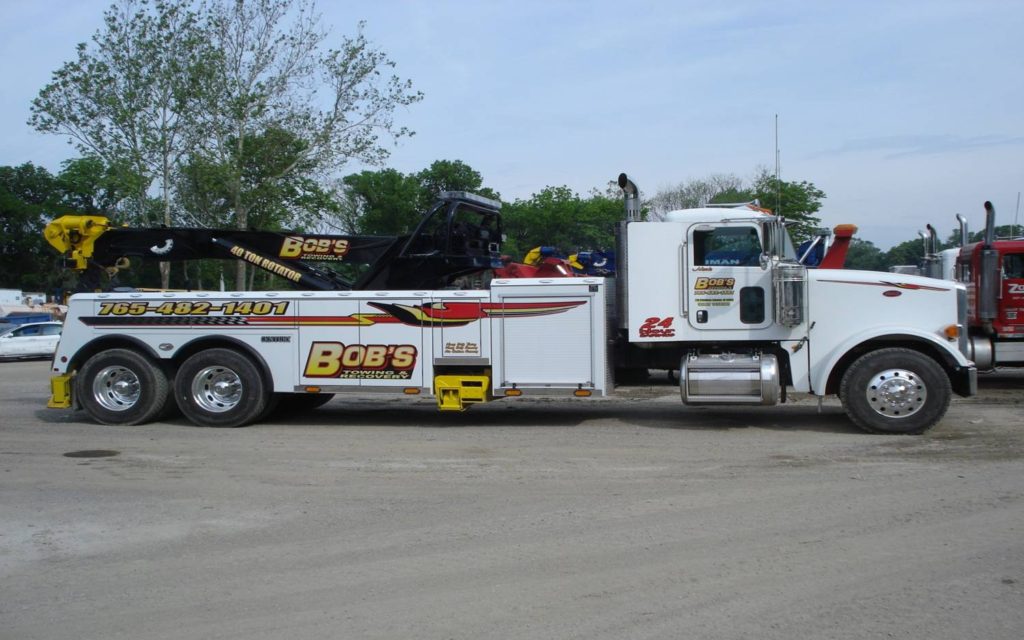
Here at Zore’s Towing, we retain more than 35 tow trucks and wrecker equipment. This includes a crane truck, flatbed tow trucks, heavy-duty wreckers, a few bulldozers, a handful of forklifts, a portable car crusher, and 16 other assorted types of tow trucks! Just take a look for yourself!

Need Towing or Roadside Assistance Right Now?

Call Zore’s Towing at 317-247-8484 for 24 hour roadside assistance and towing services in Indianapolis and throughout Central Indiana. As you are now aware, we are fully-equipped with the right fleets to assist cars, trucks, motorcycles, boats, construction equipment, trailers, vans, semi-trucks, airplanes, and much more. Our friendly staff is waiting by the phones, ready to help you get back on the road, safe and sound. We operate 24 hours a day, 7 days a week, and 365 days a year, so you can always count on us. Request a free estimate, today.

Indianapolis Towing & Recovery 317-247-8484

How to Do a Pre-Trip Check Before Hitting the Road With Your Trailer

Summer has officially begun, which means everyone is looking for ways to take full advantage of the amiable weather. From fishing and kayaking, to biking, camping, road tripping, and more, there are several summertime options to choose from, most of which likely requires the use of a trailer haul! But when you plan to hitch a trailer and hit the road this summer, whether driving a short distance or a long one, it is important to know how to stay safe. Fortunately, your experience puts you in a great position to haul your trailer from one point to another. So, all you really need is a reminder on how to perform a pre-trip inspection!

Continue reading to learn what to do when preparing your trailer haul for a road trip this summer!

24 Hour Towing and Roadside Assistance
24 Hour Towing and Roadside Assistance 317-247-8484

Pre-Trip Trailer Check Guide

The most important part of your pre-trip inspection is to ensure your trailer is properly connected to the hitch. Equally important is to ensure the vehicle and trailer brake lights and signals are connected and compatible. Here are the steps to take to ensure all of this and more:

Step 1 – Check your hitch.

If you have a standard ball hitch, the trailer tongue should attach to the towing vehicle’s hitch, properly. Test the quality of this connection by physically lifting the trailer. If it is properly attached, you should not be able to lift it at all. Be sure that the lock pins and locking mechanisms are also snapped into place, correctly. Along with checking your hitch in this step, be sure your trailer safety chains are properly crisscrossed and connected. To complete this first step, also check that your trailer connection has enough clearance. Any trailer wheels or stands should be placed back in their UP or DRIVE position.

Step 2 – Check Brake Lights and Signals

As mentioned, checking that the brake and signal lights are functioning in alignment with your towing vehicle’s lights is a top priority. Not only do you check that they work, you need to also ensure they are aligned with your towing vehicle. When you apply the brake in your car, the brake lights should illuminate on your trailer lights, and so forth. If you are alone, use the reflection from other cars or windows to see the lights. You can also do this the night before in the dark. Also in this step, ensure that the electrical wires that make these brake and signal light connections are cleared from the ground, as well as all other undercarriage parts.

🏞 You are now ready to drive!

It does help to practice a little before the big drive day to give you some more confidence on the road. Practice turning, backing up, parking, and disconnecting the trailer from the hitch. See our blog, “Frequently Asked Questions About Towing a Trailer” to learn some more tips and tricks for safe trailer towing.

Who to Trust for 24 Hour Towing and Roadside Assistance in Indiana

If your vehicle breaks down in Indiana at any point during your trip, call Zore’s Towing at 317-247-8484 for 24 hour roadside assistance and towing recovery services you can trust. Our friendly staff is waiting by the phones, ready to help you get back on the road, safe and sound. We operate 24 hours a day, 7 days a week, and 365 days a year, so you can always count on us. Request a free estimate, today.

Indianapolis Towing & Recovery 317-247-8484

FAQS About Spare Tires

Spare tires are somewhat of a mystery to drivers. Although they seem pretty straightforward, there is much to know about them. Whether your vehicle comes equipped with one or not, as a licensed driver, it is your duty to know more about using a spare tire. Continue reading to review some common frequently asked questions about spare tires, and what to do if you are ever stuck on the road without one.

24 Hour Towing and Roadside Assistance for Indiana
24 Hour Towing and Roadside Assistance for Indiana 317-247-8484

How Do I Drive on a Spare Tire?

Not sure if you are ready to drive with a spare tire on? You are! Just follow these important tips, and you will do just fine:

➛ Plan to drive a short distance, or to the nearest tire shop.
➛ Refer to owners’ manual for instructions.
➛ Always maintain cold tire inflation pressure of 60psi.
➛ Check tire pressure regularly and before each use.
➛ Inspect the tire and tire sidewalls for punctures, nicks, and other damages before each use.
➛ Drive and maneuver carefully. 
➛ Never exceed 50 MPH.
➛ Avoid highways, but if you have to, drive in the right lane with hazard lights on.
➛ Keep at least 3 car lengths driving distance between other vehicles.
➛ Store spare tires in the trunk or cabin, or on the outside of the vehicle (SUV’s).
➛ Be sure to learn how to change a flat tire!
➛ Call a local roadside assistance company if you have trouble changing a tire.

How Do I Change a Tire With a Spare?

See our blog, “How to Change a Tire Using a Spare” for a full, step-by-step guide on how to change a tire, including what you should do as soon as you get a flat, and important safety tips.

How Long Can I Safely Drive on a Spare Tire?

Never leave your spare tire on longer than the owners’ manual or manufacturer’s instructions state. This can lead to a whole heap of complications. Spares and donuts are meant to be temporary tires, because in fact, they are temporary tires! They are not as durable as ordinary tires, and weaken at a much faster rate. You see, a standard tire contains layers of steel and polyester fibers beneath the rubber. These layers are called plies and are where the real strength comes from. For space and weight-saving reasons, spares do not contain as many plies as ordinary tires; therefore, they deteriorate quicker.

Why Does My Car Not Come With a Spare Tire?

Modern vehicles are commonly designed and manufactured without spares. This is for a number of reasons, all of which vary among car makers, but mostly to enhance fuel efficiency, create more storage space, create more space for batteries and emissions equipment (in the case of hybrids, etc.), and to decrease manufacturer costs. If your car does not have a spare, it is strongly recommended to buy one.

Are There Different Types of Spare Tires?

There are many types of spare tires, including full-size, compact, and run flats. All full size spares are either matching or non-matching forms. A matching full size spare is one that is identical to the other tires on a vehicle. And a non-matching spare is not identical. Also known as “donuts”, compact spare tires are the most frequently used spare for small to mid-sized vehicles. This is because they deliver the best balance in terms of function and size. Some vehicles are manufactured with a sort-of “built-in” spare tire system, known as run flat tires. Run flats contain reinforced tire walls that allow a vehicle to continue driving without using any tire pressure.

Are There Any Alternatives to Using a Spare Tire?

There are three common alternatives to having a spare on hand. These are run flats, as mentioned above, as well as, self-sealing tires and tire inflator kits. Tire inflator kits usually involve a type of aerosol seal kit that provides a temporary resolution for minor tire tread punctures. There are several brands of tire inflator kits on the market, all ranging in price between $20 and $200 depending on quality. You can also purchase self-sealing tires, which are designed with a built-in lining, coated in a special sealant that automatically begins to surround the hole.

Flat Tire Roadside Assistance in Indianapolis and Central Indiana

Call Zore’s Inc. at 317-247-8484 for friendly 24 hour roadside assistance and towing in Indiana. We open a family-owned and operated business for 90 years, so you can trust us for prompt and professional service. We are open 24 hours a day, seven days a week, and 365 days a year, so our certified tow truck operators can be there for you anytime, any day! Request free estimates, anytime.

Indianapolis Towing & Recovery 317-247-8484

Fuel Efficiency Myths You Need to Know

Remember are blog from December about making better gas mileage your 2020 new years’ resolution? Well, how have you done so far? Are you still not happy with your fuel saving efforts? If so, perhaps you, like so many others, have fallen victim to some common fuel efficiency misconceptions.

Continue below to learn the top gas mileage myths circulating through the industry, and perhaps improve your fuel efficiency results!

24 Hour Towing and Roadside Assistance
24 Hour Towing and Roadside Assistance 317-247-8484

Top 5 Gas Mileage Misconceptions:

“Small Cars Get Better Fuel Mileage”

Size has nothing to do with fuel efficiency. Everything under the hood, the materials used to manufacture the vehicle, and proper maintenance are what make vehicles fuel-efficient. Advancements in technology that promote better fuel economy include diesel engines, turbochargers, hybrid drive trains, and low-rolling resistance tires.

“Manual Transmissions Get Better Gas Mileage”

Although true in the past, new advancements in automatic-transmission technology has made this a modern-day myth. More gears have led to less wasted fuel and much more. Whether you choose manual or automatic, fuel efficiency will not be comprised by this decision.

“Old Cars Get Poor Gas Mileage”

A vehicle is really only as old as its engine. And so long as the engine is properly maintained over the years of ownership and use, the gas mileage should not be affected. In fact, there is a vehicle “break-in” period (the first 5,000 miles or so) where the fuel efficiency actually improves, rather than declines!

“Replacing the Air Filter Will Jump-Kick Fuel Economy”

If your car has an older engine with a carburetor still, then this myth is a little true. But fuel economy for modern fuel-injected cars and trucks is not influenced by a singular filter change. Fuel-injected engines delivers lower emissions and improved fuel economy. An onboard computer automatically adjusts the fuel-flow depending on the amount of air entering the engine.

“Premium Fuel Will Improve Gas Mileage”

This will just end up being a waste of money. Premium fuel does not equal better fuel economy. In fact, using a higher-octane fuel will not alter vehicle performance at all. Only use premium gas if your vehicle’s owners’ manual suggests to; otherwise, stick to unleaded.

Are You Out of Gas in Indianapolis, Indiana?

Call Zore’s Towing at 317-247-8484 for friendly 24 hour roadside assistance, including fuel fill-ups, in Indianapolis, or throughout Central Indiana. We open a family-owned and operated business for 90 years, so you can trust us for prompt and professional service. We are open 24 hours a day, seven days a week, and 365 days a year, so our certified tow truck operators can be there for you anytime, any day! Request free estimates, anytime.

Indianapolis Towing & Recovery 317-247-8484