What To Do After Your Car Air Bag Deploys

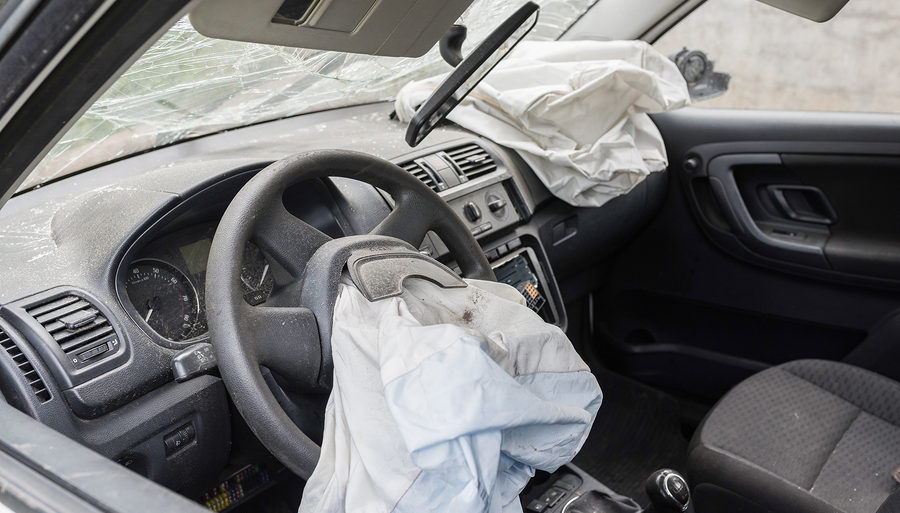
If you have never experienced a deployed airbag, then you are lucky. It can be a very shocking and unsettling experience; for first timers especially, but for everyone every time, as well. However, the more you know about how to react after your air bags deploy, the easier it is managing the fear and frustration that motor vehicle accidents usually involve. In fact, being coherent on the proper steps to take after an air bag deploys can relieve stress and fear for yourself and for your passengers, all at once.

Continue reading to learn what you should do if your airbags deploy in the case of a car accident or collision.
24 Hour Towing and Roadside Assistance
24 Hour Towing and Roadside Assistance 317-247-8484

Air Bag Deployment Basics

It doesn’t always take a significant impact to cause airbags to deploy. If certain sensors are triggered, in the case of sudden braking or abrupt stopping, air bags can deploy. This can make it even more frightening and surprising for some. Here are the recommended instructions for handling airbag deployment:

➀ Check for Injuries

As soon as airbags deploy, check your passengers and yourself for any injuries, namely unconsciousness, broken bones, or stuck extremities. Burns are the most common injury from airbags, and although minor, should be treated to prevent infection. Headaches, body aches, and muscle soreness are all common symptoms post-airbag deployment.

➁ Seek Medical Attention

Once you have assessed your passenger injuries and your own, call an ambulance and allow EMT’s to treat your wounds and to check for other bodily injury. If you do not require EMT’s, it is still recommended to go to an urgent care center and be looked at by a doctor. Whether major or minor, be sure to seek out proper medical treatment for all injuries. If you and your passengers have zero injuries, move onto the next two steps.

➂ Turn Off the Engine and Get Exit the Car

In most cases, vehicular motors are designed to shut off when airbags deploy, but if yours did not, now is a good time to turn the ignition off and remove the keys entirely. This eliminates the potential for fuel leak fires and explosions. Then remove yourself and everyone else from the car, staying safely out of the way of traffic.

➃ Assist Other Vehicles Involved

If another vehicle was involved in the accident, and you are not hurt, offer assistance to the other driver and their passengers. Call for an ambulance and allow professional EMT’s to move or treat anyone injured.

➄ Have Your Vehicle Towed

Call a reputable 24 hour Indiana tow truck company, one suggested by your roadside assistance carrier or a well-established local service. Have your car towed directly to the location of your choice, whether that is your home, office, or auto repair shop. Try to avoid leaving a wrecked vehicle at the scene of the accident. Not only is this dangerous to other drivers, it can lead to city fines or repossession. After all, a deployed airbag does not always render a car totaled. Sometimes it is possible to repair your vehicle back to a working condition. If not, you can sell it to a local junk car buyer!  

24 Towing for Wrecked Cars in Indiana

If you wreck your car in Central Indiana, call Zore’s Towing at 317-247-8484 for 24 hour emergency tow truck service at an affordable price! We provide prompt, 24 hour towing and roadside assistance in Indianapolis and throughout Central Indiana. Our licensed towing and recovery division retains an extensive fleet of over 35 tow trucks and wrecker equipment, allowing us to assist drivers 24 hours a day, 7 days a week, and 365 days a year, rain, snow, or ice. Request a free estimate, anytime.

Indianapolis Towing & Recovery 317-247-8484

Your Best Options for Mounting a Tow Bar

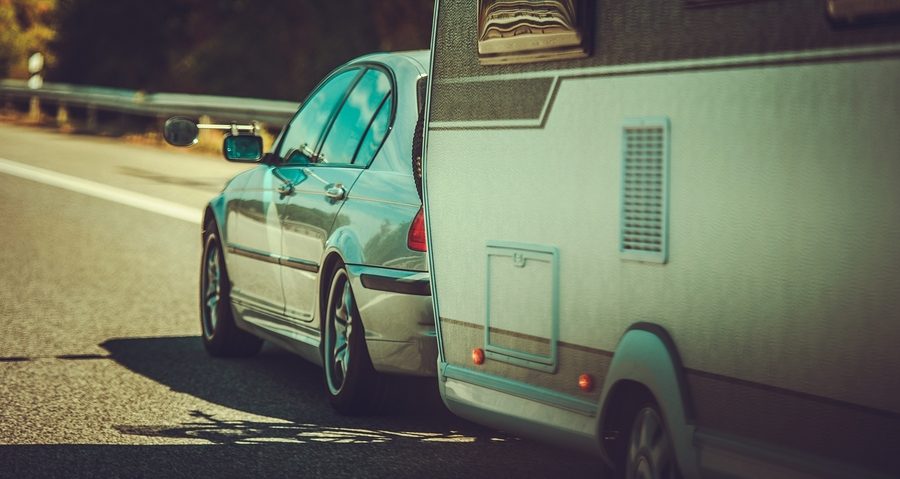
When it comes to flat towing a vehicle with your car or truck, you can choose to use a trailer, or even a tow dolly, but sometimes, these options can take up too much room, or simply prove to be more complicated than the alternatives. If you are looking for better ways to flat tow a vehicle, perhaps you should consider using a tow bar.

Continue reading to learn more about tow bars, including their common types and the benefits they offer.

24 Hour Towing and Roadside Assistance
24 Hour Towing and Roadside Assistance 317-247-8484

5 Basic Tow Bar Parts

Drivers choose tow bars for flat towing because they simply offer the most convenience in terms of labor and space. They are smaller, and take up much less room than a trailer or tow dolly, plus they can be detached at your destination for instant access. When using a tow bar, the most important factor is safety. Part of being safe is ensuring you have the right tow bar setup.

There are essentially five components of a tow bar setup. These include a base plate kit, safety cable set, wiring, supplemental braking system, and of course, the actual tow bar. See our blog, “The 5 Components Need for Flat Towing” to learn about the laws and facts surrounding each part.

Tow Bar Mounting Options

You have two primary options for mounting your tow bar: RV mount and vehicle mount. The option you choose will depend mostly on personal preference, budget, and what you already have on hand.

RV Mounts

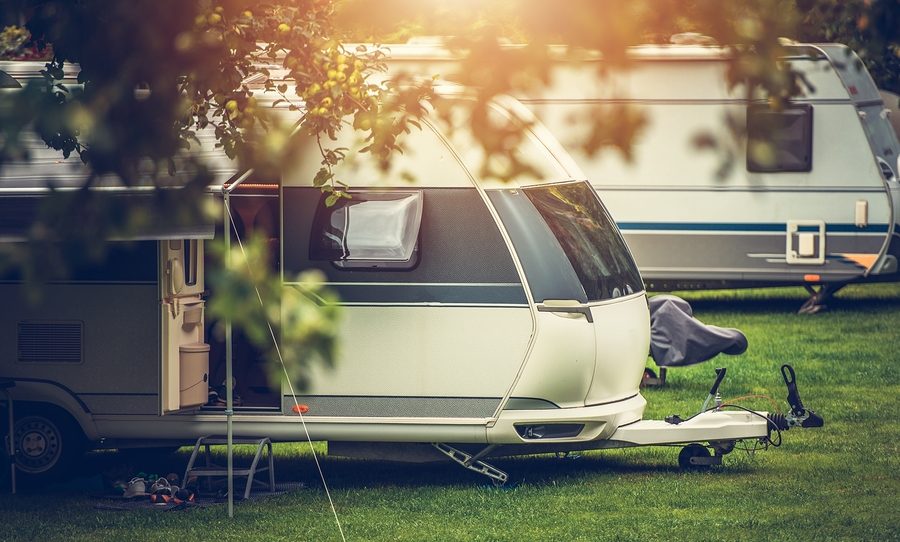
RV-mounted tow bars are widely approved as a best practice for flat towing because they allow for a very sturdy and stable connection since insert directly into an RV’s trailer hitch receiver. In fact, no coupler nor separate ball mount are needed. They are also less of a hassle because you can easily use a hitch lock to store your tow bar to your motor home when not in use. Another great quality of an RV-mounted tow bar is easy adjustment. All you have to do is use a hitch adapter to attain the increase or decrease required to meet your vehicle’s height.

Vehicle Mounts

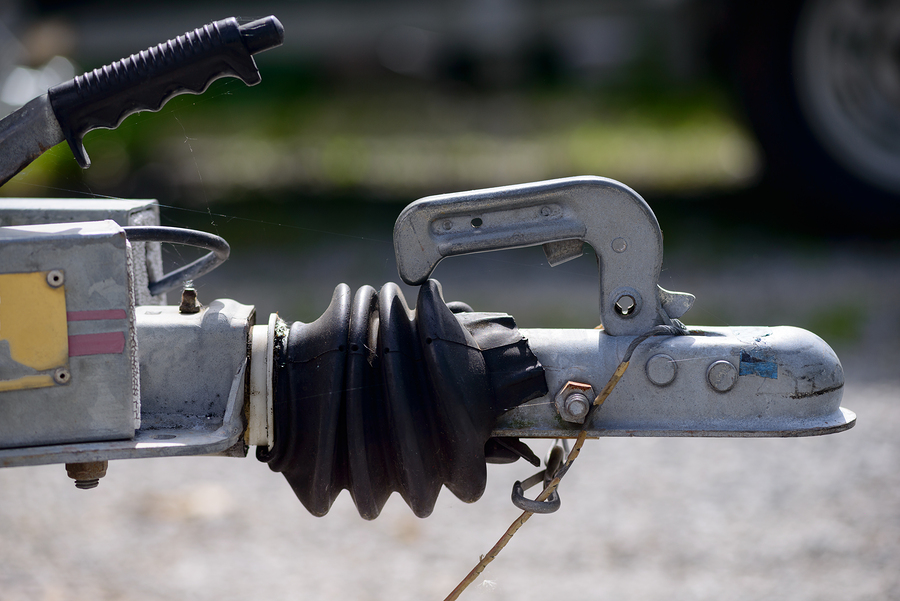
Before there were RV-mounted tow bars, there were only vehicle mounted tow bars. These tow bars perform the same way as an A-frame trailer since they attach to a trailer hitch ball on an RV using an integrated coupler. Another important feature of car-mounted tow bars is their wide variety of make and models to choose from. This allows for more economically-priced options for those who only flat tow on occasion. Furthermore, the integrated coupler can be locked to hitch ball for enhance security against loss or theft.

Indianapolis Dinghy Towing

Call Zore’s Towing at 317-247-8484 for 24 hour towing and roadside assistance in Indianapolis and throughout Central Indiana. Our friendly staff is waiting by the phones, ready to help you get back on the road, safe and sound. We operate 24 hours a day, 7 days a week, and 365 days a year, so you can always count on us. Request a free estimate, today.

Indianapolis Towing & Recovery 317-247-8484

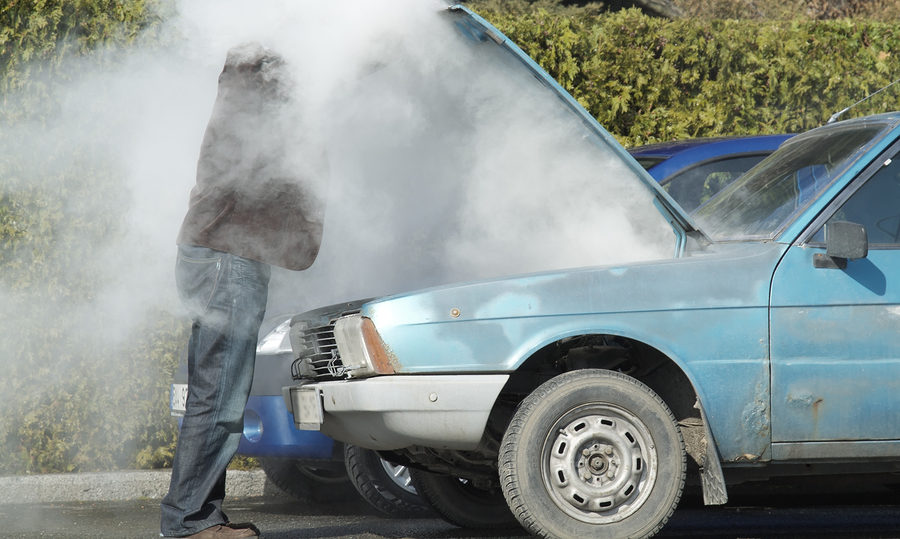
How to Diagnose Your Car’s Overheating Engine

If your car engine is overheating on a regular basis, it is time to stop driving, and start figuring out what’s causing the problem. It is important to address an overheating engine issue as soon possible; because the longer your engine experiences these issues, the more damage they will cause overtime. Worst of all, these damages will lead to costly engine repairs or full-on motor replacement. You can easily avoid these financial woes by simply addressing an engine problem when it becomes apparent to you. This can literally save you thousands of dollars.

Start by learning the most common causes for overheating motors, and then take some time to think about your driving habits. From there, you can make the necessary adjustments to get your car safely back on the road. Continue reading to do just that!

24 Hour Towing and Roadside Assistance
24 Hour Towing and Roadside Assistance 317-247-8484

Top 3 Causes for Overheating Engines

❶ No Coolant

This is the number one cause for an engine that has begun to overheat. Always be sure to keep a spare bottle of coolant, also known as radiator fluid, in your trunk. If your vehicle gets low on a particularly long road trip or hot day, you can top off your radiator with more coolant. If more coolant works at first, but later the engine overheats again, you could have a coolant leak. Although more fluid solves the immediate problem, it is a sign that your vehicle probably needs some other types of fluid refills and flushes, including brake fluid, motor oil, windshield wiper fluid, transmission fluid, and more.

❷ Defective Coolant Fan

Sometimes you have enough coolant, but the fan is not working properly. When the coolant fan is not running, it will not cool down the coolant running through the radiator and engine like it is designed to do. This is generally caused by a faulty fan motor, but can also be caused by a bad radiator switch. If your car engine begins to overheat, you can lift your hood and take a look at your coolant fan to see if it is running or not. They are usually located right on or near the radiator.

❸ Broken Fan Belt

Like your coolant fan, your engine’s fan belt plays a major role in controlling temperature. It is one of the most common causes of a reoccurring overheating engine. The worst part about a broken fan belt is that it is often a first indication of other engine malfunctions and needed engine repairs. Most people can tell they have a broken fan belt by simply looking at their engine from under the hood.

Monitor Your Driving

To better figure out what’s causing the overheating, think about the type of driving you are doing when it occurs. Is your car engine overheating at stoplights or on the highways at high speeds? This information can give you clues as to why your car overheats.  If the vehicle is overheating during an idle or stopped position, this could point to the electric cooling fan motor. This component is located near the radiator. To check for faultiness, run the vehicle’s air conditioner and listen for the fan to start. If the fan doesn’t turn on, it may be from a faulty sensor or the fan in general. If your car is overheating at high speeds, it could be anything from a kinked radiator hose to a defective thermostat. 

Stranded Due to Car Engine Problems in Indianapolis?

Call Zore’s Inc. at 317-247-8484 for friendly 24 hour towing and roadside assistance in Central Indiana. We open a family-owned and operated business for 90 years, so you can trust us for prompt and professional service. We are open 24 hours a day, seven days a week, and 365 days a year, so our certified tow truck operators can be there for you anytime, any day! Request free estimates, anytime.

Indianapolis Towing & Recovery 317-247-8484

Top Safety Tips for Driving in the Winter

It’s officially winter. Days are mostly dreary and cold, portending the snow and ice that will soon be upon us. As we can expect from every Indiana winter, streets and roadways will certainly be slick, slushy, and at times, even frozen over. When the winter storms come in, they really make driving conditions dangerous and unpredictable, so it is critical to your safety and the safety of others to use extreme caution and care when driving in such conditions. Accordingly, it is important to remember how to safely operate your vehicle, navigate in winter weather, and manage road emergencies.

Continue reading to review some vital safety tips for winter driving and be sure to pass them along to your friends and family too!

24 Hour Towing and Roadside Assistance 317-247-8484

Winter Driving Tips You Need to Know

You never know what to expect with winter weather, so being prepared is key. One of the most important rules of safe driving that applies all year long is to have your vehicle serviced professionally according to its individual needs and its manufacturer’s maintenance schedule. When your vehicle is in good condition, it is in its safest form. This includes parts, fluids, tires, and more.

Another important part of being prepared is keeping an emergency roadside assistance kit in your vehicle at all times. There are various types of kits available at the stores, all with different items. Choose whichever kit best fits your emergency roadside needs, such as jumper cables, road triangles, flashlight, first aid kit, blanket, and more. See our blog, “Put a Roadside Emergency Kit in Your Car” to get some ideas on how to create your own. Below are some additionally important tips to remember when driving in inclement weather.

Additional Driving Safety Considerations

⚠ Keep at least a half a tank of gas in your vehicle at all times.
⚠ Periodically check for proper tire inflation.
⚠ Do not leave a vehicle running in an enclosed garage.
⚠ Always wear your seat-belt.
⚠ Always ask passengers to buckle up too.
⚠ Never drive when you are too tired or drowsy.
⚠ Always keep your eyes on the direction you are steering.
⚠ Avoid using the parking brake in wet or slick conditions.
⚠ Avoid using cruise control in wet or slick conditions.
⚠ Accelerate and Brake slowly on wet or snowy roads.

Long Distance Driving Safety

⚠ Have your vehicle serviced before you leave.
⚠ Watch the weather before you leave to be prepared
⚠ Be sure you fully-charge your car phone and bring an emergency charging unit.
⚠ Delay leaving if weather is too extreme.
⚠ Check your emergency roadside kit and refill as needed.
⚠ Check that your exhaust pipe is not clogged with snow.
⚠ Pack extra blankets.

If you get stuck in the snow, stay with your vehicle and call for help.

Towing and Roadside Assistance for Indiana

Call Zore’s Inc. at 317-247-8484 for friendly 24 hour towing, recovery, and roadside assistance and advice in Central Indiana. We open a family-owned and operated business for 90 years, so you can trust us for prompt and professional service. We are open 24 hours a day, seven days a week, and 365 days a year, so our certified tow truck operators can be there for you anytime, any day! Request free estimates, anytime.

Indianapolis Towing & Recovery 317-247-8484

The 7 Automotive Fluids Required for All Cars

A vehicle operates best when its fluids are well-maintained and kept at their proper levels. There are seven chief fluids in every vehicle that work together to promote a smoother drive and optimal vehicular performance.  These fluids assist in the main functions of various automotive parts; such as the engine, transmission, and braking systems.  Without these essential fluids, a vehicle will quickly deteriorate and experience complications. This leads to costly repairs, parts replacements, or a totaled vehicle. 

Continue reading to learn about these seven critical solutions and fluids, and how they work together to support a well-operating vehicle.

Emergency Tow Truck 317-247-8484

Motor Oil

The first fluid to mention is motor oil, because it is the most valuable and important. Without motor oil, a car’s engine is running without any lubrication between its moving parts. This can cause high heat and friction, leading to piston damage, valve damage, and more. It is dangerous and can cause severe and irrevocable damage to a vehicle’s engine. Any car with an internal combustion engine requires motor oil to lubricate its moving components.

Brake Fluid

Brake fluid is another important and vital necessity for any vehicle. A brake line system is a sealed network that applies hydraulic pressure to control a vehicle’s ability to come to a stop.  When pressure is applied to a brake pedal, brake fluid compresses. This causes the hydraulic force to transfer to the brake pads and shoes and produce the required friction necessary to stop. Without brake fluid, a vehicle will have complications with stopping and using the brakes. This is very dangerous. A car must be able to stop!

Power Steering Fluid

Power steering fluid is used to assist the driver in turning the car easier. The power steering fluid is pressurized by a small hydraulic pump that is powered by the vehicle’s engine. It releases enough fluids that make the steering mechanism easier to direct and operate. Without power steering fluid, turning a steering wheel would require an abundant amount of effort and force.

Coolant

Coolant is another very important fluid in a vehicle. It is a heat-transfer fluid that controls the temperature levels within your engine. Without it, a car engine would quickly overheat, causing severe damages to the engine and its components. Coolant is generally a half and half formula, containing fifty percent water and fifty percent radiator coolant solution. It works by cycling through the engine as it runs, collecting heat and returning it to the radiator, then into the air.

Transmission Fluid

This fluid is not one commonly checked by car owners, but rather by a mechanic during an annual tune-up or inspection. Transmission fluid is important because it lubricates and cools the inner components of the transmission. This allows everything to engage and work properly. It’s job is very similar to motor oil.

Battery Fluid

Many vehicles today are manufactured with maintenance-free batteries; however, some older models will require a vehicle owner to manually replace the battery fluid on a regular basis. In these type of vehicle batteries, the individual cells need to be filled with the proper type of battery fluid in order for the vehicle to run.

Windshield Wiper Fluid

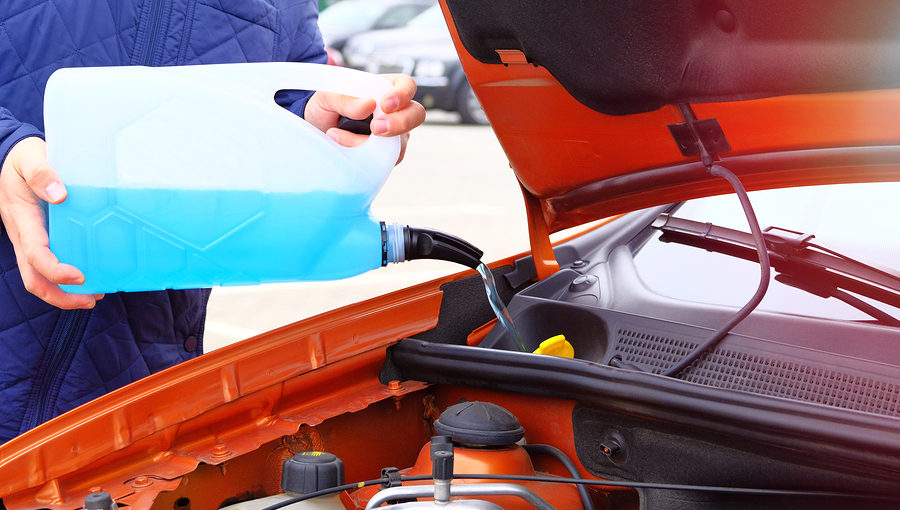
Although commonly overlooked, a driver could almost not live without windshield wiper fluid! Mud, dirt, water spots, insects, fingerprints, and more can be distracting on a vehicle’s windshield. Windshield wiper fluid is a soapy viscous solution that can be controlled manually by a push of a button inside the car. This button or attachment is generally near the steering wheel. Depending on how often it is used, windshield wiper fluid should be refilled every few months or so.

Emergency Towing and Roadside Assistance in Indiana

If you find yourself stranded and in need of automotive fluids in Indianapolis, trust Zore’s Towing for help anytime! Call us at 317-247-8484 for prompt, 24 hour towing and roadside assistance in Indianapolis and throughout Central Indiana. Our licensed towing and recovery division retains an extensive fleet of over 35 tow trucks and wrecker equipment, allowing us to assist drivers 24 hours a day, 7 days a week, and 365 days a year, rain, snow, or ice. Request a free estimate, anytime.
Indianapolis Towing & Recovery 317-247-8484

Did You Know Towing Companies Offer More than Just Tows?

Wrecker companies are more than just a towing service. They offer a wide variety of roadway, transportation, and recovery assistance. Sure they are equipped and eager to provide tows for illegally parked vehicles, broken down cars, abandoned vehicles, and more; but they are also equipped and trained to provide much more than that! Continue reading to learn what a wrecker company is truly capable of and the standard services they offer their local communities.

Indianapolis Roadside Assistance & Towing 317-247-8484

Wrecker Services

When it comes to wrecker services, towing is not the limit. Most well-established and veteran wrecker companies retain an extensive fleet of trucks, rigs, trailers, wreckers, and more that allow them to provide comprehensive towing and recovery services for anyone and everything in town. This means impounding, airplane towing, accident and traffic clearing, disaster emergency response, general roadside assistance, and much more. Here is a breakdown of the principle categories for towing and recovery, and the additional services offered by most wrecker companies near you:

Roadside Assistance

Wrecker companies generally offer roadside assistance options for individuals who experience minor vehicular issues or breakdowns on the road. If someone gets a flat tire, a wrecker service will provide tire changes and replacements. If a battery goes dead, a roadside assistance technician for a wrecker company will drive to them and provide a jumpstart. If someone is locked out of their vehicle, a wrecker service can get them back in! With just one simple phone call, a short wait, and a small fee, you can have a professional wrecker company provide roadside assistance services any time, 24 hours a day.

Light-Duty Tows

Light-duty towing includes regular vehicle towing and recovery. Cars, trucks, vans, small to mid-sized vehicles, motorcycles, jet skis, and more are all included in this category. If a car accident happens, a professional wrecker service is called to promptly remove the damaged vehicles and clear the roads of traffic congestion as soon as possible. Illegally parked vehicles and property management towing also fall into this category of light duty tows. These services are available 24 hours a day and 7 days a week; like most towing services.

Medium-Duty and Heavy-Duty Tows

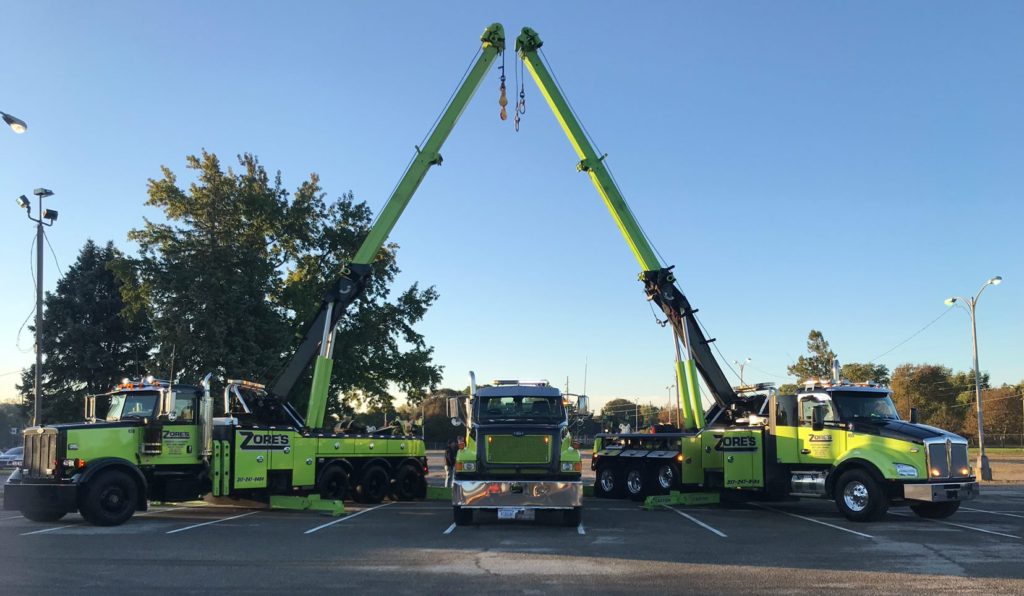
Medium and heavy-duty tows include larger-scale recovery and towing missions. Trucks, semi’s, rigs, trailers, boats, airplanes, mobile homes, construction materials, piping, and more are included in this category of towing. Wrecker companies extensively train their technicians to be able to clearly and efficiently react and handle sudden recovery emergencies, disasters, and situations. They are fully prepared to recover large equipment or vehicles on dangerous terrain or hazardous conditions. Severe storm damages, fallen trees and power lines, erupting dams, and more are all circumstances when a professional wrecker company is needed and called on.

Special Services

Wrecker companies often work together with their local municipality in road and traffic management. They also buy and sell junk cars and trucks, and offer auto auctions open to the surrounding communities. On top of auto auctions, junk car buying, light towing, medium towing, and heavy-duty towing, wrecker services also train and provide disaster response as mentioned before. Mostly wrecker companies that have been around the longest are the ones capable of offering these kinds of services because they have the local community trust, the proper and specialized equipment, licensing, and training. 

Indianapolis Towing Services You Can Trust

Call Zore’s Towing at 317-247-8484 for 24 hour towing and roadside assistance in Indianapolis and throughout Central Indiana. Our friendly staff is waiting by the phones, ready to help you get back on the road, safe and sound. We operate 24 hours a day, 7 days a week, and 365 days a year, so you can always count on us. Request a free estimate, today.

Indianapolis Towing & Recovery 317-247-8484

The 5 Basic Components Required to Flat Tow a Vehicle

A vehicle that can dinghy tow another car with a tow bar is a highly valuable asset. Not only does flat towing provide convenience, it also increases loading and unloading efficiency, saves space, and ensures balanced transportation. But before you hook your tow bar up to another car, be sure you have all the other necessary towing gear to keep you and your cargo safe. Continue reading to learn the five basic components you need to flat tow a car.

24 Hour Towing and Roadside Assistance 317-247-8484

Required Equipment for Dinghy Towing

Whether you are linking up an RV or a standard 4-door sedan, you will need 5 particular towing parts in order to be legal on the road, and more importantly, safe. These five components include a tow bar, as previously mentioned, as well as, tow bar wiring, a base plate kit, safety cable set, and an add-on braking system.

❶ Tow Bar – The “Y-shaped” metal bars that connect the towing vehicle with the dinghy (vehicle being towed). Hitch locks and hitch adapters are additional tow bar components that might be needed, especially for R-mounted tow bars.

❷ Tow Bar Wiring – The lighting system that syncs the lights of the towing vehicle with the dingy vehicle. These are mandated and required by law. There are several types, from removable and hitch-mounted, to magnetic, diode, charge line, and more.

❸ Base Plate Kit – These provide the attachment connections for a tow bar. They are vehicle-specific, and must be custom matched to specifically fit the towing vehicle’s frame.

❹ Safety Cable Set – Also required by law, these are meant to prevent your dinghy from disconnecting from your towing vehicle, even if the tow bar uncouples from it.

❺ Supplementary Braking System – These are designed to decrease braking distance up to 30%, depending in the towing setup. These are mandatory by law in almost every state.

Dinghy Towing

Upon reviewing the basic principles and best practices of flat towing, you can better understand the importance and purpose of each piece of towing equipment. You see, to flat tow, or dinghy tow, a tow bar is connected to the front bumper of the towed vehicle, and then trailer lights are attached to the back bumper. Although reliable, using a tow bar to tow can become complicated since cars are meant to drive on their own power, rather than be towed on the ground. Also, transmissions are designed to be turned by the car’s engine.

But when a car is being towed on the pavement, the tires will cause the transmission to turn instead, which could possibly lead to transmission damage. On the other hand, certain vehicles, like Jeeps, are designed with a 4WD mechanism that retains a transfer case, which places the car in neutral, isolating the transmission from the wheels. It is important to always refer to the towed vehicles owners’ manual for manufacturer recommendations before setting it up for tow bar dinghy towing.

Need Towing Assistance in Central Indiana?

Call Zore’s Towing at 317-247-8484 for 24 hour roadside assistance and towing services in Indianapolis and throughout Central Indiana. We are fully-equipped with the right fleets to assist cars, trucks, motorcycles, boats, construction equipment, trailers, vans, semi-trucks, airplanes, and much more. Our friendly staff is waiting by the phones, ready to help you get back on the road, safe and sound. We operate 24 hours a day, 7 days a week, and 365 days a year, so you can always count on us. Request a free estimate, today.

Indianapolis Towing & Recovery 317-247-8484

3 Factors to Consider When Buying a Trailer Hitch

The right trailer hitch can make your cargo towing duties a lot easier. Not only does it increase versatility, it also makes the towing process more convenient. But how do you find the proper tow hitch for your vehicle? You have to make the proper considerations.

Continue reading to learn the top three considerations for buying new trailer hitch.

24 Hour Towing 317-247-8484

The top three considerations you must keep at the front of your mind when matching a new trailer hitch are cargo weight, weight class, and installation standards. Below are some details to help you understand what makes these 3 factors so important.

❶ Cargo Weight

How much weight will you be towing with your trailer hitch? What type of cargo will you be hooking up and carrying? Do you have bicycles? Electric wheelchair or scooter? Mini-camper? Boats? These answers will help you determine the best trailer hitch and hitch receiver for your needs. Class I trailer hitches are designed to carry up to 200 pounds. Class II trailer hitches carry up to 300 pounds. Class III trailer hitches can carry even more weight.

Trailer hitch receivers also have class weights that must be considered. Class I receivers can manage up to 2,000 pounds. Class II receivers can manage up to 3,500 pounds, while Class III and IV receivers can haul as much as 5,000 and 10,000 pounds, depending.

❷ Weight Class

In addition to the weight classes of your trailer hitch and hitch receiver, you must also consider your towing vehicle’s weight class and capacity. Refer to your owners’ manual for instruction on how much your vehicle can haul. Typically, compact and sub-compact cars should never haul more than 2,000 pounds of cargo. Similarly, mid-size or crossover SUV’s should not haul more than 3,500 pounds of cargo.

❸ Installation Standards

You are responsible, morally and legally, to ensure your trailer hitch and receiver are hooked up and installed up to standards. Electrical connections of brake lights and signal lights must be installed correctly when using a trailer. This set-up might also require a power adapter to protect the other electrical systems in your towing vehicle. For mechanical connections, solid and secured mounting is imperative.

Need Help With Towing in Indianapolis?

Call Zore’s Towing at 317-247-8484 for prompt, 24 hour towing and roadside assistance in Indianapolis and its surrounding counties. Our licensed towing and recovery division retains an extensive fleet of over 35 tow trucks and wrecker equipment, allowing us to assist drivers 24 hours a day, 7 days a week, and 365 days a year, rain, snow, or ice. Request a free estimate, anytime.

Indianapolis Towing & Recovery 317-247-8484

Pertinent Towing Laws in Indiana

If you want to get rid of your neighbor’s junk car that’s been taking up space in front of your house for too long, you may want to review the common towing laws in Indiana before making any decisions that you can’t undo. After all, you wouldn’t want to put yourself at risk of being in violation of such laws, and subsequently, subjected to several fines, fees, and tedious litigation.

Taking matters into your own hands when it comes to towing is something that should only be done under certain circumstances. Furthermore, you must understand towing laws in order to protect yourself from becoming a target of a tow.

Continue reading to learn the most basic and pertinent towing laws you need to know as a common resident in Indiana.

24 Hour Towing and Roadside Assistance 317-247-8484

Indiana Laws for Towing and Being Towed

Here in Indiana, if you are a licensed driver, you have officially consented all terms and conditions that come into play if you were to violate a state or federal traffic offense. When it comes towing, these same conditions apply to all drivers; if you park a vehicle in a spot it shouldn’t be, you have surrendered to the possible penalties, which include ticketing and towing.

As of July 2011, the City-County Council granted a towing law that empowers the Department of Business and Neighborhood Services to license qualified wrecker companies. You can find details of this ordinance in Chapter 995 of the Municipal Code. However, this law also protects drivers against unlawful and unethical towing practices.

Standard Towing Laws:

📛 A vehicle can be towed instantly if it’s an emergency situation or if it’s impacting a business.

📛 If a driver is arrested, their vehicle is immediately towed.

📛 Vehicles abandoned on private property must be tagged with a notification sticker 24 hours before they are towed. After 24 hours of being tagged, a vehicle can be towed by the appointed towing company.

📛 Vehicles abandoned on private property for more than 21 consecutive days can be towed away without notification by appointed authorities.

📛 Vehicles with false license plates will be towed and impounded.

📛 When vehicles are taken to the impound, it can legally be searched.

📛 Towing signs must be entirely visible at all times.

What To Do After Being Towed

If your car was just towed, ask yourself why. Was your license plate expired? Do you have several unpaid parking tickets? Was your car just involved or suspected of being involved in a recent crime? Was your vehicle in extremely poor physical condition, like flattened tires, missing bumper, or busted oil tank, while parked in a private lot?

If you answered yes to any of these circumstances, it could be the reason your car was towed. From here, look for towing signs. These signs typically have information about the appointed towing company and how to contact them. If this does not work, contact the DMV or the local police.

Indianapolis Towing Services You Can Trust

Call Zore’s Towing at 317-247-8484 for 24 hour towing and roadside assistance in Indianapolis and throughout Central Indiana. Our friendly staff is waiting by the phones, ready to help you get back on the road, safe and sound. We operate 24 hours a day, 7 days a week, and 365 days a year, so you can always count on us. Request a free estimate, today.

Indianapolis Towing & Recovery 317-247-8484

How to Jump Start a Dead Car Battery

If you have never jump started a dead car battery on your own, it is time that you learn! It is one of the easier automotive troubleshooting repairs a driver can do on their own, without professional assistance or invasive operations. All you need is a set of jumper cables and another working car battery to recharge your car or truck on your own.

Roadside Assistance Tow Truck Indianapolis Indiana
24 Hour Towing and Roadside Assistance 317-247-8484

Why Car Batteries Die

Automotive batteries typically last anywhere from three to five years, depending on make, model, and the condition of the vehicle. It can also depend on the number of miles driven. Car batteries run on battery fluid, which eventually runs out, causing a battery to die. Other reasons why a car battery can die include exposure to extreme temperatures, leaving the lights on for an extended period of time when the car is not in use, not driving a car in a long time, and more. In some cases, a car battery cannot be jump started, and instead, will require a whole new battery.

How to Jump Start a Dead Car Battery:

➀ Position the working vehicle’s engine close to your car engine so the jumper cables can touch both.

➁ Turn both vehicles off and remove keys from ignition.

➂ Locate the car batteries for each vehicle.

➃ Attach the negative and positive jumper cable clamp to the matching negative and positive sides of each battery. Refer to the owner’s manual for help identifying these cells. Be sure the clamps are secured and the cables are not touching the engines.

➄ Return the keys to the operational vehicle’s ignition and turn the engine on.

➅ Allow the operational vehicle to run for 5 or 6 minutes.

➆ With the jumper cables still secured, return the keys to the dead vehicle and turn the engine on. It should start right up!

If the Engine Does Not Turn Over….

⛿ Keep the jumper cables on and allow the battery to charge for an additional 5 minutes.

⛿ Now turn the engine on again. If the engine turns on, still allow the cables to charge the battery a few minutes longer. If the engine does not turn on, you likely need a mechanic.

⛿ Be sure to turn both vehicles off before removing the jumper cables. Then just close the hood and wait for an Indianapolis tow truck to transport your vehicle to your auto shop of choice!

No Jumper Cables? Use Roadside Assistance

Roadside assistance services are a fantastic convenience for all drivers of all ages, but even more so for adolescents just starting out. Roadside assistance offers services for flat tires, dead batteries, overheating engines, fuel assistance, and more. When your car or truck battery runs out of juice while driving, you can simply contact one of these roadside services for a jump start.

Towing and Roadside Assistance for Indiana

Call Zore’s Inc. at 317-247-8484 for friendly 24 hour towing and roadside assistance and advice in Central Indiana. We open a family-owned and operated business for 90 years, so you can trust us for prompt and professional service. We are open 24 hours a day, seven days a week, and 365 days a year, so our certified tow truck operators can be there for you anytime, any day! Request free estimates, anytime.

Indianapolis Towing & Recovery 317-247-8484