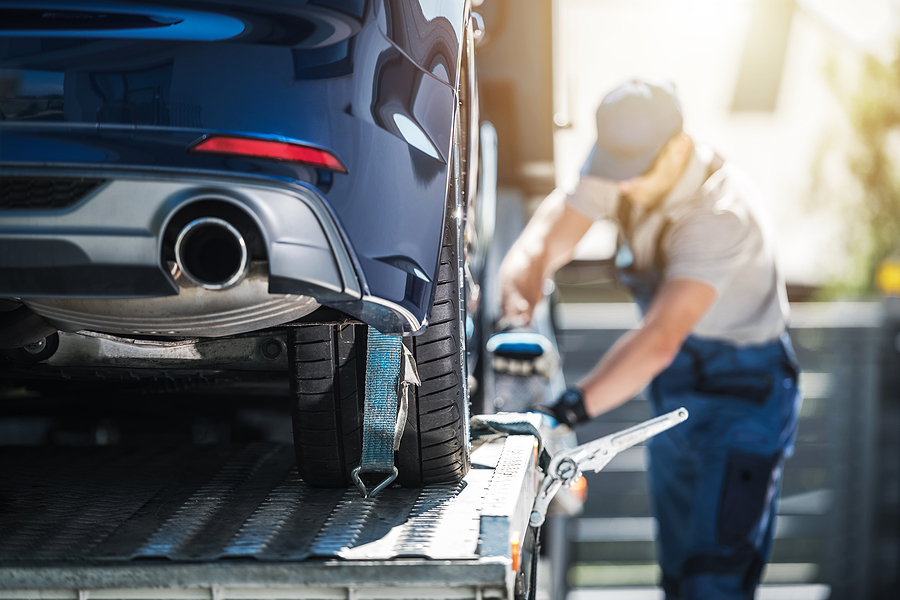
The Safest Ways to Tow a Pickup Truck and Mistakes to Avoid

Towing a pickup truck requires a different approach than moving a compact sedan or a small SUV. These vehicles are heavier, longer, and often equipped with four-wheel-drive systems that complicate the towing process. Whether you are dragging a truck behind an RV for a cross-country adventure or moving a disabled vehicle across town, choosing the wrong method can result in catastrophic transmission damage or dangerous road conditions.

Understanding the mechanics of your specific truck is the first step toward a safe journey. The method you choose—flat towing, using a dolly, or loading it onto a trailer—depends entirely on your vehicle’s drivetrain, your budget, and the equipment you have on hand. This guide breaks down the three primary options, helping you make an informed decision that protects your vehicle and keeps you safe on the road.
Call 317-247-8484 For 24 Hour Pickup Truck Towing in Indianapolis
Call 317-247-8484 For 24 Hour Pickup Truck Towing in Indianapolis & Central Indiana

Best Options for Towing a Pickup Truck

Flat Towing (Four-Down Towing)

Flat towing, often called “dinghy towing,” involves pulling the pickup truck with all four wheels rolling on the pavement. This is a favorite method among RV owners because it is quick to hook up and disconnect once the initial equipment is installed.

How it Works

In this scenario, a tow bar connects the front of the pickup truck to the hitch of the towing vehicle. The truck rolls freely behind the lead vehicle, much like a caboose on a train.

Required Equipment

To flat tow safely and legally, you cannot simply strap the vehicles together. You will need:

  • Tow Bar: The physical link between the two vehicles.
  • Base Plate: A custom-installed bracket on the pickup’s frame that the tow bar attaches to.
  • Supplemental Braking System: Most states require a system that activates the brakes in the towed truck when the lead vehicle brakes, reducing stopping distance.
  • Safety Cables: A fail-safe connection in case the tow bar fails.
  • Wiring Kit: This syncs the truck’s brake lights and turn signals with the RV or tow vehicle.

Pros and Cons

The primary advantage of flat towing is convenience. It tracks well behind the lead vehicle and takes up very little space at a campsite or destination since there is no trailer to store.

However, not every pickup truck can be flat towed. Many automatic transmissions rely on the engine running to pump fluid for lubrication. If the wheels turn the transmission internals without the engine running, you risk burning out the transmission. Generally, this method works best for 4WD trucks with a manual transfer case that can be shifted into neutral. Always consult your owner’s manual before attempting this.

Dolly Towing (Two-Wheel Towing)

A tow dolly is a small, two-wheeled trailer that lifts the front wheels of the vehicle off the ground while the rear wheels roll on the pavement. You have likely seen these used behind moving trucks for smaller cars.

When to Use a tow Dolly

Tow dollies are generally designed for front-wheel-drive (FWD) vehicles. Since the front wheels are stationary on the dolly, the transmission isn’t spinning, making it safe for FWD cars.

For pickup trucks, which are predominantly rear-wheel-drive (RWD) or four-wheel-drive (4WD), dolly towing presents a significant challenge. If you lift the front wheels of a RWD truck and drag it by the rear wheels, the driveshaft will still spin the transmission. Without the engine running to provide lubrication, severe damage can occur.

To safely dolly tow a RWD pickup, you generally must disconnect the driveshaft. This is a mechanical task that requires crawling under the truck, unbolting components, and securing them—a process that is often too cumbersome for casual towing.

Pros and Cons

The benefit of a dolly is that it is cheaper to rent or buy than a full trailer. However, for pickup owners, the mechanical risks often outweigh the savings. Additionally, you cannot reverse with a tow dolly attached; the pivot point makes it nearly impossible to back up without jackknifing.

Request Professional Tow Truck Service Now

Trailer Towing

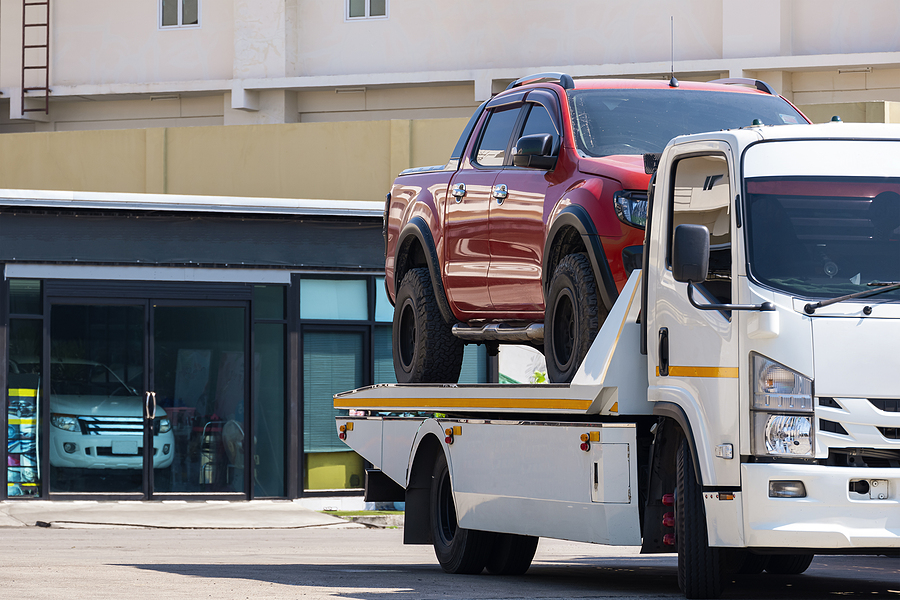
Trailer towing involves loading the entire pickup truck onto a trailer (often called a car hauler or flatbed), so no wheels touch the ground.

Types of Trailers

  • Open Flatbed Trailers: The most common choice. These are versatile and easier to load but expose the truck to road debris and weather.
  • Enclosed Trailers: These offer maximum protection and security but are significantly heavier and create more wind resistance, requiring a very powerful tow vehicle.

Pros and Cons

This is widely considered the safest method for the towed vehicle. Because the truck is stationary, there is no wear and tear on tires, suspension, or the transmission. You do not need to worry about disconnecting driveshafts or installing supplemental brakes in the truck itself.

The downside is the weight and bulk. You need a tow vehicle capable of pulling the weight of the pickup plus the weight of the heavy trailer. Maneuvering a long trailer through gas stations or tight streets requires skill and experience.

Choosing the Right Method

Selecting the right towing method usually comes down to three factors: vehicle compatibility, distance, and experience.

Vehicle Drivetrain

Start with your owner’s manual. It will explicitly state if your truck can be flat towed. If you have a standard RWD automatic truck, a full trailer is likely your only safe DIY option without major mechanical modifications. If you have an older 4WD truck with a manual transfer case, flat towing might be a viable option.

Distance and Terrain

For short trips across town, a flatbed trailer is often the least complicated solution. For long-distance travel, such as following an RV across the country, the investment in a flat-tow setup pays off in convenience.

Budget

Flat towing requires a high upfront cost for the base plate and braking system installation (often $3,000+), but it costs nothing per mile after that. Trailers can be rented fairly cheaply for one-time moves but purchasing one is a significant investment that also requires storage space.

Safety Tips for a Successful Tow

Regardless of the method you choose, safety must be the priority. Towing changes the physics of driving, affecting acceleration, braking, and turning.

Pre-Trip Inspection

Before you pull onto the road, perform a “circle check.” Ensure all safety chains are crossed and secure. Check the tire pressure on both the tow vehicle and the trailer or towed truck. Verify that all brake lights and turn signals are synchronized. If you are using straps on a trailer, tighten them, drive for five miles, and then pull over to retighten them as the load settles.

Driving Considerations

You must adjust your driving habits to accommodate the extra weight and length.

  • Increase following distance: It will take you much longer to stop.
  • Take turns wide: Prevents the trailer or towed truck from hopping the curb or hitting a pole.
  • Check your mirrors: Monitor the towed vehicle constantly to ensure it isn’t swaying or drifting.

DIY vs. Professional Towing

There is a distinct difference between recreational towing (like behind an RV) and recovery towing (moving a broken-down vehicle).

If your truck has broken down, or if you do not have a vehicle powerful enough to tow your pickup, attempting a DIY solution can be dangerous. Pickup trucks are heavy; an F-150 or Silverado can easily weigh over 5,000 pounds. Towing this weight with an undersized vehicle can burn out your transmission or cause you to lose control on the highway.

Furthermore, roadside repairs or loading a disabled truck onto a trailer on a busy shoulder carries a high risk of injury. In these scenarios, professional equipment is not just a luxury—it is a necessity.

When to Call a Professional

If you are in the Indianapolis or Central Indiana area and find yourself in need of reliable transport for your truck, you don’t have to manage the logistics alone. A professional towing service will have heavy-duty wreckers and flatbeds specifically designed to handle the weight and length of full-size pickups without causing damage.

Summary

Towing a pickup truck requires careful consideration of the vehicle’s mechanics and the right equipment. Flat towing offers convenience for RVers but requires specific drivetrain capabilities. Dollies are rarely the best choice for RWD trucks due to transmission risks. Flatbed trailers offer the best protection but require a heavy-duty tow vehicle to pull them.

If you are unsure about your truck’s weight or your tow vehicle’s capacity, err on the side of caution. The cost of a professional tow is far lower than the cost of replacing a transmission or recovering from a roadway accident. Prioritize safety, check your equipment, and choose the method that ensures you and your truck arrive in one piece.

Need professional help now? Contact our team for licensed towing and roadside assistance for trucks in Indianapolis and Central Indiana. We have the equipment and expertise to get your vehicle where it needs to go, safely and efficiently.

Call Now to Request Service

Related Post: Truck Towing Tips: How to Transport a Broken Down Truck Safely
Stuck on the Shoulder? Your Guide to Flat Tire Roadside Assistance

The sound is unmistakable—a rhythmic thumping, a sudden vibration in the steering wheel, or the feeling of your vehicle pulling aggressively to one side. A flat tire is more than just an inconvenience; it is a disruption that can leave you stranded on the side of a busy highway or an isolated back road.

While modern vehicles are safer than ever, tires remain the single point of contact between your car and the road. When that contact is compromised, your safety is at risk. Whether you are a seasoned driver or new to the road, knowing how to handle a blowout or a slow leak is essential knowledge.

This guide explores everything you need to know about managing a flat tire situation. We will cover how to recognize the warning signs, the step-by-step process of changing a tire yourself, and why professional roadside assistance is often the safest and most efficient choice.

Call 317-247-8484 For 24 Hour Flat Tire Roadside Assistance Service in Indianapolis

Understanding Flat Tires and Blowouts

Before you can fix the problem, you need to understand what caused it. Tires are durable, but they aren’t invincible. The most common culprit is a puncture from sharp objects like nails, screws, or glass. However, damage to the valve stem (the small tube used to inflate the tire) or simple wear and tear can also lead to air loss.

Sometimes, the issue isn’t an external object but neglect. According to the National Highway Traffic Safety Administration (NHTSA), 646 people died on the road in 2023 in tire-related crashes. Poor maintenance, such as underinflation or failing to rotate tires, significantly increases the risk of a blowout.

How To Tell If You Have a Flat While Driving

Recognizing a flat tire early can prevent an accident. If a front tire goes flat, you will likely feel the force in the steering wheel; it may become difficult to turn or pull hard to the left or right. If a rear tire fails, you will feel it more in the seat or the body of the vehicle.

Modern vehicles (model year 2008 and newer) are equipped with a Tire Pressure Monitoring System (TPMS). If the TPMS symbol—an exclamation point inside a horseshoe shape—illuminates on your dashboard, it means at least one tire is significantly underinflated.

DIY vs. Professional Help

When you realize you have a flat, your first instinct might be to fix it yourself. While changing a tire is a valuable skill, it isn’t always the safest option.

How to Change a Flat Tire Safely

If you decide to perform the change yourself, safety must be your priority. Never attempt to change a tire on a narrow shoulder or a busy highway.

  1. Find a safe location: Pull over to a flat, level surface away from traffic. Turn on your hazard lights immediately.
  2. Secure the vehicle: Apply the parking brake. If you have wheel chocks, place them behind the wheels to prevent rolling.
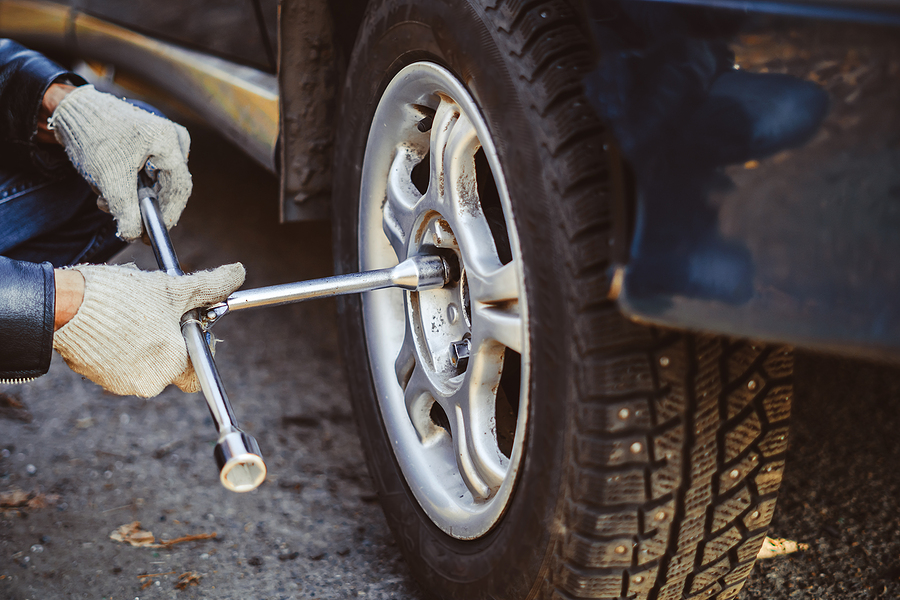
  3. Gather equipment: Locate your jack, lug wrench, and spare tire.
  4. Loosen the lug nuts: Before jacking up the car, use the wrench to loosen the lug nuts on the flat tire. Do not remove them yet.
  5. Lift the vehicle: Consult your owner’s manual for the correct jack points. Raise the car until the flat tire is about six inches off the ground.
  6. Swap the tires: Remove the lug nuts and the flat tire. Mount the spare tire.
  7. Tighten the nuts: Replace the lug nuts by hand. Then, use the wrench to tighten them snugly, but not fully.
  8. Lower and finish: Lower the vehicle until the tire touches the ground. Tighten the lug nuts completely in a crisscross pattern (tightening opposites rather than going in a circle) to ensure even pressure.

Remember that most vehicles today come with a “donut” or temporary spare. Experts at AAA warn that you should never drive more than 50 miles an hour on these tires, and your total driving distance should be limited to 50 miles.

Reasons to Opt for Professional Roadside Assistance

While the DIY approach is possible, there are several scenarios where calling a professional roadside assistance service is the smarter choice:

  • Safety concerns: If you are on a busy interstate or unlit road at night, stepping out of your vehicle is incredibly dangerous.
  • Physical limitations: Tires are heavy, and lug nuts can be seized tight. Changing a tire requires significant physical effort.
  • Missing equipment: Many newer cars do not come with a spare tire, opting instead for inflator kits or run-flat tires.
  • Complications: If your lug nuts require a special key you can’t find, or if the wheel is rusted to the hub, you will need professional tools.

Request Immediate Roadside Assistance Service in Indy

Benefits of Roadside Assistance for Flat Tires

Utilizing a roadside assistance service transforms a stressful, dirty, and dangerous ordeal into a manageable inconvenience.

Safety: Avoiding dangerous roadside situations

The most significant benefit is your personal safety. Professional technicians are trained to set up safety cones and work in high-traffic areas. By staying inside your vehicle while they work, you drastically reduce your risk of injury.

Time-saving: Quick and efficient tire change

A professional changes tires every day. What might take you 45 minutes of struggling with a scissor jack in the rain, a technician with a hydraulic jack and impact wrench can often finish in under 15 minutes.

Expertise: Professional handling of tire issues

Sometimes, what looks like a simple flat is actually rim damage or a suspension issue. A professional can assess the situation and determine if a tire change is sufficient or if the vehicle needs to be towed to a repair shop.

Proper Equipment: Ensuring correct tools and procedures

As mentioned, many modern vehicles have specific jack points or require lock keys for the wheels. Roadside assistance providers carry universal tools and heavy-duty equipment that ensure the job is done without damaging your vehicle.

Choosing the Right Roadside Assistance Provider

Not all towing and assistance companies are created equal. When you are stranded, you need reliability.

Factors to Consider

  • Response Time: How quickly can they reach you?
  • Coverage Area: Do they service the specific highway or rural road where you are stranded?
  • Cost and Transparency: Are there hidden fees, or is the pricing flat-rate?
  • 24/7 Availability: Tire trouble doesn’t stick to business hours. You need a provider who answers the phone at 2:00 AM on a Sunday.

Questions to Ask Potential Providers

When you call for help, ask the following to ensure you are getting the right service:

  • “What is your estimated time of arrival (ETA)?”
  • “Do you have the equipment to handle my specific vehicle type (e.g., heavy-duty truck, low-profile sports car)?”
  • “Does the quote include the service call and the labor?”

What to Expect When You Call for Assistance

Being prepared for the call can speed up the process. When you contact a dispatcher, stay calm and provide clear information.

Information to Provide to the Dispatcher

Location: Be as specific as possible. Use mile markers, exit numbers, or nearby landmarks. If you are unsure, use the GPS on your smartphone to pin your location.

  • Vehicle Details: Make, model, color, and license plate number.
  • Safety Status: Tell the dispatcher if you are in a dangerous spot (e.g., the left shoulder of a highway) so they can prioritize your call.
  • Spare Tire Status: Confirm whether you have a spare tire and if it is inflated. If you don’t have a spare, you will likely need a tow rather than a tire change.

Typical Response Time and Service Procedure

Response times for flat tire emergencies vary based on traffic and weather, but a reputable local company will keep you updated. Once the technician arrives, they will secure the scene with lights or cones. They will inspect your spare tire to ensure it is safe to use before installing it. If your spare is flat or missing, they will arrange to tow your vehicle to the nearest tire shop.

In Summary

A flat tire is a disruption, but it doesn’t have to be a disaster. Whether you choose to change the tire yourself or call for help, understanding the risks and the proper procedures is vital. However, for the sake of speed, convenience, and—most importantly—your safety, professional roadside assistance is often the best route.

If you find yourself stranded with a flat, don’t risk your safety on the side of the road. We provide 24-hour roadside assistance in Indianapolis and throughout Central Indiana. Call Us Now for fast, reliable service to get you back on the road safely.

Related Post: Prevent and Prepare: A Guide to Flat Tire Emergencies

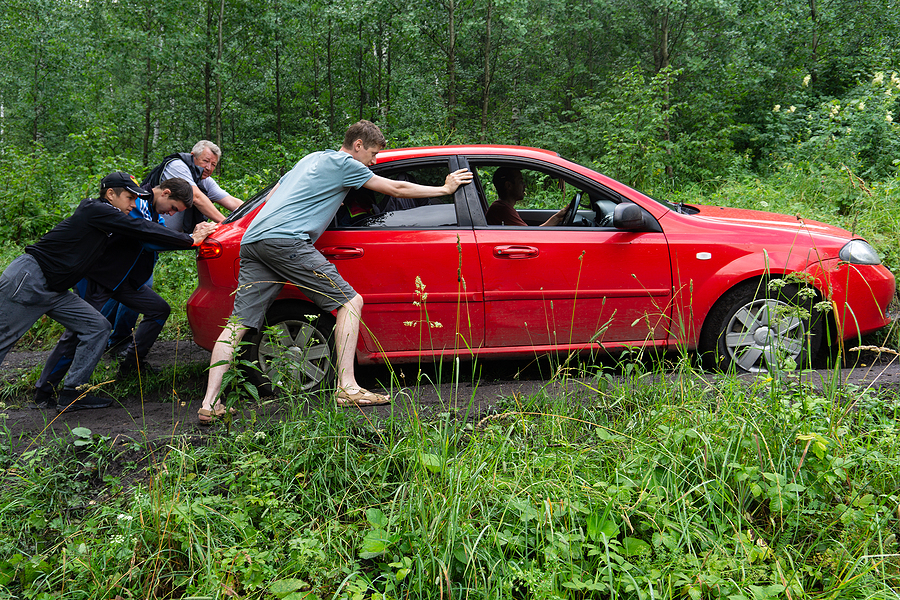
When Your Car Slides Off the Road and Gets Stuck: A Complete Recovery Guide

The moment your vehicle loses traction and slides off the road can be terrifying. Your heart pounds as you grip the steering wheel, watching helplessly as your car veers into a ditch, snowbank, or muddy shoulder. While this situation feels overwhelming, taking the right steps immediately after can make the difference between a minor inconvenience and a dangerous ordeal.

Understanding how to respond when your car becomes stuck protects both your safety and your wallet. Whether you’re dealing with icy winter conditions, unexpected rain, or construction zones, knowing the proper recovery procedures helps you navigate this stressful situation with confidence. This guide walks you through every step, from immediate safety measures to working with professional towing services.

Most importantly, remember that your safety comes first—no vehicle is worth risking injury or putting yourself in harm’s way.

Call 317-247-8484 if You Need Car Towing in Indianapolis Indiana
Is Your Car Stuck Off the Road? Call 317-247-8484 for Fast Towing Assistance!

Immediate Safety Measures After Going Off-Road

Check for Injuries First

The moment your car stops moving, take a deep breath and assess whether anyone in the vehicle is hurt. Even minor accidents can cause injuries that aren’t immediately apparent due to adrenaline. Ask all passengers how they feel and look for any visible signs of injury before focusing on the vehicle situation.

Turn On Your Hazard Lights

Activate your hazard lights immediately to alert other drivers to your situation. This simple step significantly reduces the risk of additional accidents, especially on busy roads or during poor weather conditions. Your hazard lights serve as a beacon, warning approaching vehicles to slow down and change lanes.

Assess Your Surroundings

Before exiting the vehicle, carefully observe your surroundings. Are you in a safe location away from traffic? Is the ground stable beneath your car? Look for potential hazards like steep drops, unstable surfaces, or oncoming traffic. If you’re on a busy highway or in severe weather conditions, staying inside your vehicle may be the safest option.

Call Emergency Services if Needed

If anyone is injured, your vehicle is blocking traffic, or you’re in immediate danger, call 911 right away. Emergency responders can provide medical assistance, direct traffic around your vehicle, and coordinate with towing companies for safe recovery.

Evaluating Your Vehicle’s Condition

Perform a Visual Inspection

Once you’ve ensured everyone’s safety, carefully examine your car’s condition. Look for obvious damage to the body, bumpers, or undercarriage. Check if any fluids are leaking onto the ground, which could indicate serious mechanical problems. Pay special attention to your tires—are they flat, damaged, or simply stuck?

Check Your Vehicle’s Position

Understanding how your car is positioned helps determine the best recovery approach. Is it sitting level, or is one side significantly lower than the other? Are all four wheels touching solid ground, or is your vehicle high-centered on a rock or snow pile? This assessment guides whether you can attempt self-recovery or need professional towing assistance.

Test Basic Functions

If your car appears undamaged, try starting the engine and testing basic functions like lights, wipers, and steering. However, avoid attempting to drive until you’re certain the path is safe and your vehicle is mechanically sound.

Basic Recovery Techniques to Try First

Clear Away Obstacles

Before attempting any recovery, remove debris, snow, ice, or mud from around your tires. Use whatever tools you have available—a shovel from your emergency kit works best, but even a sturdy piece of cardboard can help. Focus on creating a clear path in the direction you want to move.

Improve Traction Naturally

If you have cat litter, sand, or traction mats in your emergency roadside kit, place them under and in front of your drive wheels. These materials provide the grip your tires need to gain traction. Rock salt can also help melt ice, though it takes time to work effectively.

Try Gentle Acceleration

With obstacles cleared and traction aids in place, attempt to move your vehicle using gentle, steady pressure on the accelerator. Avoid spinning your tires, which only digs your car deeper into soft surfaces. If you have a manual transmission, try starting in second gear to reduce wheel spin.

Rock Your Vehicle

Sometimes gently rocking your car back and forth can help it gain enough momentum to break free. Shift between drive and reverse while applying light pressure to the accelerator. This technique works best on level ground with minimal obstacles.

When Professional Towing Becomes Necessary

Recognize the Warning Signs

Certain situations require professional towing and recovery services immediately. If your vehicle is severely damaged, leaking fluids, or positioned dangerously close to traffic, don’t attempt self-recovery. Similarly, if you’re stuck in deep snow, mud, or sand, or if your car is high-centered on an obstacle, professional equipment is likely necessary.

Don’t Risk Further Damage

Excessive tire spinning, aggressive rocking, or using inappropriate recovery methods can cause expensive damage to your transmission, differential, or other critical components. When basic techniques fail after a few attempts, calling a professional tow truck service protects your vehicle and your safety.

Consider Weather and Time Factors

Severe weather conditions, approaching darkness, or being stranded in an isolated area all increase the urgency of calling for professional help. Your safety is worth more than the cost of towing services, especially when environmental factors make self-recovery dangerous.

Preparing for Professional Towing Services

Contact a Reputable Towing Company

When you need professional assistance, choose a licensed and insured towing company with experience in road emergency situations. Zore’s Towing in Central Indiana, for example, specializes in emergency roadside assistance and towing and recovery services for vehicles in challenging situations.

Document the Scene

While waiting for the tow truck, take photos of your vehicle’s position, any visible damage, and the surrounding area. This documentation proves valuable for insurance claims and helps the towing operator understand the situation before arrival.

Gather Important Information

Have your vehicle registration, insurance information, and identification ready. The towing operator will need these documents, and having them organized saves time and reduces stress during an already challenging situation.

Stay Safe While Waiting

If possible, wait inside your vehicle with the doors locked and hazard lights activated. If you must exit the vehicle, stay away from traffic and wear bright or reflective clothing if available. Keep your emergency kit accessible, including items like a flashlight, blanket, and first aid supplies.

Request Immediate Towing Help in Indianapolis

Understanding Insurance and Financial Considerations

Review Your Coverage Options

Many auto insurance policies include roadside assistance coverage that reimburses towing costs up to certain limits. Contact your insurance provider promptly to understand your coverage and begin the claims process. Even if you don’t have specific roadside assistance, comprehensive coverage may apply to certain situations.

Document Everything for Claims

Keep detailed records of the incident, including photos, receipts from towing services, and any repair estimates. This documentation supports your insurance claim and ensures accurate processing. Note the time, weather conditions, and circumstances that led to your vehicle going off the road.

Understand Your Financial Responsibilities

Even with insurance coverage, you may be responsible for deductibles or costs exceeding your policy limits. Discuss payment options with your towing company upfront to avoid surprises and ensure you can access necessary services.

Post-Recovery Vehicle Inspection

Schedule a Professional Assessment

After your vehicle is recovered, have it thoroughly inspected by a qualified mechanic, even if no damage is visible. Off-road incidents can cause alignment issues, suspension damage, or other problems that aren’t immediately apparent but could lead to safety issues or expensive repairs later.

Check for Hidden Damage

Pay attention to how your car drives after recovery. Does it pull to one side? Are there unusual noises or vibrations? These symptoms could indicate frame damage, suspension problems, or other issues requiring professional attention.

Update Your Emergency Preparedness

Use this experience to improve your emergency preparedness. Consider adding items to your roadside kit that could have helped in your specific situation, such as better traction mats, a more powerful flashlight, or additional warm clothing for winter emergencies.

Preventing Future Off-Road Incidents

Maintain Your Vehicle Properly

Regular maintenance significantly reduces your risk of sliding off the road. Keep your tires properly inflated with adequate tread depth, maintain your braking system, and ensure your battery and fluid levels are appropriate for seasonal conditions. Consider seasonal tire changes to improve traction during winter months.

Practice Defensive Driving

Stay aware of changing road conditions and adjust your driving accordingly. Reduce speed in poor weather, maintain greater following distances, and avoid sudden movements that could cause loss of control. Keep your gas tank at least half full during winter months to prevent fuel line freezing.

Know Your Resources

Familiarize yourself with local emergency numbers and roadside assistance contacts before you need them. Program these numbers into your phone and keep a written copy in your glove compartment as backup.

Wrapping Up

Getting stuck off the road tests your preparedness and decision-making skills, but following these guidelines helps ensure your safety and minimizes potential damage. Remember that professional towing services exist to handle situations beyond your ability to resolve safely—there’s no shame in calling for help when you need it.

The investment in proper emergency equipment and professional towing services when necessary far outweighs the potential costs of injury, vehicle damage, or prolonged exposure to dangerous conditions. By staying calm, prioritizing safety, and knowing when to seek professional assistance, you can navigate these challenging situations successfully.

If you find yourself needing immediate towing and recovery assistance in Central Indiana, we are here to help. Contact Zore’s Towing for professional, reliable service that prioritizes your safety and gets you back on the road quickly.

Book Emergency Towing Service Now

Related Post: Stuck on the Shoulder? Here’s What to Do in a Roadside Emergency

Why You Should Always Mind Your Towing Capacity Limits

Planning a road trip with a trailer or moving heavy equipment can be an exciting venture. But connecting a trailer to your car without understanding the vehicle’s towing capacity limits can lead to serious trouble. Using a car that isn’t strong enough for the job is not just a minor miscalculation; it’s a significant risk that can have severe consequences for your vehicle, your safety, and your finances.

Towing might seem straightforward, but it’s a task that demands careful planning and respect for your vehicle’s capabilities. Pushing your car beyond its designated towing capacity can lead to everything from expensive mechanical failures to dangerous accidents on the road.

This guide will walk you through the essentials of safe towing capacity, helping you understand the risks of overloading and why sometimes, calling a professional tow truck service is the smartest move you can make.

Call 317-247-8484 For Professional Towing Capacity Solutions in Indianapolis

What is Towing Capacity and How Do I Find It?

Before you even think about attaching a trailer, you need to understand one of the most critical numbers associated with your vehicle: its towing capacity. This is the maximum weight your vehicle can safely pull. This figure is determined by the manufacturer and takes into account several factors, including the vehicle’s engine power, transmission, brakes, axle strength, and frame construction.

Exceeding this limit puts immense strain on your vehicle’s most important components. So, how do you find this crucial number? Look here:

Owner’s Manual: This is the most reliable place to find your vehicle’s towing capacity. The manufacturer will provide a detailed breakdown, often with different capacities based on engine type and whether you have a towing package installed.

Driver’s Side Door Jamb: Look for a sticker inside the driver’s side door. This label, often called the Safety Compliance Certification Label, lists various weight ratings, including the Gross Vehicle Weight Rating (GVWR) and Gross Combined Weight Rating (GCWR), which are used to calculate safe towing limits.

Manufacturer’s Website: Most car manufacturers have this information readily available online. You can usually search by your vehicle’s model, year, and specific trim.

If you can’t find the information in these places, it’s possible your vehicle is not rated for towing at all. Never assume it’s safe to tow just because you can attach a hitch.

The Risks of Overloading Your Vehicle

Towing a load that’s too heavy for your vehicle is like asking a marathon runner to sprint with a backpack full of bricks—something is bound to give. The consequences range from inconvenient to catastrophic.

Severe Mechanical Damage

Overloading your vehicle puts a tremendous amount of stress on its mechanical systems.

  • Transmission Failure: The transmission is often the first component to suffer. It can overheat while trying to handle the extra weight, leading to fluid breakdown and eventually, complete failure. A transmission replacement is one of the most expensive repairs a car owner can face.
  • Engine Strain: The engine has to work much harder to pull the excess weight, which can cause it to overheat and lead to long-term damage like warped cylinders or blown head gaskets.
  • Brake Damage: Your brakes are designed to stop the weight of your vehicle, not the weight of your vehicle plus a heavy trailer. The extra momentum can cause brakes to overheat, fade, or wear out prematurely, leaving you unable to stop in an emergency.
  • Suspension and Frame Damage: The sheer weight can damage your suspension, axles, and even bend the vehicle’s frame, leading to costly and sometimes irreparable damage.

Serious Safety Hazards

Beyond the mechanical risks, overloading creates a dangerous situation on the road for you and everyone around you.

  • Loss of Control: An overweight trailer can push the back of your vehicle around, a phenomenon known as “trailer sway.” This can make steering difficult and may lead to a complete loss of control, jackknifing, or a rollover.
  • Longer Stopping Distances: As mentioned, your brakes won’t be as effective. You’ll need significantly more distance to come to a stop, which can be disastrous in sudden traffic or an emergency.
  • Tire Blowouts: The extra weight puts more pressure on your tires than they are designed to handle, increasing the risk of a blowout, which can easily cause you to lose control of the vehicle.

Legal and Financial Implications

Ignoring towing capacity isn’t just unsafe; it’s often illegal.

  • Fines and Penalties: If you’re pulled over and found to be exceeding your vehicle’s weight limits, you can face hefty fines. Law enforcement officers are trained to spot overloaded vehicles.
  • Liability in an Accident: If you cause an accident while towing an overweight load, you could be held liable for damages and injuries. Your insurance company may even deny your claim, as you were operating the vehicle outside of its specified limits.
  • Voided Warranty: If your vehicle is still under warranty, any damage caused by improper towing will likely not be covered by the manufacturer.

Contact Us for Immediate Professional Towing Service

How to Practice Safe Towing

If you’ve confirmed your vehicle is up to the task, following safe towing practices is essential for a smooth journey.

1. Distribute Weight Correctly

How you load your trailer is just as important as how much you load. Aim to place 60% of the cargo weight in the front half of the trailer (closer to your vehicle) and 40% in the back. Also, ensure the load is centered side-to-side. Improper weight distribution is a primary cause of trailer sway.

2. Use the Right Towing Accessories

Having the right gear is non-negotiable.

  • Hitch: Ensure your hitch is rated for the weight of your trailer.
  • Safety Chains: Always cross the safety chains under the hitch. If the trailer detaches, the crossed chains will form a cradle to catch it, preventing it from veering into another lane.
  • Brakes and Lights: Check state laws. Many states require trailers over a certain weight to have their own braking system. Ensure your trailer’s brake lights and turn signals are connected and working correctly.

3. Drive Differently

Towing changes how your vehicle handles.

  • Reduce Speed: Drive slower than you normally would. Many states have lower speed limits for vehicles towing trailers.
  • Increase Following Distance: You need more space to stop, so leave several car lengths between you and the vehicle ahead.
  • Make Wider Turns: Your trailer will cut corners more sharply than your car, so take turns wider to avoid hitting curbs or other objects.

4. Perform Regular Checks

Before you leave and at every stop, do a quick inspection. Check your tires, make sure the hitch is secure, and confirm that your lights are working.

When to Call a Professional Towing Company

Sometimes, the safest and most efficient option is to leave it to the experts. If your vehicle’s towing capacity isn’t sufficient, or if you’re dealing with a particularly heavy or valuable load, a professional wrecker company like Zore’s Towing is your best choice.

Professional services have the right equipment and experienced operators to handle any vehicle towing job safely. They have powerful trucks designed specifically for heavy loads, and their drivers are trained to navigate challenging road conditions while towing. Using a professional tow truck service eliminates the risk of damaging your own vehicle and ensures your cargo arrives safely at its destination.

In Summary

Towing can be a useful skill, but it’s one that requires knowledge and preparation. Understanding your vehicle’s limits and practicing safe towing techniques are essential for protecting your vehicle, your cargo, and your life. Never take a chance with a load that’s too heavy. When in doubt, the smartest and safest decision is always to contact a professional for your towing needs.

If you need safe, reliable, and professional towing, contact Zore’s Towing today. From small tows and roadside assistance solutions to large, wrecker and recovery services, we have the advanced equipment and expertise to get the job done right.

Talk to a Towing Professional Now

Related Post: Towing Capacity: The Ultimate Guide to Understanding Your Vehicle’s Pulling Power

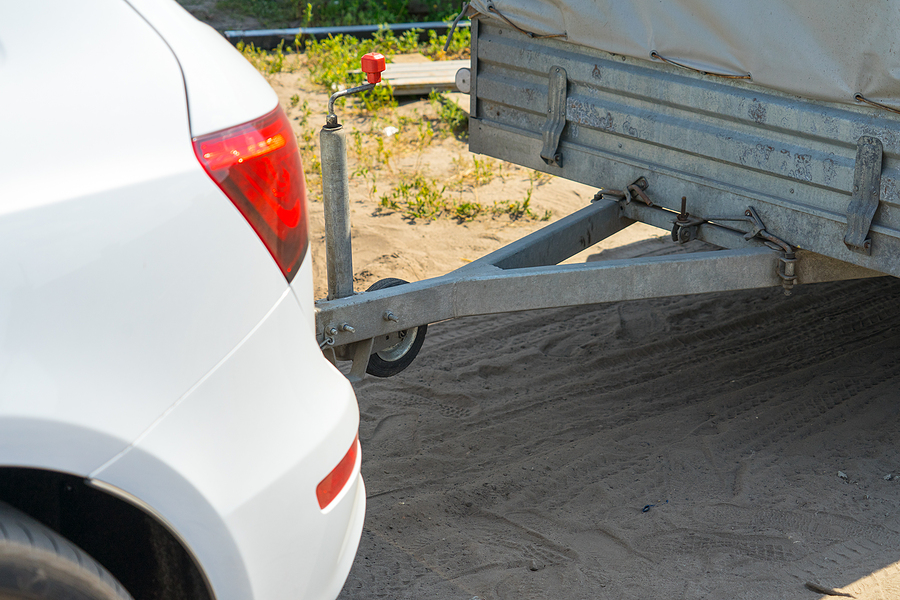
Trailer Sway Control Tips for a Safer Towing Experience

Trailer sway can transform a routine towing experience into a dangerous situation within seconds. This unpredictable side-to-side motion occurs when your trailer begins oscillating behind your vehicle, creating a swaying motion that can quickly escalate beyond your control. Understanding trailer sway isn’t just about convenience—it’s about protecting yourself, your passengers, and everyone else on the road.

When trailer sway occurs, it affects your vehicle’s stability and can lead to jackknifing, rollovers, or complete loss of control. The consequences extend far beyond property damage, potentially resulting in serious injuries or fatalities. Whether you’re hauling equipment for work, towing a recreational vehicle for vacation, or transporting cargo, mastering trailer sway control is essential for safe towing practices.

This comprehensive trailer towing guide will equip you with the knowledge and techniques needed to prevent trailer sway before it starts, recognize early warning signs, and respond effectively if sway does occur.

Call 317-247-8484 For Professional Trailer Towing Service in Indianapolis

Understanding the Root Causes of Trailer Sway

Trailer sway doesn’t happen randomly—specific factors create the conditions that allow this dangerous phenomenon to develop.

Improper Weight Distribution 

Improper weight distribution represents one of the most common culprits. When too much weight sits behind the trailer’s axle, it creates a pendulum effect that encourages swaying motion. Conversely, insufficient tongue weight can also contribute to instability. 

External Forces 

External forces play a significant role in trailer sway development. Strong crosswinds, particularly sudden gusts, can push against your trailer’s surface area and initiate swaying. Passing large vehicles creates similar effects through air displacement and turbulence. The faster these interactions occur, the more dramatic their impact on your trailer’s stability. 

Road Conditions and Driving Behaviors 

Road conditions and driving behaviors also contribute to sway issues. Uneven pavement, potholes, and sudden lane changes can trigger the initial motion that develops into problematic sway. Speed amplifies all these factors—the faster you travel, the more severe any sway becomes and the more difficult it becomes to control.

Essential Preparation Before Towing

Tongue Weight and Loading

Proper preparation forms the foundation of safe trailer towing and effective sway prevention. Loading your trailer correctly creates the stability needed to resist swaying forces. Place 60% of your cargo weight in the front half of the trailer, ensuring the tongue weight falls between 10-15% of your total trailer weight. Heavy items should sit low and centered, while lighter cargo can occupy higher positions.

Tire Pressure and Stability

Tire pressure affects trailer stability more than many people realize. Check both your vehicle’s and trailer’s tire pressure when cold, following manufacturer specifications exactly. Underinflated tires create excessive rolling resistance and heat buildup, while overinflated tires reduce your contact patch and traction. Don’t forget to inspect tire condition, looking for uneven wear patterns that might indicate alignment issues or other problems.

Preparing the Tow Vehicle

Your tow vehicle’s preparation is equally critical. Verify that your vehicle’s towing capacity exceeds your loaded trailer weight, including a safety margin of at least 20%. Check your hitch installation, ensuring all bolts are properly torqued and safety chains are correctly attached with enough slack for turning but not so much that they drag on the ground.

Safe Driving Practices to Prevent Trailer Sway

Speed Management

Speed management represents the most important aspect of safe trailer towing. Higher speeds exponentially increase sway severity and reduce your reaction time. Maintain speeds 5-10 mph below posted limits on highways and reduce speed further in challenging conditions. Remember that your trailer towing capacity isn’t just about weight—it also involves your ability to maintain control at various speeds. 

Smooth and Gradual Movements 

Smooth, gradual movements prevent the sudden inputs that can trigger trailer sway. Avoid abrupt steering corrections, hard braking, and rapid acceleration. When changing lanes, use extended distances and gentle steering inputs. Plan your moves well in advance, giving yourself extra time and space for every maneuver. 

Adjusting for Weather Conditions 

Weather conditions demand special attention and adjusted driving techniques. Strong winds require reduced speeds and heightened awareness of your trailer’s behavior. Rain reduces traction and requires gentler inputs and increased following distances. In severe weather conditions, consider postponing your trip until conditions improve.

Request Professional Towing Right Now

Equipment and Technology Solutions

Modern Trailer Sway Control Systems 

Modern trailer sway control systems provide electronic assistance that can dramatically improve towing safety. These systems use sensors to detect the onset of sway and automatically apply individual wheel brakes to counteract the motion. Many newer vehicles include integrated trailer sway control as part of their electronic stability programs.

Weight Distribution Hitches 

Weight distribution hitches help level your vehicle and distribute tongue weight across more axles, improving stability and control. These systems use spring bars to transfer weight from your vehicle’s rear axle to the front axle and trailer axles. Proper setup requires professional installation and adjustment to achieve optimal performance.

Trailer Sway Bars or Stabilizers 

Trailer sway bars or stabilizers provide mechanical resistance to side-to-side motion. These devices connect between your vehicle and trailer, creating friction or hydraulic damping that opposes swaying forces. While not as sophisticated as electronic systems, sway bars offer reliable, maintenance-free operation and work with older vehicles that lack modern stability systems.

Recognizing Early Warning Signs

Understanding how trailer sway develops helps you recognize problems before they become dangerous. Initial sway often feels like a gentle side-to-side tugging sensation transmitted through your steering wheel. Your vehicle might require constant minor steering corrections to maintain a straight path. These early signs indicate developing instability that requires immediate attention.

Visual cues can also alert you to developing problems. Watch your mirrors for trailer movement that doesn’t match your vehicle’s path. Other drivers may signal problems by giving you extra space or attempting to get your attention. Trust these observations and take corrective action immediately.

Physical sensations provide another warning system. Unusual vibrations, increased steering effort, or a feeling that your vehicle is being “pushed around” all suggest developing sway conditions. Pay attention to how your vehicle responds to normal steering inputs—delayed or exaggerated responses often precede more serious control problems.

What to Do If Trailer Sway Occurs

When trailer sway begins, your response determines whether the situation improves or escalates into a dangerous loss of control. The natural tendency is to steer against the sway, but this often makes the problem worse by creating over-correction cycles that amplify the swaying motion.

Instead, gradually reduce speed by easing off the accelerator and applying gentle, steady pressure to your trailer brake controller if equipped. Avoid using your vehicle’s brakes initially, as this can worsen the sway. Keep your steering wheel steady, resisting the urge to make corrections unless absolutely necessary to avoid obstacles.

If electronic trailer brake control isn’t available, maintain steady steering and allow speed to decrease naturally. In severe cases, gradually apply your vehicle’s brakes while maintaining firm control of the steering wheel. Once you regain control, find a safe location to stop and inspect your setup before continuing.

When Professional Towing Services Make Sense

Some situations exceed the capabilities of typical vehicle and driver combinations. Extremely heavy trailers, valuable cargo, or challenging weather conditions might warrant professional towing services. Commercial operators possess specialized equipment, training, and experience that can handle difficult towing scenarios safely.

Legal considerations also influence this decision. Exceeding weight limits, lacking proper licensing, or operating equipment that doesn’t meet regulatory standards can result in significant penalties and liability issues. Professional services ensure compliance with local, state, and federal towing regulations while maintaining proper insurance coverage.

In Summary

Mastering trailer sway control combines proper preparation, appropriate equipment, safe driving practices, and continuous learning. These techniques work together to create a comprehensive approach to towing safety that protects you and everyone sharing the road.

The complexity of modern towing systems and varying legal requirements often benefit from professional guidance. Consider consulting a towing expert who can evaluate your specific vehicle, trailer, and intended use to recommend optimal equipment and techniques. Professional advice ensures you’re not only following best practices but also complying with all applicable regulations while maximizing your safety margin.

For trusted and professional trailer towing and roadside assistance in Indianapolis, contact Zore’s Towing today. Ensure your peace of mind on the road by reaching out to us for reliable, expert support whenever you need it most.

Call Now for Immediate Towing Help

Related Post: 10 Essential Items You Need to Tow a Trailer Safely

Hit a Pothole? How Roadside Assistance Service Can Help 

Potholes are the nemesis of every driver. Whether you commute daily, enjoy weekend road trips, or simply run errands downtown, encountering these road hazards is nearly unavoidable. Every year, drivers across the United States deal with the aftermath of pothole-related vehicle damage, ranging from minor inconveniences to costly repairs. If you’ve hit a pothole and aren’t sure what to do next, don’t panic—we’ve got you covered. Below, we’ll talk about common pothole damages, what to do after hitting one, and how a roadside assistance service can make all the difference when it comes to dealing with unexpected vehicle issues. 

Call 317-247-8484 For 24 Hour Roadside Assistance Service in Indianapolis and Central Indiana

Common Damages from Pothole Accidents 

Hitting a pothole might seem like just a jolt, but the repercussions can be far more serious than they appear at first. Beyond the initial shock, pothole impacts can cause hidden damage to your vehicle that may lead to costly repairs down the line. Here are some of the most common issues caused by pothole impacts and why they shouldn’t be ignored:

Tire Punctures or Blown Tires 

Potholes often have hard, sharp edges that can puncture your tires or cause a sudden blowout. A blown tire can leave you stranded on the side of the road and require immediate flat tire repair or replacement. 

Bent Rim 

The impact of hitting a pothole can also bend your vehicle’s rim, causing improper tire alignment and a rough ride. Driving on a bent rim can lead to further damage to your tires and suspension system. 

Suspension and Alignment Issues 

Potholes don’t just affect your wheels. They can also damage your car’s suspension, leading to issues like uneven tire wear or trouble steering. You may also notice your car pulling to one side, a clear sign of alignment problems. 

Undercarriage Damage 

Severe potholes can even damage the undercarriage of your vehicle, scraping or denting essential components like the exhaust system or oil pan. 

Immediate Actions After Hitting a Pothole 

If you’ve hit a pothole, taking the right steps can save you time, money, and further stress. Here’s what you should do immediately after the incident:

1. Pull Over Safely 

Find a safe place to stop and assess your vehicle. Driving further with damage can worsen the situation. Before getting out of your vehicle, be sure there is no oncoming traffic.

2. Inspect for Visible Damage 

Check for obvious issues like a flat tire, bent rims, or fluid leaks. Don’t forget to listen for unusual noises, which could indicate internal damage. 

3. Document the Incident 

Take pictures of the pothole and any damage to your vehicle. These photos can be helpful if you plan to file an insurance claim or report the pothole to your local authorities. 

4.Check Your Emergency Kit 

A well-stocked roadside emergency kit can be a lifesaver in these situations. Make sure you have essentials like a spare tire, jack, flashlight, and first aid supplies. 

5. Call for Help 

If the damage is significant or you’re not confident performing repairs yourself, contact a roadside assistance company in Indianapolis for help. 

The Role of Professional Roadside Assistance 

When a pothole damages your car, it can be both frustrating and inconvenient. A roadside assistance company can be your best ally in these situations, offering support when you need it most. Whether it’s a flat tire caused by the impact or damage to your vehicle’s alignment, these services are designed to help you get back on the road quickly and safely.

From towing your car to the nearest repair shop to providing on-the-spot fixes like tire changes or temporary solutions, roadside assistance ensures you’re not stranded and can continue your journey with peace of mind. Here’s how these services can help:

☑ Towing Services 

If the pothole damage has left your vehicle undriveable, roadside assistance can arrange for emergency towing to a nearby repair shop. 

☑ Flat Tire Repair or Replacement 

Many roadside assistance providers offer tire-changing services, helping you replace a blown tire with your spare on the spot. 

☑ Emergency Repairs 

Some roadside assistance companies offer basic on-site repairs that can temporarily address issues like minor suspension damage or loose components. 

☑ Peace of Mind 

When you call for roadside assistance, you’re not just getting help with your car; you’re gaining peace of mind knowing that professionals will handle the situation. 

Choosing the Right Roadside Assistance Provider 

Not all roadside assistance service providers are created equal. Here are some factors to consider when selecting a service:

  • Service Options: Look for a provider that offers a wide range of services, including towing, tire changes, and emergency repairs. 
  • Availability: Choose a company that provides 24/7 assistance to ensure you’re covered at any time of day. 
  • Response Time: Quick response times are essential when you’re stranded on the side of the road. 
  • Customer Reviews: Check online reviews to learn about the experiences of other customers. 
  • Additional Perks: Some companies offer extras like discounts on repairs or membership benefits for frequent users. 

How to Report a Pothole in Indianapolis 

Fixing potholes not only prevents future damages but also ensures safer roads for everyone. The city of Indianapolis makes it easy for drivers to report these problems. Here’s how:

  1. Request Indy Online Portal: Visit the official Request Indy portal and follow the instructions to submit a pothole report. 
  2. Call Indy 311: Dial 311 to speak directly with a city representative, who will log your report and provide further guidance. 
  3. Mobile App: Download the Request Indy app on your smartphone for a convenient way to report potholes while on the go. 

This proactive step not only benefits your fellow drivers but also reduces the risk of future vehicle damage for yourself. 

In Summary

While potholes might be inevitable, the way you prepare for and respond to them can make a world of difference. Keep your roadside emergency kit stocked, familiarize yourself with reliable roadside assistance companies, and take note of pothole reporting resources in your area. 

By staying proactive and informed, you’re not just protecting your vehicle but also contributing to safer roads for everyone. And if you’re in Indiana, having a trusted roadside assistance company at your service makes all the difference. 

Don’t wait until the unexpected happens. Find a roadside assistance provider that fits your needs and enjoy peace of mind on every drive. Contact Zore’s Towing at 317-247-8484 for 24 hour roadside assistance services in Indianapolis and its surrounding areas. We serve over 30 central Indiana counties, 24 hours a day and 365 days a year.

Related Posts:

Top Alternatives to Having a Spare Tire
Roadside Assistance Exposed: Myths and Truths Every Driver Should Know
A Guide to Roadside Assistance: What You Should Know

The Benefits of Quick Clearance Towing Services for Traffic Obstructions

Accidents and breakdowns are an unavoidable part of driving. Unfortunately, they can often turn a manageable delay into frustrating traffic jams or even dangerous road hazards. This is where quick clearance towing services come in. They are a lifesaver for drivers and a necessity for maintaining safe, efficient roadways. If you’ve ever been stuck in traffic because of a car wreck or lane-blocking breakdown, you know how vital fast, reliable wrecker services can be. 

This guide will walk you through the importance of quick clearance towing services, their benefits, and how technology is shaping the future of traffic obstruction solutions. By the end, you’ll know exactly why these services are a critical component of modern road safety and traffic management.

Call 317-247-8484 For Quick Clearance Towing Services in Indianapolis

Why Traffic Obstructions Are More Than an Annoyance

Before we look at the benefits of quick clearance towing, it’s important to understand the real-world impact of traffic obstructions on road safety and the economy.

Economic Costs: 

Traffic jams caused by car wrecks and breakdowns cost billions of dollars annually in lost productivity and wasted fuel. A study by the Texas A&M Transportation Institute found that Americans lose about $87 billion each year due to traffic congestion. Quick clearance towing and recovery services can significantly minimize this avoidable financial drain.

Safety Concerns: 

Vehicles stuck on the road, whether due to a crash or breakdown, create hazards for other drivers. The longer these obstructions remain, the higher the risk of secondary accidents. According to the Federal Highway Administration, 18% of all crashes are secondary accidents, often caused by vehicles failing to slow down near an initial incident. Fast-acting towing and winching services can dramatically reduce this risk.

Environmental Impact: 

Idling engines during traffic jams contribute to unnecessary emissions, impacting air quality and the environment. Clearing obstructions quickly not only helps keep cars moving but also reduces the environmental footprint of extended traffic congestion.

The Benefits of Quick Clearance Towing Services for Drivers 

When you encounter a sudden traffic obstruction, quick clearance towing services provide a lifeline for drivers, road safety teams, and commuters. Here’s how they’re making your daily commute safer and more efficient:

1. Reduced Traffic Congestion 

Every minute a car wreck or disabled vehicle blocks a lane, the buildup of traffic worsens. Quick clearance towing solutions work quickly to remove the obstruction, restoring normal traffic flow more efficiently than traditional towing companies might.

2. Improved Road Safety 

Blocked lanes often lead to rubbernecking, erratic lane changes, and panic braking. These scenarios are ripe for accidents. Quick clearance towing minimizes the chaos, clearing the obstruction before it becomes a magnet for secondary crashes.

3. Faster Commute Times 

How often have you been stalled on the highway, inching forward for miles, only to realize that the cause was a single disabled vehicle? Quick action by professional towing companies ensures that your trips are inconvenienced as briefly as possible.

4. Specialized Services for Complex Wrecks 

Beyond routine towing, many quick clearance services offer specialized solutions such as winching services for pulling vehicles out of ditches or clearing overturned vehicles safely from the highway. These tools serve to handle accidents of all magnitudes swiftly.

5. Peace of Mind for Stranded Drivers 

For drivers involved in the incident, a quick wrecker service provides peace of mind, knowing help will arrive in minutes to remove their car from the road and transport it to the nearest repair shop.

Best Practices for Quick and Safe Traffic Incident Clearance 

Towing isn’t simply about moving a car from one place to another—especially when traffic is backed up or safety is a concern. Here’s how today’s towing operators are ensuring efficient and safe traffic clearance:

  • Specialized Equipment: Modern quick clearance services use advanced towing equipment like flatbeds, heavy-duty wreckers, and integrated winching systems. These handle a variety of vehicle types and accident scenarios.
  • Skilled Operators: Professional towing operators undergo extensive training to ensure safe recovery under various conditions, particularly in high-speed traffic zones.
  • Collaboration with First Responders: Towing companies often work closely with police, fire, and emergency medical teams to coordinate the safe removal of vehicles and related debris from the roadway.
  • Clear Communication with Drivers: Clear signage, warnings, and communication via traffic apps alert drivers to lane closures and give them alternate routes before they reach the scene.

The Role of Technology in Quick Clearance Towing 

Like many industries, the towing and recovery sector has been transformed by technology. These advancements are helping services become faster, safer, and more efficient:

  • GPS Tracking and Dispatching: Many towing companies now use real-time GPS systems to locate stranded vehicles and dispatch the nearest available tow truck. These cut response times dramatically.
  • Traffic Management Systems: Integration with smart traffic systems helps prioritize incident clearance, ensuring fewer disruptions during peak hours.
  • AI and Predictive Analytics: Artificial Intelligence (AI) tools are being developed to predict where traffic incidents are most likely to occur based on historical data, helping governments and towing companies allocate their resources more effectively.
  • Mobile Apps for Reporting: Some services enable stranded drivers to use mobile apps to request help. These apps provide detailed info about their location and type of incident, streamlining assistance.

Key Takeaways

It’s clear that quick clearance towing services play a major role in keeping traffic moving and roads safe. By reducing congestion, preventing secondary accidents, and enhancing the overall driving experience, these services provide critical support for both individuals and communities.

But these benefits only come when quick clearance programs are prioritized and supported—both financially and operationally. That’s why it’s essential for drivers and safety advocates alike to champion these services in their communities. Encourage your local governments and transportation departments to invest in advanced towing technologies and well-trained towing companies.

If you’re stuck on the road—whether in a breakdown or in a traffic jam—just remember the difference well-run quick clearance services make. Safer, clearer roads benefit us all, and it starts with advocating for more efficient solutions to traffic obstructions.

Looking for a professional towing and recovery company near you? Contact Zore’s Towing at 317-247-8484 for a wide range of towing services in Indianapolis and surrounding counties. From emergency towing and traffic clearance to car transport, winching, roadside assistance, and more, we handle it all out there on the road.

Related Posts:

A Complete Guide to Hiring the Right Wrecker Service
How to Find a Reliable Car Wreck Towing Service
Roadside Emergencies That Require Towing and Ones That Do Not

Long Distance Towing: How to Prepare Your Vehicle for a Lengthy Haul

In today’s fast-paced world, the need for long-distance towing services is becoming increasingly common. Whether you’re relocating, heading out on an extended vacation, or simply need your vehicle transported over a long distance, preparing your vehicle for such a journey is crucial. Ensuring that your car is ready for the trip can save you time, money, and stress, not to mention the potential hazards of an ill-prepared vehicle on the road.

This blog post aims to provide you with a comprehensive guide on how to prepare your vehicle for long-distance towing. By the end of this article, you will have a clear understanding of what long-distance towing entails, factors that affect it, and practical tips for getting your vehicle ready for the road.

Call 317-247-8484 for Long Distance Towing Service in Indiana
Call 317-247-8484 for Long Distance Towing Service in and Outside of Indiana

Understanding Long-Distance Towing

What is Long-Distance Towing?

Long-distance towing refers to the transportation of a vehicle over extensive distances, often spanning several hundred miles. Unlike local towing, which typically involves short distances within a city or town, transporting a vehicle over long distances necessitates specialized equipment and careful planning to ensure safe and efficient towing.

Differences Between Local and Long-Distance Towing

Local towing is usually straightforward, involving short trips to the nearest repair shop or dealership. In contrast, long haul tows necessitate meticulous planning and preparation. The primary differences include the need for robust towing equipment, experienced drivers, and a thorough understanding of the route and conditions along the way.

Why Long-Distance Towing is Essential

For many vehicle owners, long-distance towing is a necessity rather than a luxury. Relocation, vacations, and vehicle breakdowns far from home are just a few scenarios where long-distance towing becomes indispensable. Understanding its importance can help you make informed decisions when the need arises.

Factors Affecting Long-Distance Towing

Vehicle Weight, Size, and Type

The weight, size, and type of your vehicle play a significant role in determining the towing approach. Larger vehicles like trucks and SUVs require more powerful towing equipment compared to smaller cars. Ensure that your towing service has the appropriate equipment to handle your vehicle’s specifications.

Weather Conditions and Terrain

The weather and terrain along the route can significantly impact the towing process. Adverse weather conditions such as rain, snow, or high winds can pose challenges, while rough or mountainous terrain requires extra caution. It’s essential to discuss these factors with your towing service provider to ensure they’re well-prepared for any eventuality.

Legal and Regulatory Considerations

Different states and regions may have specific regulations governing long-distance towing. These can include weight limits, permits, and safety standards. Make sure that your towing company complies with all relevant laws to avoid any legal complications during the trip.

Preparing Your Vehicle for a Safe Journey

Regular Maintenance Tasks

Before embarking on a long-distance tow, it’s critical to ensure that your vehicle is in optimal condition. Regular maintenance tasks such as oil changes, brake inspections, and battery checks can go a long way in preventing issues on the road. A well-maintained vehicle is less likely to encounter problems during the tow.

Comprehensive Checklist for Long Trips

A detailed checklist can help you cover all bases when preparing your vehicle for a long-distance tow. Key items to include are:

  • Tires: Check for proper inflation and tread depth.
  • Brakes: Ensure that they are in good working condition.
  • Fluids: Top off all essential fluids, including oil, coolant, and brake fluid.
  • Lights: Verify that all lights are functioning correctly.
  • Battery: Check the battery’s charge and condition.

Personal Items and Documentation

Remove any valuable personal items from your vehicle to prevent loss or damage during the tow. Additionally, gather all necessary documentation, such as registration, insurance, and identification, to ensure a smooth process.

Choosing the Right Towing Service

Factors to Consider

Selecting the right towing service is crucial for a hassle-free experience. Key factors to consider include the company’s reputation, experience, and the quality of their equipment. Look for customer reviews and testimonials to gauge their reliability and professionalism.

Importance of Insurance and Roadside Assistance

Ensure that the towing company offers comprehensive insurance coverage for your vehicle during the tow. This provides peace of mind in case of any unforeseen issues. Additionally, inquire about their roadside assistance services, which can be invaluable in case of emergencies.

Cost and Transparency

Transparent pricing is essential when choosing a towing company. Request a detailed quote that outlines all potential costs, including any additional fees for special equipment or services. This helps avoid any surprises when the bill arrives.

Safety Tips for the Road

Driving Behavior and Speed Control

If you’re towing your vehicle yourself, it’s crucial to adopt safe driving practices. Maintain a steady speed, avoid sudden maneuvers, and keep a safe distance from other vehicles. Following these guidelines can help prevent accidents and ensure a smooth towing experience.

Emergency Preparedness

Despite thorough preparation, emergencies can still occur. Equip your vehicle with an emergency kit that includes items like a first aid kit, flashlight, and basic tools. Knowing how to handle common issues, such as flat tires or engine trouble, can make a significant difference in critical situations.

Communication and Support

Maintain open communication with your tow truck service provider throughout the journey. Ensure that you have their contact information readily available and that they provide regular updates on the progress of the tow. This helps you stay informed and address any concerns promptly.

Conclusion

Preparing your vehicle for long-distance towing might seem daunting, but with the right knowledge and planning, it can be a smooth and stress-free process. By understanding the nuances of long-distance towing, considering the key factors involved, and following practical preparation and safety tips, you can ensure that your vehicle reaches its destination safely and efficiently. Remember, the importance of choosing a reliable towing service cannot be overstated. It’s a decision that can make or break your towing experience.

If you’re in need of trusted and professional car transport or long haul towing, let our pros help. Contact Zore’s Towing at 317-247-8484 for a wide range of towing services in Indianapolis and surrounding counties. We offer everything from light-duty and long distance towing to heavy equipment transportation, wrecker service, lowboy tows, flatbed tows, and more.

Related Posts:

Essential Tips for Hassle-Free Long Distance Towing
Tips for Towing Your Car Across Long Distances
How to Transport a Car Across the Country

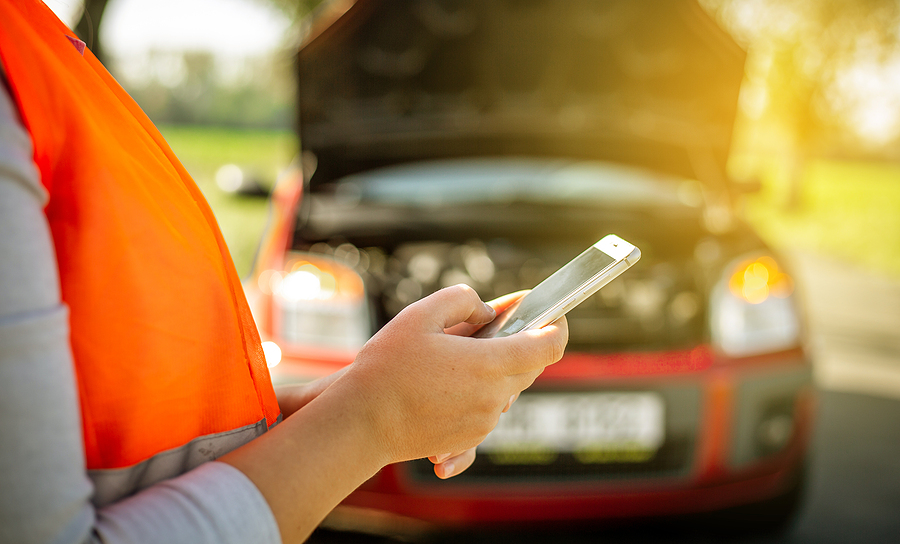
Safety First: What to Do While Waiting for a Tow Truck

For many of us, the road is like a second home. It’s where we encounter life’s unexpected twists in a very literal sense. A flat tire, engine trouble, or an unfortunate roadside collision can happen to anyone at any time. In these often-stressful scenarios, the wait for a tow truck is a critical period where the right actions can mean the difference between a smooth recovery and a complicated situation.

This blog post is your guide to making the most of those crucial minutes while you’re waiting for a two truck roadside assistance service. Whether you’re an experienced driver or you’ve just got your keys to independence, the importance of these steps can’t be overstated.

Call 317-247-8484 For Local Tow Truck Service in Indianapolis Indiana

Key Steps to Take While You Wait for a Tow Truck

When finding yourself in a situation where you need to wait for a tow truck, it’s important to take specific steps to ensure safety, expedite the service, and feel more at ease throughout the process. By following these guidelines, you can effectively manage the situation and make the experience smoother for yourself and those assisting you. Let’s dive into the most important key points.

Ensure Your Personal Safety

The first and most crucial step is to ensure the safety of both you and your passengers. This is paramount for a smooth and secure journey. Here’s how:

Find a Safe Location – If you can, move your vehicle to a safe and visible location, away from the flow of traffic. This could be a nearby shoulder, a parking lot, or an emergency stopping area.

Turn on Hazard Lights – Alert others of your presence by activating your hazard lights. Ensure they are working and visible, especially in adverse weather or low-light conditions.

Use Reflective Triangles or Cones – If you have them, place reflective triangles behind your vehicle to provide an extra layer of warning to oncoming traffic.

Contact an Emergency Tow Truck Service

Having the right towing and roadside assistance service contact information at your fingertips is invaluable when faced with a roadside emergency. Here’s what you need to keep in mind:

Keep Essential Contact Information Handy – Store the number of your roadside assistance service or tow truck company in your phone and on a paper in the car. Familiarize yourself with their procedure for requesting assistance.

Communicate Your Location Clearly – When you call for tow truck service, be precise about your location. Note any landmarks, mile markers, or recognizable signs to help the service find you quickly.

Remain Calm and Patient

Remaining composed is essential for both your mental well-being and the safety of others on the road.

Avoid Roadside Confrontations – If you have had an accident, never engage in confrontation with other parties involved. Remain calm and wait for proper authorities or assistance.

Be Prepared to Wait and Stay Informed – Tow trucks are dispatched based on priority and location. Ask for an estimated time of arrival and any updates as you wait.

Secure Valuables and Important Documents

Your immediate concern should be safety, but don’t forget your personal items and vehicle documents. Here are some important things to remember:

Gather Personal Belongings – Take the time to collect any valuables or important items from the vehicle. You may not be able to once your car is towed.

Ensure Relevant Documents Are Accessible – Keep your insurance card, registration, and any other relevant documents in a readily accessible location within the car.

Communicate With Other Road Users

If you’re unable to move your vehicle completely off the road, take steps to manage the situation. Here’s where you might start:

Signal for Help if Needed – Use your phone or wave down drivers on the shoulder to help direct traffic or assist in calling for help.

Maintain Visibility and Awareness – Stay alert and make your presence known. Honk your horn if necessary, to alert passersby of your need for help.

Conclusion

Being prepared for the unexpected while driving is not merely a matter of having a first-aid kit or jumper cables in your trunk. Knowing what to do in the event of an emergency can have a profound impact on your safety and that of others. By staying informed and following these guidelines, you’re not just biding your time until the tow truck arrives—you’re taking proactive steps to ensure a positive outcome from a challenging situation. Remember, safety is always the top priority, and every precaution you take brings you one step closer to getting back on the road securely and smoothly.

Are you currently in need of emergency towing or roadside assistance? Or perhaps you are just thinking about hiring a tow truck to transport your vehicle or equipment to a new location? We can help either way. Contact Zore’s Towing for 24 hour roadside assistance  and tow truck service in Indianapolis and its surrounding counties. We provide towing, recovery, equipment transport, car lockout service, flat tire service, jump starts, refueling, and more!

Related Posts:

Top 5 Reasons to Always Go for Licensed Tow Truck Service
What to Do if Your Truck Broke Down in Indianapolis
How Much Does Tow Truck Service Cost?

Why Choose a Professional Towing Service Over DIY Solutions

When it comes to vehicle breakdowns or other roadside issues, a common dilemma many people face is whether to opt for a DIY solution or to call a professional towing service. While the idea of saving some money can make DIY seem appealing, it’s important to consider the potential risks and challenges that could arise.

This blog post aims to shed light on why choosing a professional tow truck company for towing services, including long distance towing, is often a smarter, safer, and more cost-effective option. Read on to understand the unbeatable advantages of professional towing services and why they should be your first choice in times of vehicular distress.

Call 317-247-8484 For 24 Hour Professional Towing Service in Indianapolis Indiana

What Professional Towing Service Can Offer You

Expertise and Experience

Want to know one of the primary reasons to opt for professional towing services? Their expertise in handling all types of vehicles. Towing companies hire experienced professionals who receive extensive wrecker service training. This training includes how to properly load, transport, and unload various types of motorized assets. They are also equipped with the latest tools and techniques.This allows them to provide efficient solutions for different kinds of roadside emergencies. Their experience and expertise ensure that your vehicle is in safe hands and will be handled with utmost care. Additionally, it gives you peace of mind. Knowing that your car is being taken care of by professionals who have dealt with similar situations before feels good.

24/7 Availability

Vehicle breakdowns are unpredictable and can happen at any time. This is where professional towing services shine. They are available 24/7, including holidays and weekends. No matter where you are or what time of the day it is, a reliable tow truck company will be at your service in no time. This round-the-clock availability means that you don’t have to wait for hours for help to arrive, especially in emergency situations.

Enhanced Safety and Security

DIY towing can be dangerous, not only for yourself but also for other drivers on the road. It requires a certain level of skill and knowledge to properly secure a vehicle onto a towing truck. This is especially true when dealing with heavy or oversized vehicles. Licensed and insured towing services have the necessary equipment and trained personnel to safely handle your vehicle and transport it without causing any harm to you or others on the road.

Towing Service is Cost-Effective

While DIY solutions may seem cheaper at first, they can ultimately end up costing you more in the long run. Inexperienced handling of your vehicle can lead to further damage or accidents, resulting in expensive repairs or legal fees. On the other hand, professional tow truck services come with insurance coverage that protects your vehicle from any damages caused during transportation. This means that you won’t have to worry about any additional expenses in case of accidents or mishaps.

Long Distance Towing Service

Long distance towing can be extremely challenging, especially if you’re planning on doing it yourself. It requires specialized equipment and knowledge of the best routes to take for safe transportation. Professional towing services are well-equipped to handle long distance towing, ensuring your vehicle reaches its destination safely and on time. This is particularly helpful when relocating to a new city or state.

Wrapping Up

In conclusion, while DIY solutions may seem like a good option for saving money, they can come with significant risks and challenges. Opting for professional towing services from a reputable tow truck company not only ensures your safety and the safety of your vehicle but also provides you with peace of mind. Additionally, it can end up being a more cost-effective option in the long run. So, the next time you find yourself in need of towing services, remember to choose the professionals for a hassle-free and secure solution. 

Looking for a professional towing and recovery company near you? Contact Zore’s Towing at 317-247-8484 for a wide range of towing services in Indianapolis and surrounding counties. We offer everything from light-duty and long distance towing to heavy equipment transportation, wrecker service, and more. We transport all throughout Indiana and across state lines.

Related Posts:

A Complete Guide to Hiring the Right Wrecker Service
Where You Should Wait When Waiting for a Tow Truck
Will My Car Insurance Pay For Towing Fees?