Seeing a massive excavator or bulldozer perched atop a trailer on the highway might look routine to the average driver, but for industry professionals, it represents a complex logistical challenge. Transporting heavy equipment is high-stakes work. These machines are the backbone of construction, agriculture, and mining projects, representing significant financial investments. One wrong move during transport can result in damaged machinery, costly project delays, or worse—severe safety hazards for the public and the operator.
Moving heavy iron requires more than just a truck with a hitch. It demands meticulous planning, a deep understanding of weight distribution, and strict adherence to federal and state safety regulations. Whether you are moving a skid steer across town or a crane across the state, understanding the protocols for safe transport is non-negotiable. This guide walks you through the critical steps to ensure your equipment arrives at the job site ready to work, without incident.
Navigating Regulations and Compliance
Before a wheel turns, you must ensure the haul is legal. The transportation industry is heavily regulated for a reason: 50 tons of steel moving at 60 miles per hour requires strict oversight.
Understanding Weight and Dimensions
Every road has a limit, and every state has specific laws regarding how much weight an axle can bear. You need to know the exact dimensions—height, width, length, and weight—of your machinery. If your load exceeds standard legal limits, it is classified as an “oversize” or “overweight” load.
Permits and Pilot Cars
Transporting oversized equipment isn’t as simple as driving down the interstate. You will likely need special permits from the Department of Transportation (DOT) for each state you travel through. For particularly wide or long loads, you may also be legally required to employ pilot cars (escort vehicles) to warn other drivers and ensure the load can safely navigate turns and bridges. Ignoring these regulations doesn’t just risk hefty fines; it puts your company’s operating license in jeopardy.
Strategic Planning: The Route and The Risk
A successful transport job begins long before the truck creates air pressure. It starts with a map and a plan.
Route Selection
GPS apps designed for passenger cars are insufficient for heavy haulers. They won’t tell you if a bridge is rated for your weight or if an overpass is too low for your boom arm. You must plan your route to avoid low-clearance bridges, weight-restricted roads, and tight residential turns that a lowboy trailer simply cannot navigate.
Risk Assessment
Analyze the terrain at both the pickup and drop-off points. Is the ground level? Is it muddy or unstable? Loading a heavy machine on soft ground is a recipe for a rollover. Check the weather forecast as well; rain, ice, or high winds can turn a standard transport job into a dangerous situation instantly.
Choosing the Right Hauling Equipment
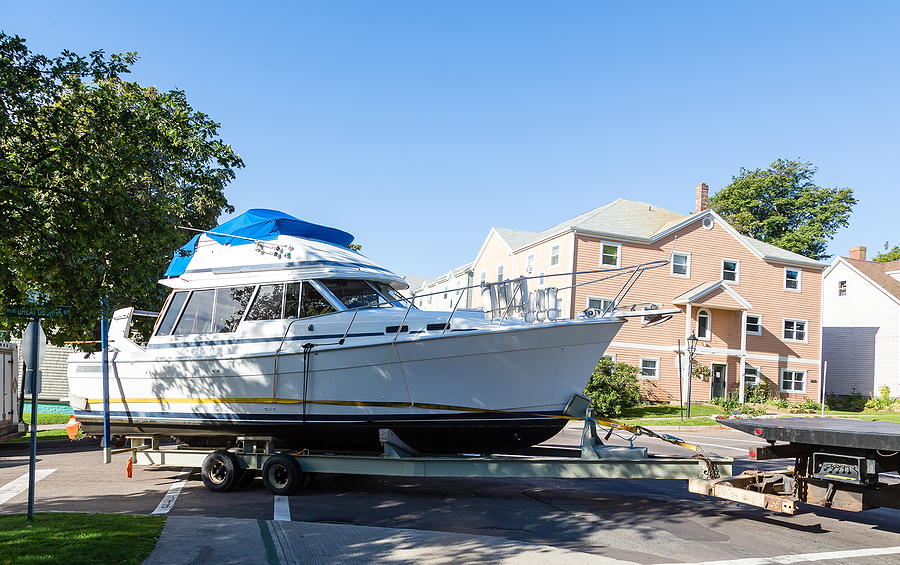
You wouldn’t use a sedan to tow a boat, and you can’t use a standard flatbed for every piece of heavy machinery. Matching the trailer to the equipment is vital for stability and legality.
Trailer Types
- Flatbed Trailers: Good for smaller equipment and palletized material, but often too high for tall machinery.
- Step Deck Trailers: These have a lower deck height, allowing for taller loads than a standard flatbed.
- RGN (Removable Gooseneck)/Lowboys: The industry standard for very heavy or tall equipment. The front detaches, allowing the trailer to lay flat on the ground so equipment can be driven directly onto it.
Securing the Load
The hardware used to secure the machine is just as important as the trailer. Chains and binders are generally required for heavy equipment, as synthetic straps can be cut by sharp metal edges or stretch under extreme weight. You must ensure the Working Load Limit (WLL) of your tie-down system is equal to at least 50% of the cargo’s weight, though many experts recommend aiming for 100% for added safety.
Request a Free Heavy Equipment Transport Assessment ✅
Loading and Unloading Best Practices
The moments when equipment is moving on or off the trailer are statistically the most dangerous. This is where gravity and physics are most likely to cause accidents.
- Level the Ground: Always load and unload on firm, level ground to prevent the trailer or the machine from tipping.
- Clean the Deck: Mud, oil, or ice on the trailer deck or the machine’s tracks/tires significantly reduces friction. A slippery deck can cause a machine to slide off sideways even at slow speeds.
- Use a Spotter: The operator often has limited visibility. A trained spotter using clear hand signals is essential to guide the machine safely onto the ramp.
- Lower Attachments: Once the machine is on the trailer, lower all buckets, blades, and booms to the deck. This lowers the center of gravity and prevents hydraulic creep during transit.
- The 4-Point Rule: Federal regulations typically require a minimum of four tie-downs to prevent movement in any direction (forward, backward, left, right). Attachments often require additional independent tie-downs.
Vigilance During Transit
Safety protocols don’t end once the chains are tight. During the drive, the situation can change. Loads can settle, and vibrations can loosen binders.
Drivers should stop within the first 50 miles to re-check the tightness of all chains and straps. Subsequent checks should happen every 150 miles or every 3 hours, whichever comes first. It is also crucial for drivers to maintain increased following distances.
Stopping a loaded semi-truck takes significantly longer than stopping a passenger vehicle, and sudden braking can cause the load to shift, leading to catastrophic failure of the tie-downs.
The Hidden Dangers of DIY Transport
For some business owners, there is a temptation to handle transport in-house to save money. However, “Do It Yourself” heavy hauling often carries hidden costs and risks that far outweigh the price of a professional service.
Unless your team is specifically trained in heavy haul logistics, you risk:
- Improper Securement: A lack of knowledge regarding aggregate working load limits can lead to chains snapping under braking pressure.
- Regulatory Violations: Missing a single permit or failing to display the correct “Oversize Load” banner can result in the truck being impounded.
- Equipment Damage: Incorrect loading techniques can damage the undercarriage or hydraulic systems of your machinery.
- Liability: If an accident occurs involving a DIY transport, the liability falls entirely on your company. This can lead to lawsuits that devastate a business financially.
The Benefits of Professional Transport Services
Partnering with a professional heavy equipment transport company is an investment in peace of mind. These specialists bring experience and resources that general contractors typically don’t possess.
Professional haulers carry specialized insurance that protects your asset from the moment it’s loaded until it’s delivered. They have extensive knowledge of state-specific regulations and have existing relationships with permit offices to expedite the process. Most importantly, their drivers are experts in load securement and defensive driving with heavy loads. They ensure that your focus remains on the job site, not on the highway.
Key Points
Transporting heavy equipment is a serious undertaking that demands respect for the machinery and the laws of the road. By understanding the regulations, planning your route, and utilizing the correct equipment, you ensure the safety of your crew, your investment, and the driving public. While the logistics can be complex, the goal is simple: getting the machine to where it needs to be, safely and efficiently.
If you are looking for a partner to handle your heavy hauling needs without the headache, we are here to help. For reliable, compliant, and professional heavy equipment transport in Central Indiana, Contact Our Team today to schedule your move.
Related Post: The Essential Guide to Safely Transporting Heavy Equipment